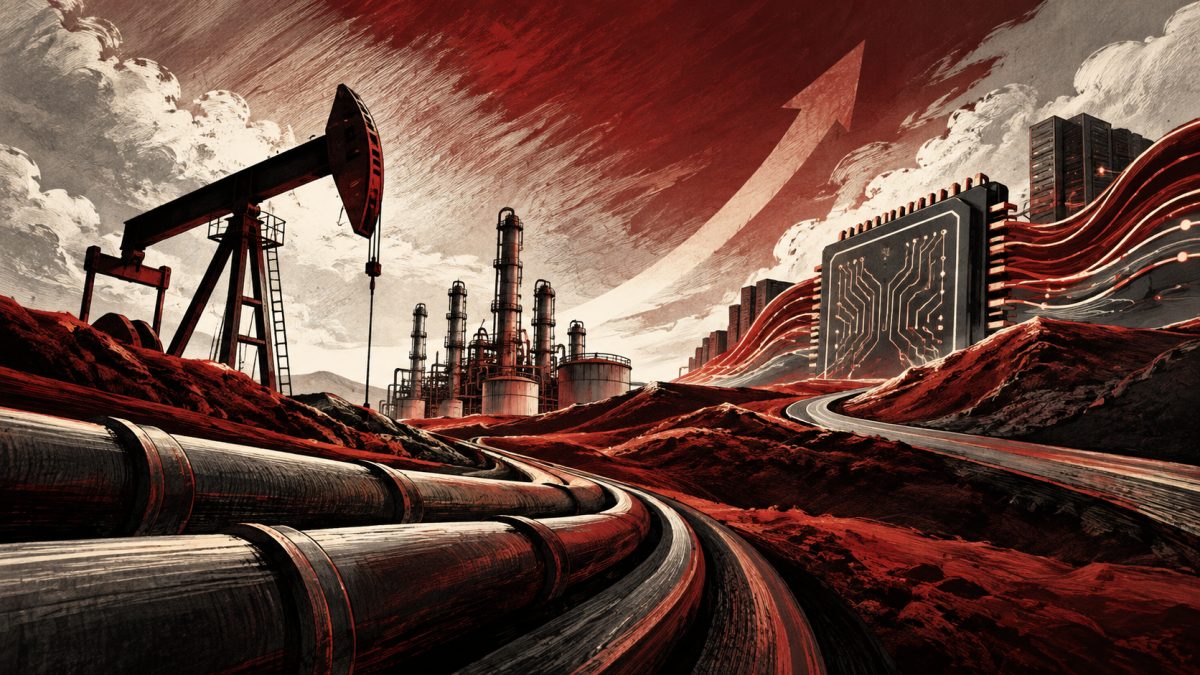
Kansas City Fed’s Schmid Flags Energy and AI Demand as Top Inflation Drivers
TREE NEWS reports: Kansas City Federal Reserve President Jeffrey Schmid said the dominant forces keeping inflation elevated right now are energy prices and demand tied to the artificial intelligence boom, offering a granular view of where price pressure is actually concentrated in the US economy. The remarks land at a sensitive moment for markets, as investors weigh how long the Federal Reserve can keep policy restrictive while growth cools and the labor market loosens.
Schmid’s framing matters because it splits inflation into two very different buckets. Energy costs are volatile, globally driven, and largely outside the Fed’s control, while AI-related demand reflects a genuine investment cycle — data centers, power procurement, advanced chips, and the electricity infrastructure needed to run them. That second bucket is not a classic demand-pull story from consumer spending; it is a capital expenditure wave that is bidding up specific inputs and could prove stickier than headline inflation data suggest.
Why This Matters for Markets
If the Fed reads AI-driven demand as structural rather than transitory, the bar for rate cuts rises. That has direct implications across asset classes:
- Equities: A higher-for-longer rate path pressures long-duration growth names, but the AI capex cycle itself is a revenue tailwind for chipmakers, power producers, utilities, and industrial suppliers. The tension between valuation compression and earnings strength is likely to define sector rotation.
- Bonds: Sticky inflation keeps upward pressure on the long end of the curve, steepening it if the front end stays anchored by expectations of eventual easing. Real yields, not just nominal, are the key signal to watch.
- Commodities: Energy is explicitly named as a driver, which keeps oil, natural gas, and power-linked commodities in focus. Electricity demand from data centers is a slow-burn bullish factor for natural gas and uranium.
- Crypto: Digital assets remain sensitive to real-rate expectations. A higher-for-longer narrative typically weighs on risk appetite, though bitcoin’s occasional role as an inflation hedge can complicate the correlation.
- Currencies: A Fed that cannot ease as quickly as peers supports the dollar, particularly against currencies of economies with weaker inflation dynamics.
The AI-Inflation Nexus
The novel part of Schmid’s argument is the explicit link between AI investment and inflation. Data center construction, grid upgrades, and power purchase agreements are creating localized bottlenecks — in electricity, in skilled labor, in certain hardware components. These are supply-side constraints meeting a demand surge, which is precisely the kind of inflation that monetary policy struggles to address without choking off productive investment.
Investors should watch utility capital expenditure plans, power market pricing in key data-center regions, and semiconductor supply commentary as leading indicators. If these continue to run hot while core services inflation moderates, the Fed faces an uncomfortable split: easing to support the consumer while AI capex keeps parts of the price index elevated.
Key Takeaways
- Energy and AI-linked demand are the two inflation drivers the Kansas City Fed president is emphasizing, complicating the rate-cut timeline.
- AI capex is a structural, supply-constrained inflation source that monetary policy cannot easily fix.
- Equities face a tug-of-war between higher discount rates and strong AI-driven earnings.
- Bonds, commodities, crypto, and the dollar all hinge on whether markets accept a higher-for-longer regime.
- Watch power markets, utility capex, and chip supply as the clearest real-time signals of AI inflation pressure.