Anthropic’s President Used Stuffed Animals as Advisors: The Inside Story of the OpenAI Split
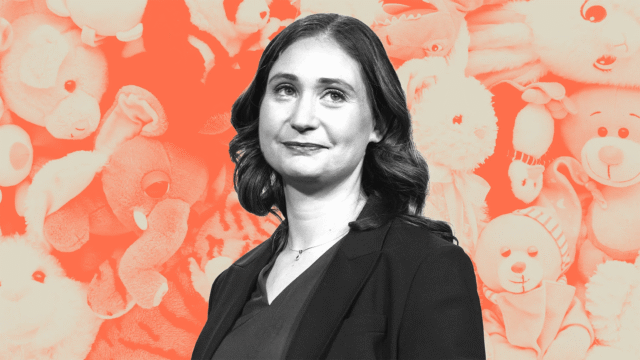
TREE NEWS reports: Before Daniela Amodei became president of Anthropic, the AI safety company now valued at a potential $2 trillion, she used a rather unusual management tool: a committee of stuffed animals. During her tenure at OpenAI, Amodei and her husband, Holden Karnofsky, would assign distinct personalities to plush toys—a laid-back cat named Jinji who advocated skipping unnecessary meetings, a detail-oriented pink bear named Maura, and a panda called Beary Bonds tasked with injecting empathy into decisions—and let them ‘weigh in’ on thorny workplace issues. The method, she later said, was ‘very useful for analyzing different personality types.’
That whimsical anecdote, revealed in a forthcoming book by journalist Kevin Roose, serves as a window into a far more consequential story: the ideological and personal fractures that led Amodei and her brother Dario to leave OpenAI in 2020 and found Anthropic. Daniela, who joined OpenAI in 2018, clashed with several senior leaders, including Greg Brockman and Mira Murati. Dario grew increasingly wary of CEO Sam Altman and Brockman, and began organizing private gatherings with researchers concerned about the risks of advanced AI—a faction some colleagues dubbed ‘Dario’s little circle.’ By 2020, the siblings had decided to depart, a split insiders later called a ‘divorce.’
Market Implications: AI Safety as a Competitive Moat
While the stuffed-animal detail is quirky, the underlying narrative has serious implications for investors. Anthropic’s origin story is fundamentally about a disagreement over how to prioritize AI safety—and that disagreement has become a defining feature of the competitive landscape in generative AI.
- Valuation and IPO speculation: Anthropic is reportedly eyeing an IPO that could value it near $2 trillion. If realized, that would make it one of the most valuable technology companies in history. For public-market investors, the emergence of a safety-first AI giant alongside OpenAI creates a duopoly narrative that could reshape how capital flows into AI equities.
- Enterprise adoption and trust: Anthropic’s safety branding has helped it win enterprise customers, particularly in regulated industries. A successful IPO would give public investors direct exposure to the ‘responsible AI’ theme, potentially pressuring other AI firms to strengthen their own safety and governance credentials.
- Competitive dynamics: The OpenAI-Anthropic rivalry is not just about model performance; it’s about corporate governance, talent retention, and mission alignment. The exodus of key researchers from OpenAI to Anthropic shows how internal culture can become a source of competitive advantage—or a vulnerability.
- Regulatory tailwinds: As governments worldwide draft AI regulations, companies that have invested early in safety research may find themselves better positioned to comply and shape standards. Anthropic’s founding mission could translate into a regulatory moat.
Key Takeaways for Investors
- AI safety is now a business strategy. Anthropic’s rise demonstrates that safety and ethics are not just costs but can be differentiators that attract talent, customers, and premium valuations.
- Watch the IPO pipeline. A potential Anthropic listing would be a landmark event for the AI sector, offering a pure-play investment opportunity and setting a benchmark for other AI startups.
- Governance matters. The OpenAI split underscores how internal disputes over mission and control can lead to talent drain and strategic shifts. Investors should scrutinize governance structures at AI companies.
- Long-term theme: The competition between OpenAI and Anthropic will shape the trajectory of AI development, regulation, and commercialization for years to come. Exposure to both—or to the broader AI ecosystem—may be prudent.
In short, the story of stuffed animals and a messy corporate divorce is more than a curiosity. It is the origin story of a company that could become one of the defining AI players of the decade, and it highlights how personal convictions and internal culture can drive massive market outcomes.