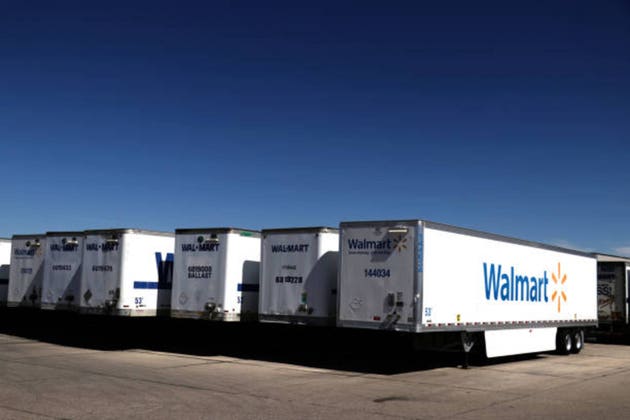
Walmart’s New California Fulfillment Center Signals a Step Change in Retail Automation
TREE NEWS reports: Walmart has opened a next-generation fulfillment center in California, marking another significant investment in automated logistics infrastructure by the world’s largest retailer. The facility is designed to dramatically accelerate order processing and shipping speeds for online orders, using a combination of robotics, AI-driven inventory management, and high-density storage systems. The move extends Walmart’s multi-year effort to close the gap with Amazon in e-commerce fulfillment and to convert its massive store network into a competitive advantage for same-day and next-day delivery.
The new center is part of Walmart’s broader strategy to build a network of automated market fulfillment centers and high-tech distribution hubs that can handle a rising volume of e-commerce orders while lowering per-unit fulfillment costs. California is a strategically important market given its dense population, high labor costs, and role as a gateway for imports from Asia. By automating more of the fulfillment process in the state, Walmart aims to reduce reliance on manual labor, improve speed, and protect margins in a retail environment where price competition remains intense.
Why the Market Should Care
While a single fulfillment center is not a material earnings event on its own, the direction of travel matters for several reasons.
- Retail margins and operating leverage: Automation is one of the few levers large retailers have to offset wage inflation and thin grocery margins. If Walmart can demonstrate that automated fulfillment lowers cost per order, it strengthens the case for accelerating capex across its network — a positive for long-term earnings power but a drag on near-term free cash flow.
- Competitive dynamics vs. Amazon: Amazon has spent over a decade building out robotic fulfillment. Walmart’s push narrows the delivery-speed gap, which could pressure Amazon’s e-commerce margins and force further investment. For investors, this is a reminder that the US retail logistics arms race is far from over.
- Industrial automation and robotics suppliers: Every new automated facility represents demand for warehouse robotics, conveyor systems, sensors, and software. Companies exposed to warehouse automation — from industrial automation vendors to robotics pure-plays — could see incremental order flow as Walmart and peers scale their programs.
- Labor and wage considerations: Automation reduces the number of roles per unit of volume, which is a long-term disinflationary force in logistics labor. That is a positive for retailers’ cost structures but a headwind for warehouse employment growth in regions where such facilities concentrate.
- Real estate and industrial REITs: Large, high-throughput facilities require specific site characteristics — proximity to population centers, power capacity, and transportation links. Continued investment supports demand for modern industrial real estate in key markets like California’s Inland Empire.
Broader Macro and Market Implications
For equity investors, the story reinforces several themes that have driven markets in recent years: the persistence of automation capex, the resilience of large-cap retailers with omnichannel scale, and the growing importance of logistics efficiency as a competitive moat. It is also a reminder that even in a slowing consumer environment, top retailers continue to invest in structural cost advantages rather than simply cutting back.
In the bond market, the read-through is modest. Sustained automation investment supports productivity growth, which is generally disinflationary over time and supportive of longer-duration fixed income. For commodities, incremental warehouse construction supports demand for steel, cement, and industrial equipment, though the effect of one facility is negligible at the macro level. Currency and crypto markets are unlikely to see any direct impact — this is a company-specific operational story, not a macro catalyst.
Key Takeaways for Investors
- Walmart’s new California fulfillment center is a small but symbolically important step in its automation strategy.
- Watch for commentary on capex, fulfillment cost per order, and e-commerce profitability in upcoming earnings.
- Suppliers of warehouse automation and robotics could benefit as Walmart and peers scale their programs.
- The story reinforces the competitive pressure on Amazon and the broader retail sector to keep investing in logistics.
- For diversified portfolios, the read-through is thematic rather than a single-name trade: automation, industrial real estate, and retail margin resilience.
Ultimately, the facility is less about one building and more about the direction of Walmart’s capital allocation. Investors should treat it as another data point in the long-running debate over which retailers can convert scale and technology into durable cost advantages — and which will be left paying the price of catch-up.