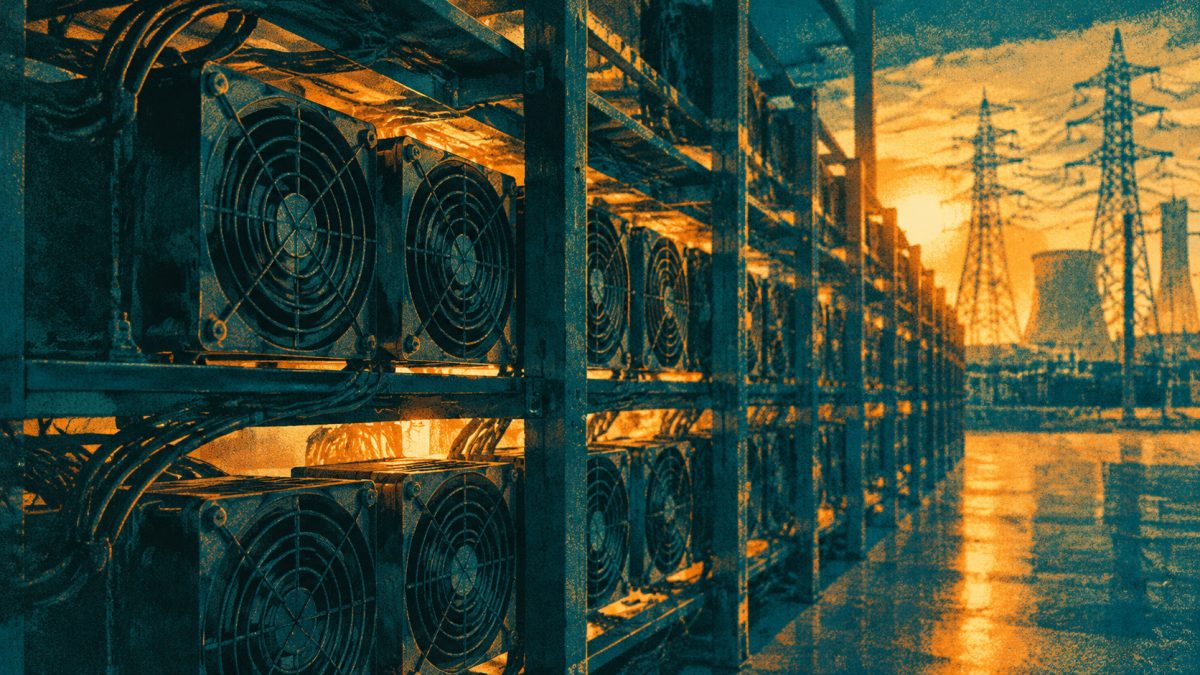
Russia’s New Grid Rule Puts Crypto Miners Last in Line for Power
TREE NEWS reports: Russia has moved to formally reclassify cryptocurrency mining as a low-priority electricity consumer. Under Government Resolution No. 1300 and guidance from the Ministry of Energy, mining farms and mining infrastructure operators may now only apply for grid connection under the fourth category of power supply reliability — the lowest tier in the Russian system. In practice, that means mining facilities can be cut off first when supply tightens or system conditions deteriorate, so that households, industry, and critical infrastructure keep the lights on.
What the Fourth Category Actually Means
Russia’s reliability categories determine how a consumer is treated during grid stress. Fourth-category consumers receive no guaranteed redundancy and can be disconnected on short notice. For mining operators, this is more than a bureaucratic label: it directly affects project economics, because uninterrupted uptime is the single largest driver of hash-rate revenue. A farm that can be curtailed at will is a farm whose revenue is capped by the grid operator’s discretion.
The rule also applies to “mining infrastructure operators” — a broad term that can capture hosting providers and data-center landlords who lease capacity to miners. That widens the blast radius beyond a handful of large farms and into the hosting economy that has grown around cheap Siberian and Volga power.
Why Moscow Is Doing This
Russia has spent years trying to reconcile two goals: capturing the tax and export revenue from mining, and protecting a strained power system. Several regions have already experimented with seasonal mining bans during peak demand. Resolution No. 1300 turns that ad-hoc approach into a national default — mining is welcome, but only when there is spare capacity.
The policy is also a signal to the broader energy market. By codifying miners as interruptible load, the government gives grid operators a ready lever during winter peaks and outages, without having to negotiate with each facility. For utilities, that is operationally convenient. For miners, it converts a physical risk into a permanent regulatory condition.
Implications for the Mining Sector
- Curtailment risk becomes structural. Financing and valuation models will need to price in expected downtime, not just electricity tariffs.
- Hosting contracts get repriced. Providers that cannot guarantee uptime will face pressure from clients seeking remedies or relocation.
- Geography matters more. Regions with genuine surplus capacity — and the political will to prioritize miners — become relatively more attractive.
- Smaller operators are squeezed first. They lack the capital to build redundancy or negotiate bespoke arrangements.
Forward Look
Russia is effectively choosing to keep mining in a subordinate position within its energy hierarchy. That is a rational choice for a country balancing export revenue against domestic reliability, but it creates a two-tier market: miners that can tolerate curtailment, and those that cannot. Expect more capital to flow toward jurisdictions that offer firmer supply guarantees, and expect Russian hosting providers to compete increasingly on transparency about outage risk rather than headline tariffs alone. The long-term question is whether Russia’s cheap power remains cheap once reliability is priced in.