SpaceX’s $4 Billion Debt Raise Tests Ray Dalio’s AI Bubble Warning
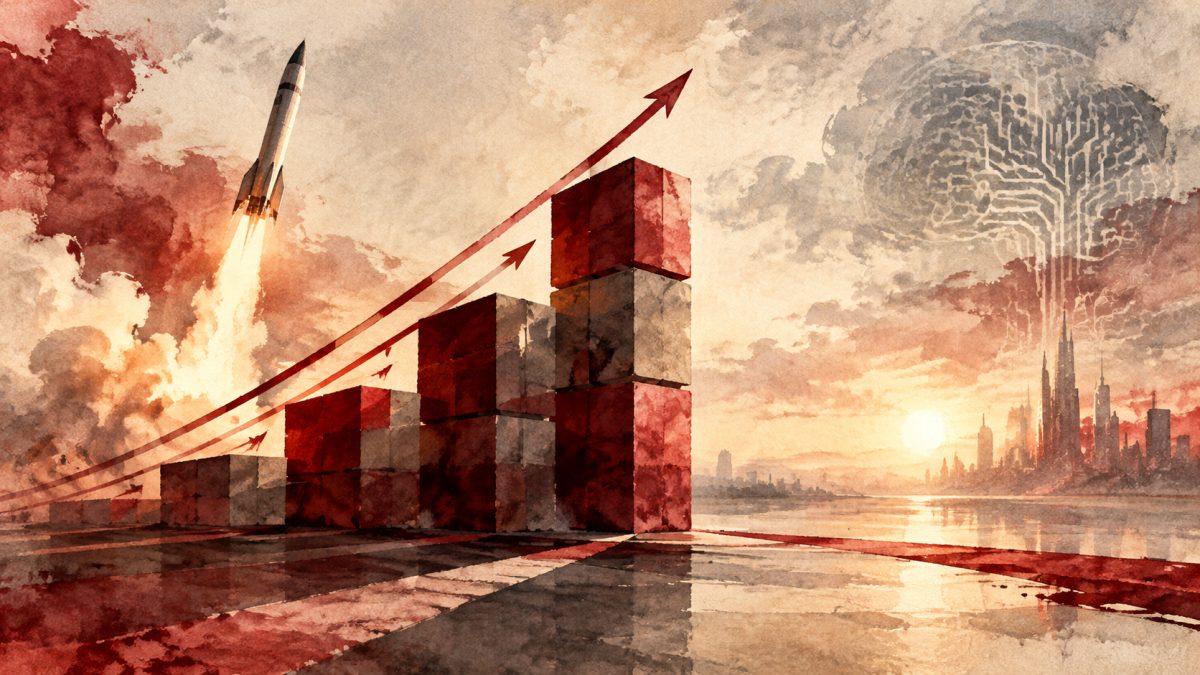
TREE NEWS reports: SpaceX is reportedly seeking an additional $4 billion in debt financing to purchase Nvidia chips, a move that has reignited concerns about the sustainability of the artificial intelligence investment boom. The news comes as Ray Dalio, founder of Bridgewater Associates, continues to warn that the AI-driven market rally is nearing its peak and could be on the verge of a sharp correction.
Debt-Fueled Expansion in the AI Supply Chain
The SpaceX debt raise is notable not just for its size but for its purpose. Rather than funding rocket launches or satellite deployment, the capital is earmarked for Nvidia hardware — the same chips that have become the bottleneck and bellwether of the global AI buildout. Using debt to acquire depreciating hardware assets introduces a new layer of financial risk into an already capital-intensive industry.
This pattern is increasingly common across the technology sector. Companies are leveraging their balance sheets to secure computing power, betting that AI-driven revenue will arrive before the debt maturities do. If those bets fail to materialize, the resulting write-downs could ripple through credit markets.
Dalio’s Warning and the Crypto Connection
Dalio has repeatedly drawn parallels between the current AI enthusiasm and historical bubbles, including the dot-com crash and the 2008 housing crisis. His core argument is that asset prices have decoupled from fundamentals, and that the unwinding of leveraged positions could trigger a broader market downturn.
For crypto markets, the implications are significant. Digital assets have increasingly traded in correlation with Nasdaq and AI-linked equities. A sharp repricing in AI stocks would likely pressure Bitcoin, Ethereum, and tokenized real-world asset (RWA) markets, which have attracted institutional capital partly on the promise of a technology-driven productivity boom.
- Bitcoin and Ethereum: Often treated as high-beta tech proxies in institutional portfolios.
- RWA tokens: Their growth thesis depends on TradFi convergence, which could stall if risk appetite collapses.
- AI-crypto tokens: Decentralized compute and GPU networks could face a valuation reset if Nvidia demand cools.
Forward-Looking Perspective
The key question is whether the AI capex cycle can sustain itself without continuous debt issuance. If SpaceX and its peers can convert chip purchases into tangible revenue — through Starlink, defense contracts, or AI services — the leverage may prove justified. If not, Dalio’s warning could look prescient.
For crypto investors, the lesson is to monitor credit conditions in the AI supply chain as closely as on-chain metrics. The next major crypto drawdown may not originate in a DeFi protocol or a regulatory crackdown, but in a corporate bond market stretched by the cost of computing power.