BIT Securities Launches Hong Kong Equity Trading, Signaling Deeper Crypto-TradFi Convergence
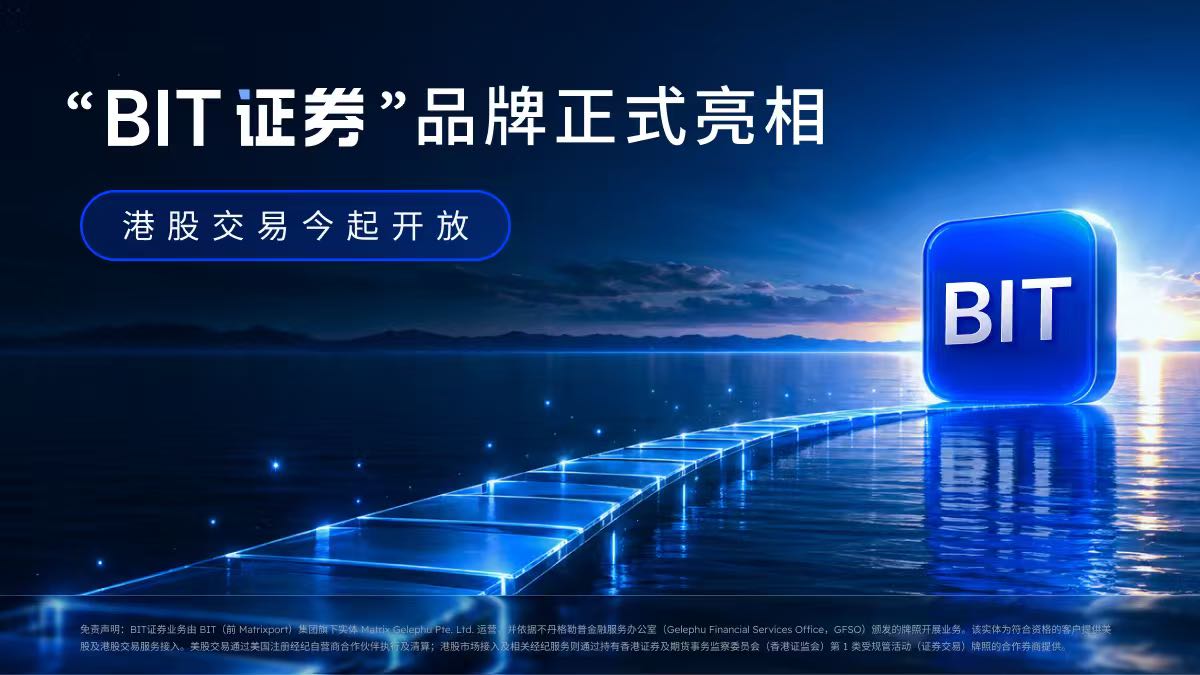
TREE NEWS reports: Digital asset financial services group BIT has officially opened Hong Kong stock trading services as of October 12, 2026, simultaneously launching its securities business under the brand “BIT Securities.” The move marks a significant step in the convergence of digital asset platforms and traditional equity markets, positioning BIT as a multi-asset financial services provider in one of Asia’s most dynamic financial hubs.
From Crypto-Native to Multi-Asset Platform
BIT’s expansion into Hong Kong equities represents a broader trend among crypto-native firms seeking to diversify revenue streams and capture traditional finance clients. By offering securities trading alongside its existing digital asset services, BIT aims to provide a unified gateway for investors navigating both worlds. This strategy mirrors moves by other major exchanges that have pursued brokerage licenses and traditional asset offerings to build stickier, more comprehensive platforms.
Hong Kong has emerged as a focal point for this convergence, with regulators progressively establishing frameworks that allow licensed virtual asset service providers to expand into traditional securities. The city’s dual-track regulatory approach—overseeing both crypto and equities—offers a sandbox for firms like BIT to test integrated offerings while maintaining compliance.
Industry Implications: Competition and Consolidation
BIT’s entry into Hong Kong stock trading intensifies competition among both traditional brokers and crypto-native platforms. Incumbent brokers face pressure to adopt digital asset capabilities, while crypto exchanges without securities arms risk losing high-net-worth clients who demand diversified portfolios. This dynamic is likely to accelerate mergers, partnerships, and licensing applications across the region.
For investors, the immediate benefit is convenience: a single platform for Bitcoin, Ethereum, and Hong Kong-listed equities. But the deeper implication is structural—the gradual erosion of the boundary between “crypto” and “traditional” finance. As tokenization of real-world assets gains traction, platforms that can custody, trade, and settle both native digital assets and tokenized securities will hold a competitive edge.
Regulatory Tailwinds and Headwinds
Hong Kong’s Securities and Futures Commission (SFC) has been refining its virtual asset regime, recently allowing licensed platforms to offer staking and certain derivatives. BIT’s securities launch suggests the SFC is comfortable with integrated models, provided robust investor protection and anti-money laundering standards are met. However, global regulatory divergence remains a risk—US and EU rules could complicate cross-border operations for firms straddling both asset classes.
Forward-Looking Perspective
BIT’s move is unlikely to be isolated. Expect more crypto firms to pursue securities licenses in Hong Kong, Singapore, and the UAE over the next 18 months. The real test will be whether BIT can attract meaningful trading volume and differentiate itself from established brokers like Futu and Tiger. Success would validate the multi-asset platform thesis and further normalize digital assets within mainstream finance. Failure would signal that crypto-native brands still struggle to win over traditional equity investors—even with a unified interface.
Ultimately, BIT Securities’ debut is less about a single company and more about a market structure shift: the slow, steady merger of two financial worlds that once operated in parallel. The coming year will reveal whether that merger creates a seamless experience or a regulatory and operational quagmire.