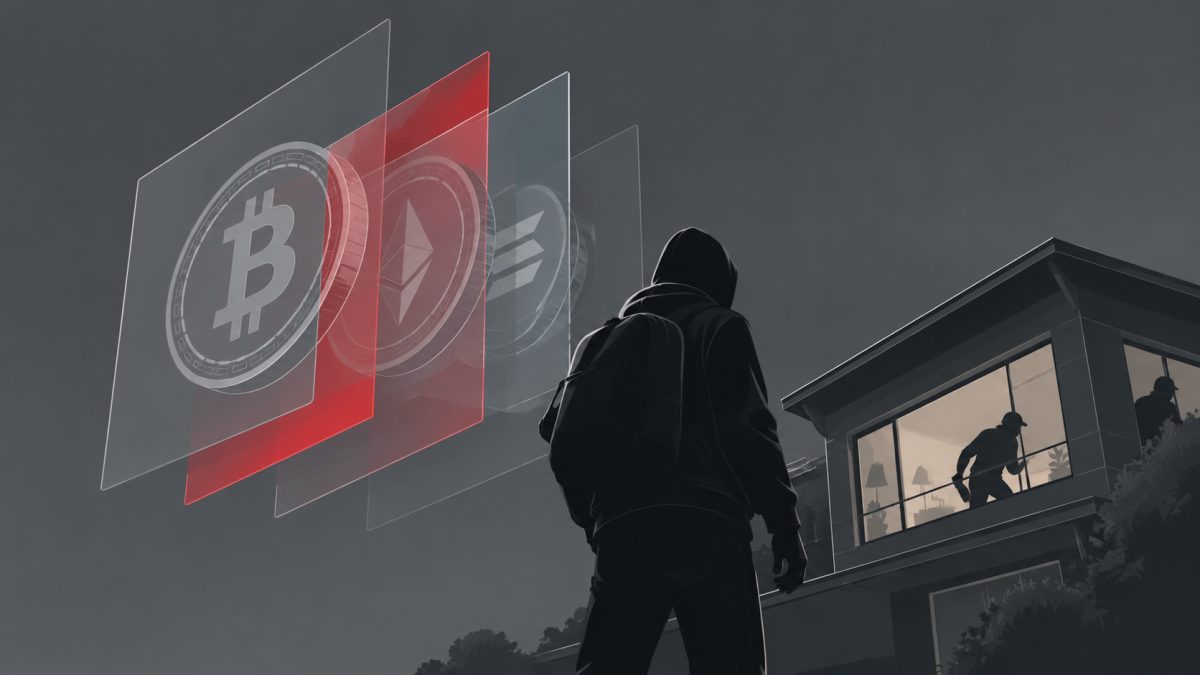
Armed Robbery Targets Crypto Holder in the UK
TREE NEWS reports: A crypto key opinion leader (@rrealist) reported that their home in the United Kingdom was targeted in a knife-point home invasion, resulting in the theft of approximately $800,000 in crypto assets and personal belongings. The attackers threatened the victim, forcing the transfer of $40,000 from a hot wallet and $720,000 from a Ledger hardware wallet. A Rolex watch was also stolen, and the victim’s phone was destroyed. The victim sustained only minor abrasions, and local police have launched an investigation.
Physical Attacks on Crypto Holders on the Rise
This incident is not isolated. Over the past year, there has been a marked increase in physical attacks against cryptocurrency holders, often referred to as “$5 wrench attacks.” High-profile cases include the kidnapping of a Ledger co-founder and the assault of a crypto trader in France. The pattern suggests that criminals are increasingly targeting individuals known to hold significant digital assets, exploiting the difficulty of tracing and reversing blockchain transactions.
Why Hardware Wallets Are Not Enough
While hardware wallets like Ledger are designed to keep private keys offline, they are not immune to physical coercion. In this case, the attackers coerced the victim into unlocking the device and transferring funds. This highlights a critical gap in personal security strategies: technical safeguards must be complemented by operational security (OPSEC) and physical safety measures.
- Coercion risk: Hardware wallets protect against remote hacks but not against physical threats.
- Information leakage: Publicly identifying as a crypto holder can make individuals targets.
- Travel and home security: Basic measures like not disclosing holdings, using decoy wallets, and maintaining a low profile can reduce risk.
Industry Implications and Mitigation Strategies
The incident underscores the need for a holistic security approach. Crypto holders should consider:
- Multi-signature wallets: Requiring multiple approvals for large transactions can thwart forced transfers.
- Duress PINs: Some wallets allow a secondary PIN that opens a decoy wallet with limited funds.
- Insurance: Specialized crypto insurance products are emerging to cover theft and coercion.
- Privacy: Avoiding public disclosure of holdings and using pseudonyms online.
Exchanges and wallet providers could also play a role by offering better educational resources and tools to protect users from physical threats.
Forward-Looking Perspective
As crypto adoption grows, so does the risk of physical attacks. The industry must move beyond purely technical solutions and address the human element of security. Regulatory bodies may need to consider guidelines for reporting and preventing such crimes. Meanwhile, individuals should adopt a defense-in-depth strategy that includes both digital and physical safeguards. The @rrealist case serves as a stark reminder that in the world of cryptocurrency, personal security is not optional—it is essential.