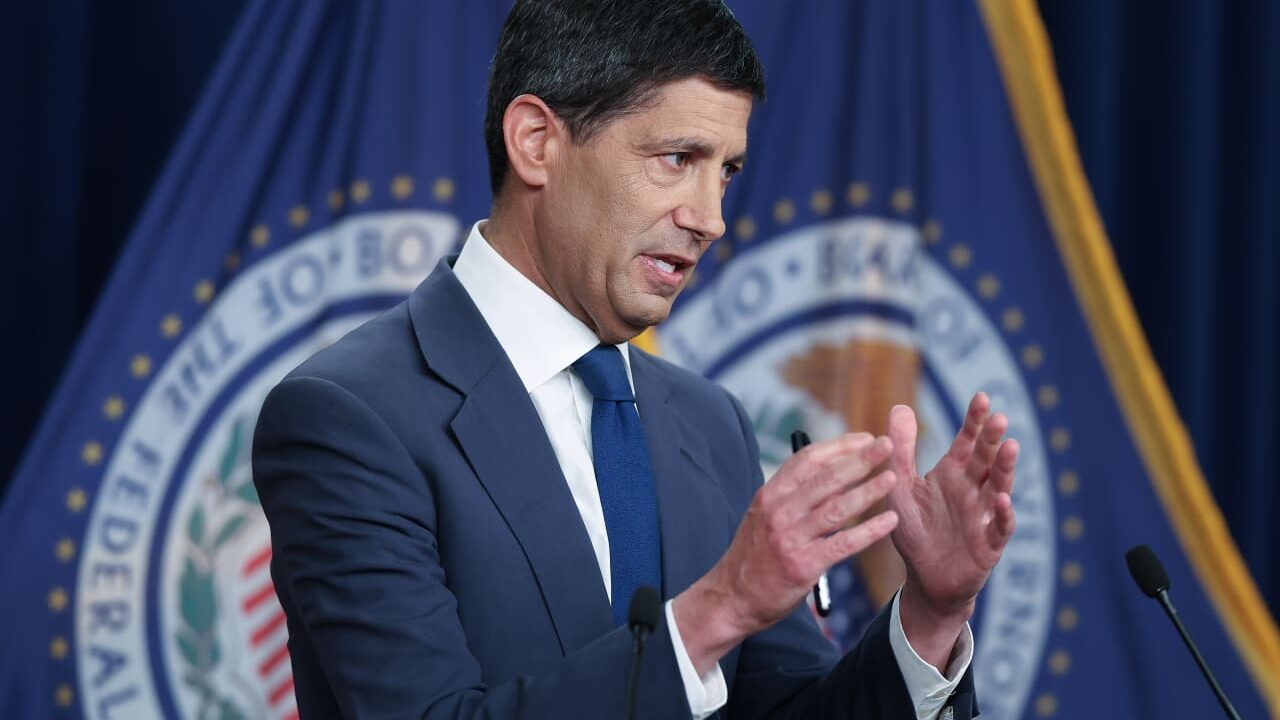
Fed Chair Kevin Warsh Weighs Overhaul of the Dot Plot as Markets Brace for a Communication Shift
TREE NEWS reports: Federal Reserve Chairman Kevin Warsh is considering a significant revamp of how the central bank communicates its economic outlook, with the quarterly “dot plot” — the anonymous projections of individual policymakers’ interest-rate expectations — emerging as a prime candidate for change. The discussion reflects a broader push inside the Fed to rethink a communication framework that critics argue has at times confused markets more than it has clarified policy.
The dot plot, introduced in 2012, publishes each FOMC participant’s view of the appropriate federal funds rate over the next several years. It has long been controversial: officials have worried it can be misread as a binding commitment rather than a set of conditional forecasts, and that it can lock policymakers into expectations they later have to walk back. Any move to modify, downgrade or replace the tool would mark one of the most consequential changes to Fed transparency in more than a decade.
What Could Change
Options reportedly under discussion range from publishing fewer dots, to replacing the chart with narrative summaries of the range of views, to shifting the emphasis toward scenario-based projections that explicitly tie rate paths to inflation and employment outcomes. Warsh has previously signaled skepticism about forward guidance and about the Fed’s tendency to telegraph policy moves far in advance.
For markets, the mechanics matter as much as the message. The dot plot is a key input into the pricing of fed funds futures, Treasury yields and the dollar. A less granular or less frequent dot plot would inject more uncertainty into the front end of the curve, potentially raising term premiums as investors demand compensation for a less predictable policy path.
Market Implications
- Rates and bonds: Reduced forward guidance typically steepens the yield curve. Short-dated yields could become more volatile around FOMC meetings if investors lose a clear anchor for the median policy path.
- Equities: Stocks, particularly rate-sensitive growth and technology names, may see larger swings around Fed communications. Some investors would welcome a less mechanical Fed; others would penalize the loss of a reliable signal.
- Currencies: The dollar could react more sharply to press conferences and speeches if the dot plot no longer provides a steady reference point, increasing FX volatility.
- Crypto: Digital assets have become increasingly sensitive to real-rate expectations. A less predictable Fed could amplify crypto’s already high beta to macro surprises, though a less hawkish communication regime might be read as supportive if it signals greater tolerance for below-target inflation.
- Commodities: Gold, as a hedge against policy uncertainty and inflation, could benefit from any perception that the Fed is becoming less transparent or less rules-based.
Why It Matters for Investors
The Fed’s communication tools are themselves a form of policy. When the central bank changes how it speaks, it changes how markets price risk. Investors who have built strategies around the dot plot’s median path — from duration positioning to carry trades — may need to reassess assumptions about how much guidance they can rely on.
The deeper issue is credibility. If the Fed moves away from quantitative projections, it will need to replace them with something markets trust. A vague narrative framework risks being read as an attempt to preserve optionality rather than to communicate honestly, which could undermine confidence at exactly the moment the central bank needs it most.
Key Takeaways
- Warsh is exploring changes to the Fed’s dot plot and broader communication strategy.
- Less granular guidance could raise rate volatility and steepen the yield curve.
- Equities, the dollar, gold and crypto are all exposed to a less predictable Fed.
- Investors should stress-test portfolios for a world with weaker forward guidance.