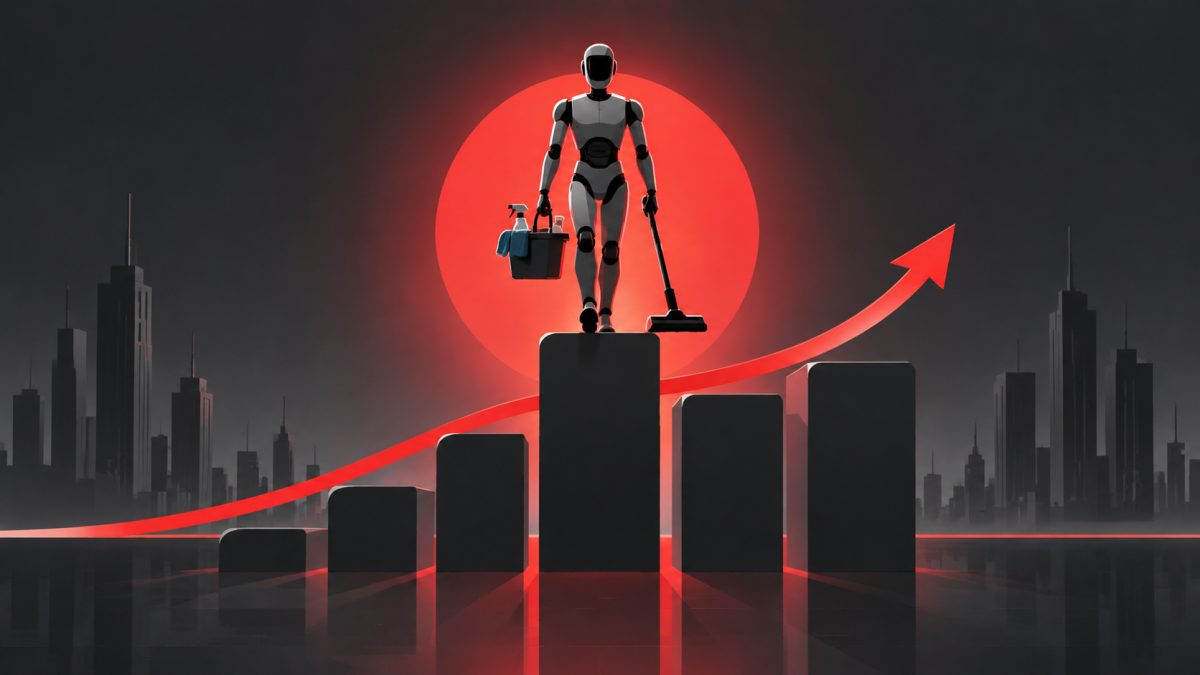
Humanoid Robots Are Coming for Your Chores — and Investors Are Watching Closely
TREE NEWS reports: A humanoid robot from Tau Robotics spent an afternoon vacuuming floors and wiping counters in a real home, demonstrating both the promise and the current limits of consumer robotics. The robots performed household tasks with some assistance from human operators behind the scenes — a reminder that full autonomy remains a work in progress.
The demonstration, which carried a price tag of roughly $55,000 per unit, raises a provocative question: can a robot really load the dishwasher? The answer, for now, is a qualified yes — with caveats. The event offers a window into how quickly consumer-facing robotics is advancing, and what that could mean for public markets.
Why This Matters for Markets
Humanoid robotics sits at the intersection of artificial intelligence, advanced manufacturing, and consumer hardware — three areas that have driven significant equity market narratives over the past two years. While Tau Robotics is privately held, the broader theme touches a wide range of publicly traded companies.
- AI and semiconductor stocks: Advances in humanoid robotics depend heavily on inference chips, sensors, and machine-learning models. Companies supplying AI accelerators, edge-computing silicon, and vision systems stand to benefit if humanoid robots scale.
- Industrial and consumer robotics: Established players in factory automation and consumer appliances could face both competitive pressure and partnership opportunities. Firms that pivot toward humanoid platforms may capture new revenue streams.
- Labor and services sectors: If robots can reliably perform household chores, the long-term implications for home-services, cleaning, and elder-care industries are significant — though mass adoption is likely years away.
- Commodities: Increased robot production would boost demand for rare earths, lithium, copper, and specialty metals used in motors, batteries, and sensors.
The Reality Check
The need for human assistance during the demonstration underscores that today’s humanoid robots are not yet fully autonomous. This mirrors the trajectory of many emerging technologies: impressive demos precede reliable, scalable products by a considerable margin. Investors should be wary of hype cycles that outpace commercial reality.
At $55,000 per unit, the economics are also challenging for mass consumer adoption. Early buyers are likely to be businesses, research labs, and wealthy early adopters — not average households. That means near-term revenue opportunities may be concentrated in enterprise and industrial applications rather than consumer markets.
Key Takeaways for Investors
- Theme over ticker: Humanoid robotics is a multi-year theme. Rather than chasing single names, investors may want exposure to the broader ecosystem — chips, sensors, actuators, and software.
- Watch the autonomy gap: The distance between assisted demos and fully autonomous operation is the key metric. Companies that close this gap first could gain a durable advantage.
- Beware of narrative risk: Robotics has a history of inflated expectations. Position sizing and patience matter.
- Supply chain implications: A robotics boom would ripple through commodity and industrial markets, creating second-order investment opportunities.
For now, the dishwasher remains safe. But the direction of travel is clear — and investors would be wise to pay attention.