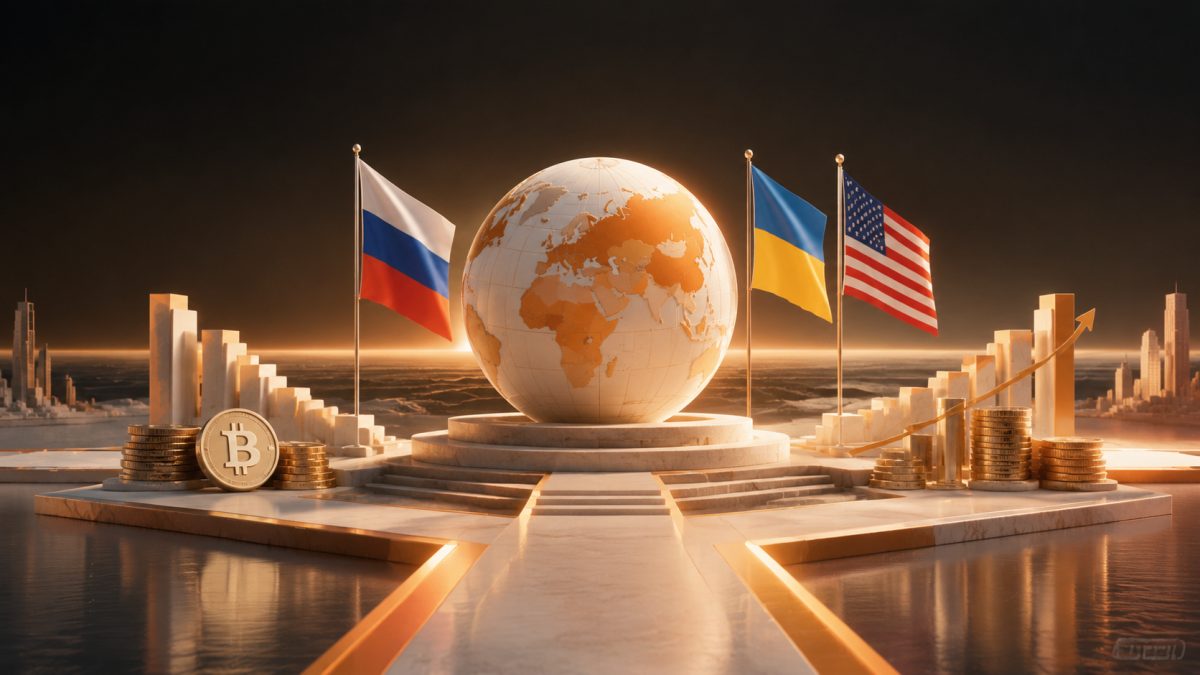
Russia-Ukraine-US Talks Set for Early November: What It Means for Global Markets and Crypto
TREE NEWS reports: Russia, the United States, and Ukraine will begin trilateral negotiations on security guarantees for Ukraine in Abu Dhabi in the first half of November. The three-way format is currently under discussion, and European participation has not been ruled out for future rounds.
The announcement marks the first concrete timeline for direct talks involving all three parties since the conflict began. While the agenda is focused on security guarantees rather than economic or energy issues, the mere prospect of a negotiated track has immediate implications for global risk assets, including cryptocurrencies.
Geopolitical Risk Premium and Crypto
Since early 2022, the war in Ukraine has been a persistent source of macro volatility. Energy price shocks, sanctions on Russian entities, and disruptions to commodity flows have repeatedly spilled over into inflation expectations and central bank policy. For crypto markets, the conflict has had a dual effect: it has reinforced the narrative of bitcoin as a geopolitical hedge, while also driving risk-off episodes that hit digital assets harder than traditional equities.
The news of a scheduled trilateral meeting is a modest de-escalation signal. In the short term, any reduction in geopolitical risk premium tends to support risk assets, including crypto. However, the market reaction will depend on whether the talks produce tangible outcomes. A mere meeting without a ceasefire framework is unlikely to shift the macro landscape.
Sanctions, Stablecoins, and On-Chain Flows
The negotiations also touch on the broader sanctions architecture that has shaped crypto compliance. Since 2022, the US and EU have imposed sweeping restrictions on Russian banks, oligarchs, and crypto exchanges suspected of facilitating sanctions evasion. A diplomatic breakthrough could eventually lead to a recalibration of these measures, though any easing would be gradual and conditional.
For stablecoin issuers and DeFi protocols, the key watchpoint is whether the talks lead to any change in the use of dollar-denominated tokens in sanctioned jurisdictions. So far, the trend has been toward tighter enforcement, with issuers like Tether and Circle freezing addresses linked to sanctioned entities. A peace track does not reverse that trend overnight, but it could reduce the frequency of new designations.
Energy Markets and Mining Economics
Russia is a major energy exporter, and the war has reshaped European energy markets. Any de-escalation could lower natural gas and electricity prices in Europe, which would be a tailwind for bitcoin miners operating in the region. Higher energy costs have squeezed mining margins in Europe over the past two years, pushing some operators to relocate to North America and the Middle East.
Abu Dhabi’s role as the host is notable. The UAE has positioned itself as a crypto-friendly jurisdiction, with regulated exchanges and growing institutional participation. Hosting the talks reinforces its status as a neutral diplomatic and financial hub, which could indirectly benefit its crypto ecosystem.
Forward-Looking Perspective
Investors should treat the announcement as a potential inflection point rather than a resolution. The path from talks to a durable ceasefire is long and uncertain. For crypto markets, the immediate impact is likely to be a modest improvement in sentiment, particularly if the talks coincide with easing macro conditions such as a pause in rate hikes.
The bigger story is the gradual normalization of geopolitical risk. If the trilateral format evolves into a sustained negotiation track, it could reduce the frequency of sanctions-related headlines that have periodically roiled crypto markets. That would be a structural positive for institutional adoption, which remains highly sensitive to regulatory and geopolitical uncertainty.
Until then, traders should watch for headlines around the Abu Dhabi meeting, any European involvement, and the reaction of energy markets. The crypto market’s correlation with macro risk assets remains elevated, and geopolitical developments will continue to be a key driver of volatility in the weeks ahead.