Iran Says Policy Won’t Shift Despite Fresh US Military Threats
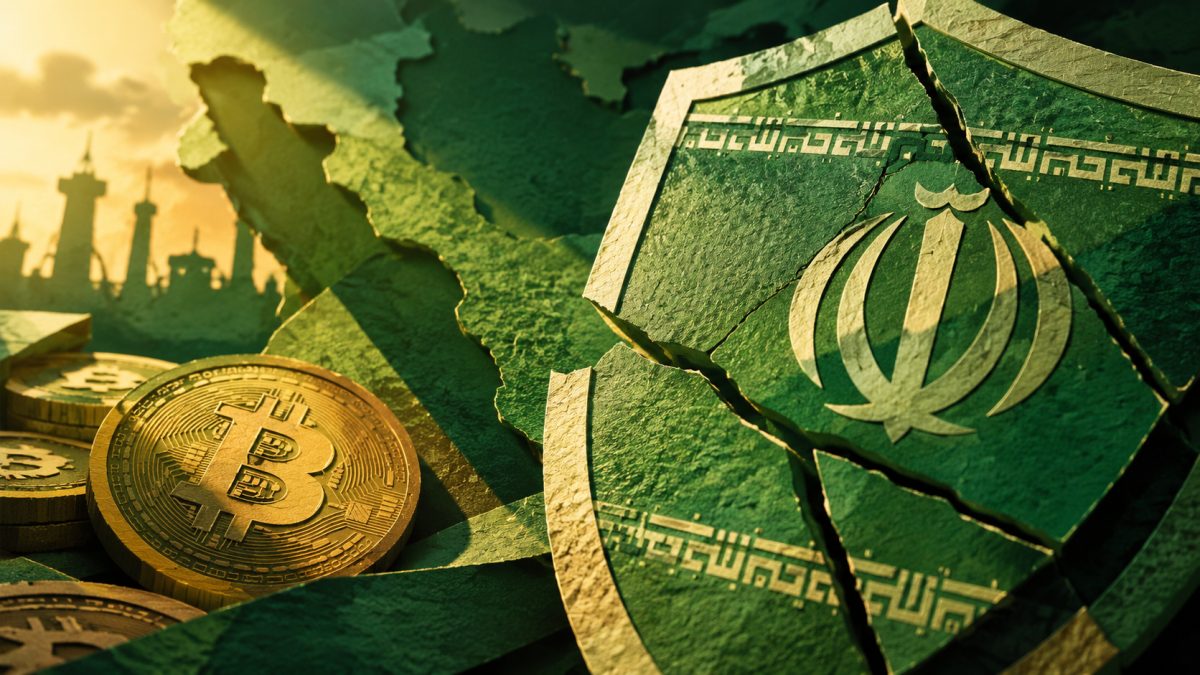
TREE NEWS reports: Iranian Foreign Minister Abbas Araghchi said Sunday that Tehran’s position will not change even if a new conflict erupts with Israel and the United States, noting he is already considering the post-war landscape. “Whether or not war happens, our policy will not change,” Araghchi said, adding that adversaries “have tried twice before and seen the results.” The remarks followed US President Donald Trump’s Friday suggestion that Washington could carry out another “small-scale ‘Epic Fury'” military operation, as tensions between Tehran and Washington continue to escalate.
Why This Matters for Digital Asset Markets
Geopolitical risk is once again the dominant macro variable for crypto traders. Historically, Middle East escalation has produced a knee-jerk “risk-off” move in digital assets — bitcoin has often sold off alongside equities in the first 24–48 hours before stabilizing — while prediction markets and on-chain data show capital rotating into stablecoins and tokenized cash equivalents during the same window. The current standoff is particularly sensitive because it arrives while the Federal Reserve’s rate path and oil prices are already fragile inputs for global risk appetite.
Channels of Transmission
- Safe-haven narrative test: Every new strike threat is a live experiment in whether bitcoin behaves as “digital gold” or as a high-beta risk asset. Recent episodes suggest the latter dominates in the immediate shock.
- Stablecoin flows: On-chain analysts typically watch for USDT and USDC minting or exchange inflows as a proxy for defensive positioning; sustained inflows would signal traders bracing for volatility.
- Energy and inflation: A wider conflict threatens oil supply, which feeds directly into inflation expectations and, by extension, the rate outlook that has driven crypto’s 2024–2025 cycles.
- Sanctions and crypto rails: Escalation raises the probability of new Treasury designations, reinforcing compliance risk for exchanges and DeFi front-ends handling Iran-linked addresses.
Forward-Looking Perspective
Markets are likely to price this as a headline-driven volatility event rather than a structural regime change — unless strikes actually occur or Hormuz shipping is disrupted. For crypto participants, the playbook is familiar: expect short-term correlation with equities, watch stablecoin flows for signs of real defensive demand, and treat any sanctions expansion as a compliance signal for exchange and DeFi treasury teams. The more durable question is whether repeated geopolitical shocks finally push allocators to hold bitcoin as a hedge — a thesis that has repeatedly been tested and only partially validated. Until then, traders should size positions for gap risk over weekends, when traditional markets are closed and crypto is the only live price signal.