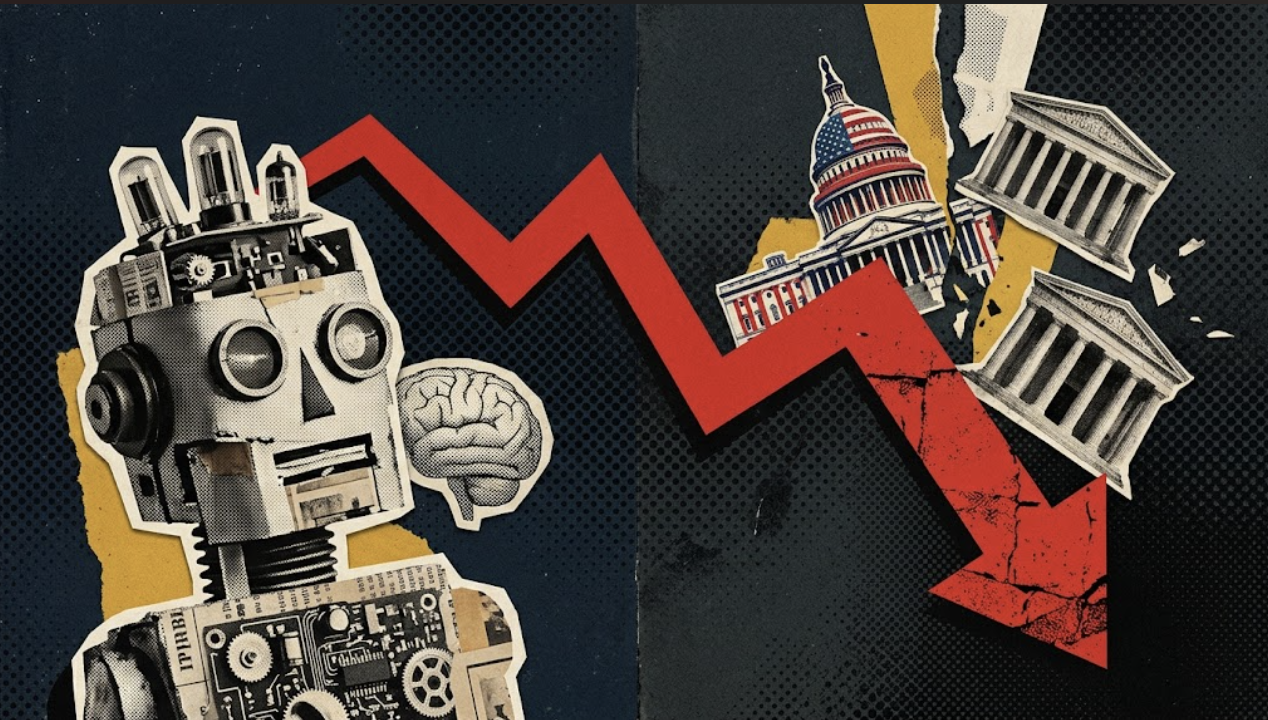
US AI Trade Stumbles as Midterm Elections Reshape Data Center Politics
US equities tied to the artificial intelligence boom sold off sharply after midterm elections delivered a sweeping Democratic victory, with the Nasdaq falling more than 5% intraday and the Philadelphia Semiconductor Index dropping nearly 11% at its lows. Nvidia, the bellwether of the AI trade, slid roughly 9%.
The catalyst was not a single earnings miss or macro shock, but a political shift that suddenly put the physical infrastructure underpinning AI—massive data centers—under scrutiny. Rising electricity prices have fueled local opposition to new facilities, and newly elected governors in several states campaigned on halting construction. Investors are now repricing the assumption that AI compute demand can expand without friction.
Why the Market Cared
The AI narrative has been built on an implicit promise: hyperscalers and chipmakers can deploy capital at will, secure power, and scale. That promise is now colliding with grid constraints and voter anger over utility bills. Data centers are among the largest new sources of electricity demand in the US, and in states where power prices have climbed, the facilities have become a visible political target.
- Nvidia and semis: The selloff reflects demand uncertainty if data center buildouts slow.
- Utilities and grid operators: Rising power prices are now a political liability, not just an operational cost.
- Hyperscalers: Capital expenditure plans may face delays, permitting risk, and higher local opposition costs.
Industry Implications
The election result does not kill AI demand, but it changes the cost and speed of delivering it. Companies may need to site facilities in more accommodating jurisdictions, invest in on-site generation, or accept longer timelines. For chipmakers, the risk is a slower ramp in orders; for utilities, the risk is that data center growth becomes a regulatory battleground. The market is beginning to distinguish between AI software demand, which remains robust, and AI infrastructure expansion, which is now politically contested.
Forward-Looking Perspective
Investors should watch state-level policy announcements, utility commission rulings, and any federal response on grid capacity. The AI trade is not over, but its next phase will be defined by power availability, permitting, and local politics—factors that equity markets had largely ignored. Volatility is likely to persist until the market can quantify how much of the projected data center pipeline is actually buildable.