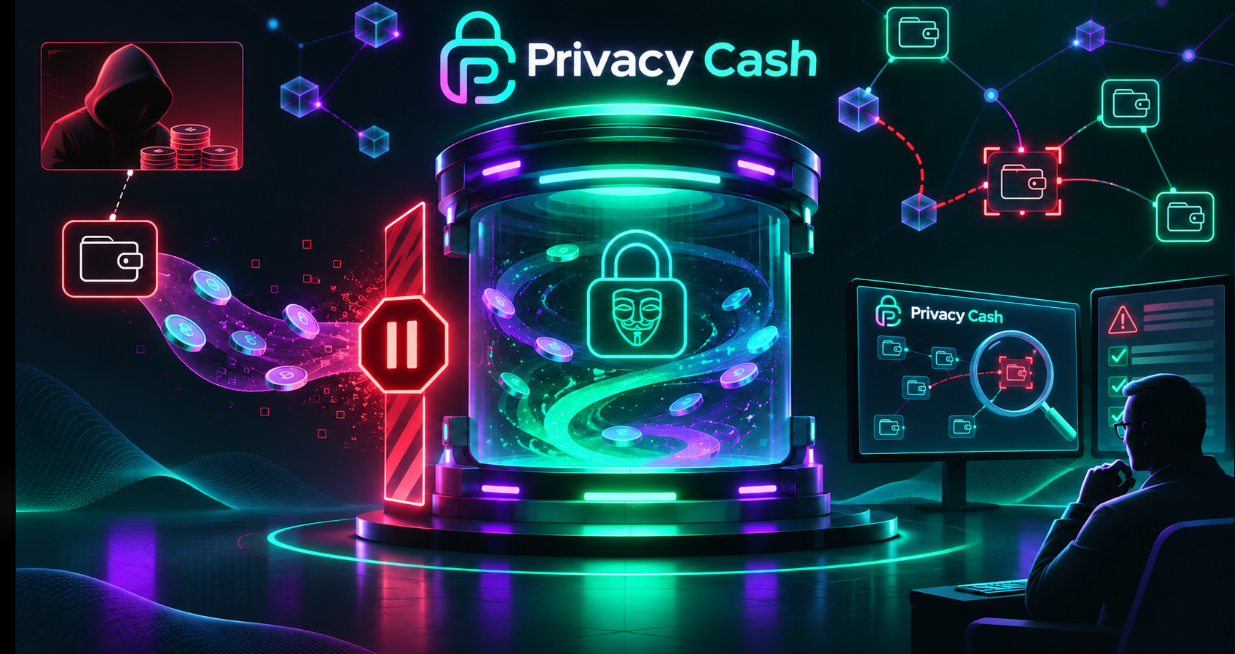
Privacy Cash Halts Deposits After Illicit Funds Flagged
Privacy Cash, a Solana-based privacy protocol that allows users to shield their on-chain transactions, has temporarily closed its deposit portal after approximately $1.2 million linked to the Binance hack entered its privacy pool. The move comes as the protocol confronts a fundamental tension: how to preserve user privacy while preventing its infrastructure from becoming a conduit for illicit funds.
The funds in question are tied to a high-profile exploit of Binance, one of the world’s largest cryptocurrency exchanges. By routing stolen assets into a privacy pool, the hackers sought to obscure the transaction trail—a tactic that has become increasingly common in the wake of major breaches. Privacy Cash’s decision to suspend deposits is a preemptive measure to avoid facilitating money laundering and to cooperate with potential investigations.
The Privacy Paradox
Privacy protocols occupy a precarious position in the crypto ecosystem. They are championed by advocates who argue that financial privacy is a fundamental right, especially in a world of increasing surveillance. Yet they are also viewed with suspicion by regulators and law enforcement, who fear they can be abused by criminals to launder money, evade sanctions, and hide stolen assets.
Privacy Cash’s growth—it has gained traction as a go-to solution for Solana users seeking anonymity—has made it a more visible target. The protocol’s architecture, which pools and mixes funds to break the link between sender and receiver, is precisely what makes it attractive to both legitimate privacy-seekers and bad actors. The challenge is to distinguish between the two without compromising the core value proposition.
Industry Implications
This incident underscores a broader dilemma for the entire privacy sector. Projects like Tornado Cash on Ethereum have faced severe regulatory backlash, including sanctions from the U.S. Treasury. Privacy Cash’s proactive shutdown of deposits may be an attempt to avoid a similar fate, but it also raises questions about the protocol’s long-term viability. If it can be forced to freeze deposits whenever illicit funds are detected, does it still offer the privacy guarantees its users expect?
Moreover, the event highlights the growing sophistication of blockchain analytics. Chainalysis and other firms have become adept at tracing funds through mixers and privacy pools, making it harder for hackers to fully anonymize their loot. This cat-and-mouse game is likely to intensify, with privacy protocols constantly updating their defenses and analytics firms refining their techniques.
Forward-Looking Perspective
Privacy Cash’s next steps will be closely watched. The protocol could implement stricter screening measures, such as requiring users to prove the source of funds, but that would erode privacy. Alternatively, it might adopt a decentralized governance model to make such decisions collectively, though that could slow response times. A more collaborative approach with regulators and law enforcement—perhaps through voluntary information-sharing—could help build trust, but it risks alienating privacy purists.
Ultimately, the incident serves as a reminder that privacy and security are not mutually exclusive but require careful balancing. As privacy protocols mature, they must develop robust compliance frameworks that protect users without becoming tools for criminals. The industry’s ability to self-regulate will determine whether privacy coins and protocols can coexist with mainstream finance or remain relegated to the fringes.