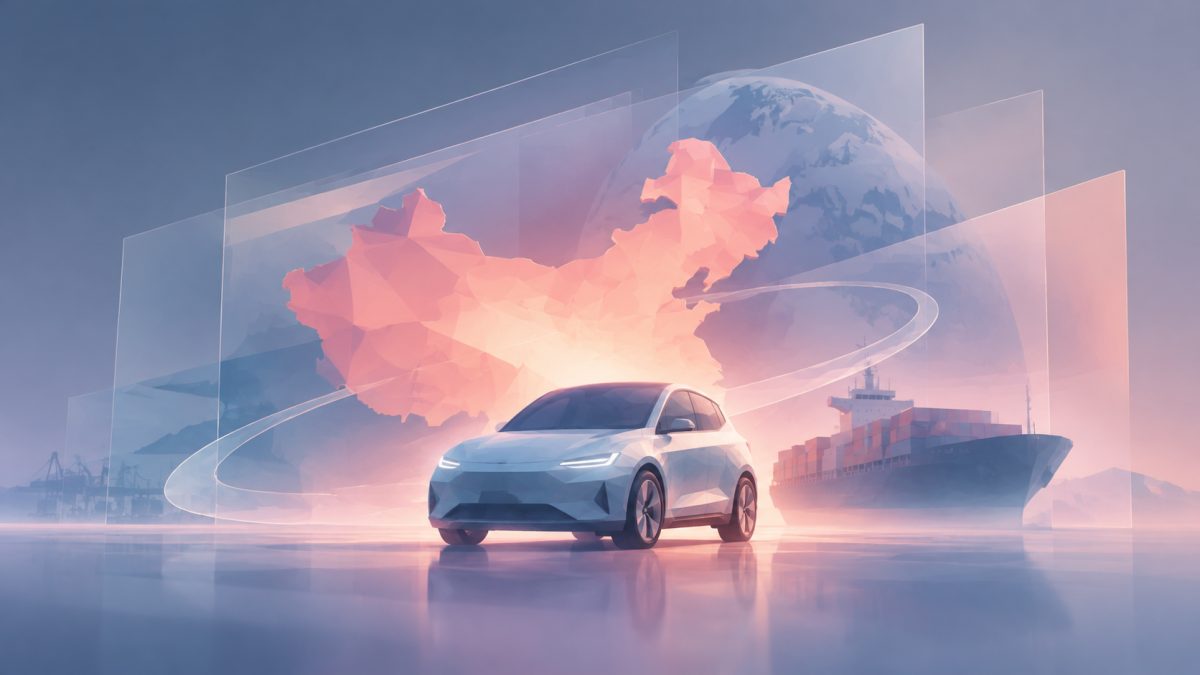
China’s Smallest EVs Are Driving Its Export Boom
TREE NEWS reports: China’s A00 and A0 segment pure electric vehicles—the compact, budget-friendly cars that have long been a staple of the domestic market—are now powering the country’s export growth. In October, combined exports of these small EVs reached approximately 200,000 units, accounting for 56.4% of China’s total pure electric passenger vehicle exports, up sharply from 42.1% a year earlier. The year-on-year increase of roughly 140,000 units in wholesale volume for these segments came almost entirely from overseas shipments.
This shift marks a significant milestone for China’s automotive industry. A year ago, exports represented only about 15% of wholesale volumes for A00 and A0 class EVs. By October 2025, more than one-third of the 557,000 units wholesaled were destined for foreign markets. Overseas dealer orders are now substantial enough to influence domestic production scheduling for these models.
Market Implications
Equities: Chinese Automakers in Focus
The data underscores the growing global competitiveness of Chinese EV manufacturers, particularly those focused on affordable small cars. Companies like SAIC-GM-Wuling, BYD, Geely, Leapmotor, and Chery are at the forefront of this export push. Geely’s Xingyuan model, for instance, has surpassed 1 million cumulative global sales in just two years and entered over 30 markets, with October global sales exceeding 70,000 units for the first time. Investors in Chinese auto stocks should watch for continued export momentum, particularly in price-sensitive markets like Spain, Italy, and Australia, where Chinese small EVs are gaining traction.
However, the competitive landscape is intensifying. European automakers like Renault are responding with their own affordable EV offerings, such as the Twingo priced at €19,500 in Spain. The window of opportunity for Chinese automakers may be narrowing as local competition heats up and subsidy programs evolve.
Commodities: Lithium and Battery Materials
Strong export volumes for small EVs support demand for battery materials, particularly lithium, nickel, and cobalt. While small EVs typically have smaller battery packs than larger models, the sheer volume of units—200,000 per month—translates into significant raw material demand. Sustained export growth could provide a floor for lithium prices, which have been volatile amid oversupply concerns.
Currencies and Trade Flows
The export surge contributes to China’s trade balance and supports the renminbi, though the effect is modest relative to broader trade flows. More importantly, it highlights China’s pivot toward higher-value manufacturing exports, a structural shift that has implications for global trade dynamics and currency markets. As Chinese automakers localize production—Wuling in Indonesia, BYD in Brazil, Geely in Brazil—the nature of these flows will evolve from finished vehicle exports to capital and technology transfers.
Bonds and Macro Policy
For bond investors, the story is less direct but still relevant. A strong export sector supports Chinese economic growth, potentially reducing the need for aggressive monetary stimulus. However, domestic demand remains soft—the CPCA noted that first-time car buyers are weak, with incremental demand coming from households adding a second vehicle. Government subsidies for EV purchases have also been reduced, with buyers now receiving 7,200 yuan versus 20,000 yuan previously. This mixed picture suggests the People’s Bank of China will maintain a supportive policy stance, keeping Chinese government bond yields anchored.
Key Takeaways for Investors
- Chinese EV exporters are gaining share in global small-car markets, particularly in Europe and Australia, driven by competitive pricing and favorable subsidy environments.
- Watch for localization strategies: Companies like Wuling, BYD, and Geely are setting up overseas production to maintain cost advantages and navigate trade barriers.
- European competition is rising: Renault and others are launching affordable EVs, which could compress margins for Chinese exporters over time.
- Battery material demand remains supported by strong unit volumes, though the smaller battery sizes of A00/A0 vehicles temper the impact.
- Domestic Chinese demand is soft, with subsidies declining and first-time buyers absent—a factor that keeps policy expectations dovish and bond yields supported.
The story of China’s small EV exports is one of rapid globalization and intensifying competition. For investors, it offers both opportunities in Chinese auto stocks and risks from margin pressure as the global market for affordable EVs matures.