Nvidia’s Founder CEO Departs in Shock Boardroom Coup
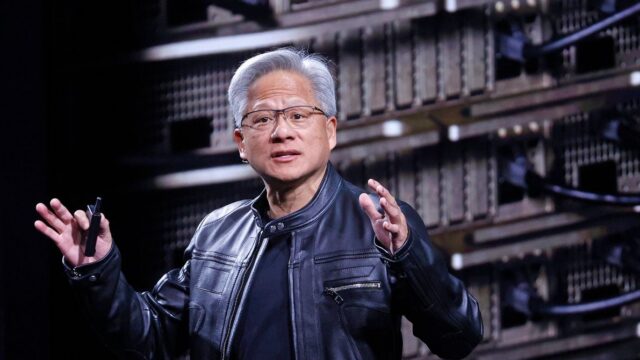
TREE NEWS reports: In a move that has stunned Silicon Valley and Wall Street alike, Nvidia founder and CEO Jensen Huang has resigned from the company he built into the world’s most valuable chipmaker. The board’s decision, announced Thursday morning, immediately sparked a fierce debate over whether this is a necessary reset or a catastrophic mistake.
Huang, who founded Nvidia 33 years ago in a garage, was ousted by his own board. The news sent shockwaves through technology, finance, and political circles, with reactions ranging from eulogies to warnings of a “generational blunder.”
Market Impact: A Valuation Question Mark
The immediate market reaction is expected to be sharply negative. Analysts are already adjusting their price targets. Dan Ives, a prominent tech analyst, stated: “Without Huang, Nvidia stock is worth $225; with him, it’s $300.” Gene Munster predicted the stock would gap down at the open, finding a bottom around $150 before the market refocuses on fundamentals.
The core issue is leadership risk. Huang is widely seen as irreplaceable—a visionary who can draw every component of Nvidia’s devices from memory. His departure raises questions about the company’s ability to maintain its AI dominance.
- Stocks: Nvidia shares are likely to face immediate selling pressure. The broader tech sector, especially AI-related names, could see contagion as investors reassess the sustainability of the AI rally. The Nasdaq may experience heightened volatility.
- Bonds: A flight to safety could push Treasury yields lower if equity markets sell off sharply. However, the impact may be limited unless the selloff broadens.
- Crypto: AI-linked crypto tokens and GPU-dependent networks could see volatility. However, some see the event as a potential bottom for AI-related assets. Anthony Pompliano called it “the maximum capitulation signal” for the AI trade.
- Commodities: Nvidia is a key consumer of advanced semiconductors and rare earths. Any perceived threat to its roadmap could affect demand forecasts for these materials.
- Currencies: The dollar may strengthen on risk-off flows, but the primary impact will be felt in equity and tech-heavy indices.
Context: Why This Matters for Investors
Nvidia is not just any company; it is the bellwether of the AI revolution. Its GPUs power the data centers behind ChatGPT, autonomous vehicles, and countless AI applications. Huang’s departure introduces uncertainty at a critical juncture when AI spending is accelerating.
History offers cautionary tales. When Apple ousted Steve Jobs in 1985, the company floundered for a decade before his return. Uber’s board pushed out Travis Kalanick, and the company eventually went public but struggled to regain its founder’s mojo. Naval Ravikant and Elon Musk both questioned whether boards ever learn that founders are irreplaceable.
Yet, some are optimistic. Ross Gerber compared it to Jobs’ departure, noting that Apple survived and thrived. Interim CEO Colette Kress is well-regarded, and the underlying AI demand remains robust. The board may have had compelling reasons—though details are scarce—for the move.
What’s clear is that Nvidia’s board is betting the company can transcend its founder. Investors must now weigh the operational continuity against the intangible loss of visionary leadership.
Key Takeaways
- Expect short-term volatility: Nvidia stock will likely gap down; use options strategies to hedge or capitalize on overreactions.
- Watch for a rebound: If AI demand holds, the dip could be a buying opportunity, as some investors like Duan Yongping are doing by selling puts.
- Monitor leadership transition: Interim CEO Colette Kress’s actions and any potential return of Huang as an advisor will be crucial.
- Broad market implications: A sustained Nvidia selloff could drag down the entire tech sector and affect AI-related crypto assets.
- Long-term view: The AI megatrend is intact, but Nvidia’s competitive edge may be tested without its visionary leader.