TREE NEWS reports: Once a market signal appears, how far is it from a qualifying action?
In digital asset markets, this distance may involve data verification, asset matching, cost calculation, strategy testing, and account authorization. Different steps can alter the initial judgment: an apparent price gap may lose meaning after fees are deducted; rules that worked in historical tests may fail to adapt to real-time execution conditions.
This makes the technical problems of financial agents more concrete. Models need to collaborate with data, tools, and rules; the system must be able to continue processing tasks that meet conditions and also explain why it stops. SONAX’s AIFi product planning is organizing capabilities around these aspects.
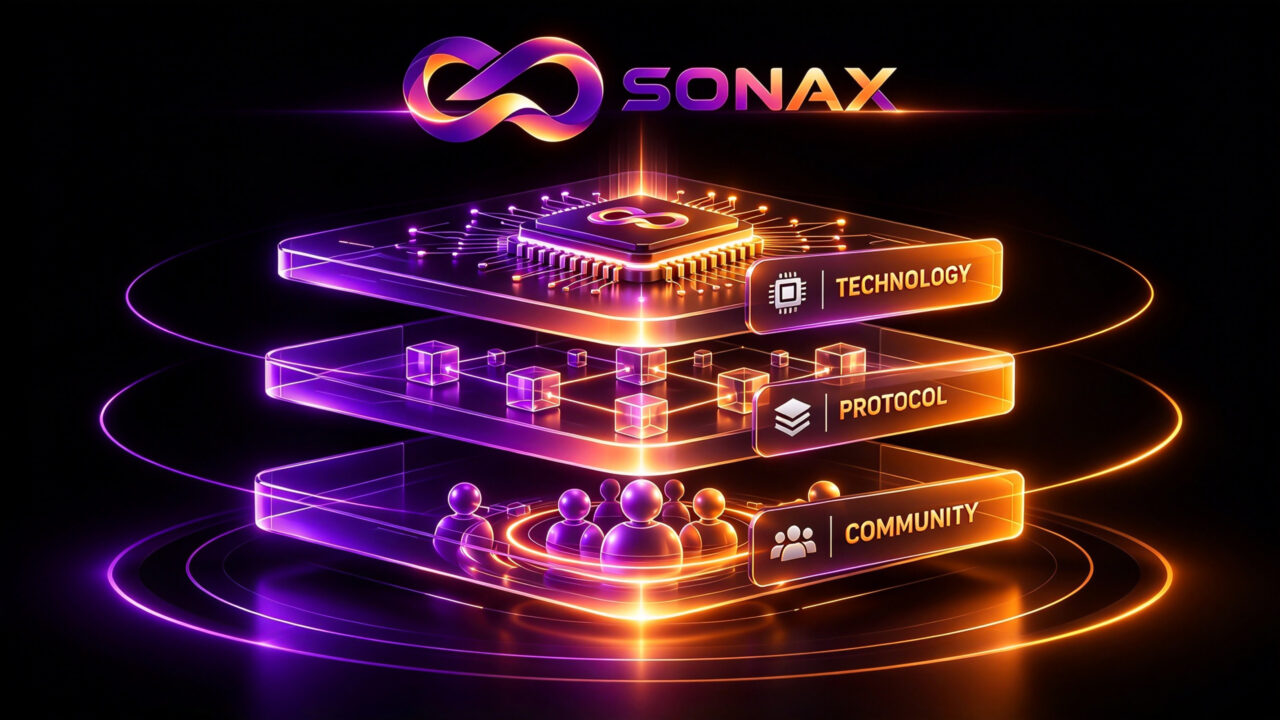
According to the project whitepaper framework, SONAX proposes modules such as RADAR, STRATEGYOS, RISKSHIELD, AGENTWALLET, and AGENTHUB, which respectively involve opportunity identification, strategy collaboration, risk constraints, account authorization, and service connectivity. They describe a construction framework; the open status, test results, and scope of use of specific modules still need to be judged separately based on subsequent product materials.
RADAR organizes research leads from raw information
Opportunity identification first faces the data problem. Prices, trades, and on-chain activities come from different venues, and update times and statistical calibers may differ. Whether assets with the same name have a corresponding relationship, and whether a piece of data is sufficiently new, will affect subsequent analysis.
In SONAX’s planning, RADAR assumes the role of market observation and opportunity screening. Its product task can be understood as organizing scattered information into candidates that can be further researched, letting users know which changes are worth attention and what conditions were used for screening.
Taking cross-market price gaps as an example, the product cannot just show the result of subtracting two prices; it also needs to explain whether the assets, timing, and trading conditions match. Even after matching, the signal is only a research entry point and does not represent actual profit. Fees, liquidity, and execution delays will still affect its subsequent value.
Therefore, the focus of observing this module should include data sources, update methods, and screening criteria. Only when input information can be traced can subsequent strategies have a relatively clear research foundation.
STRATEGYOS transforms research ideas into checkable rules
After discovering leads, it is necessary to further explain under what conditions a certain method is adopted. The strategy system needs to clearly express entry, exit, position, and pause conditions to support repeated testing and result comparison.
SONAX defines STRATEGYOS as the direction of a strategy hub, planning to organize analysis, orchestration, and verification through multi-agent collaboration. Different tasks can separately handle data, compare conditions, or organize test results, but they still need clear input and output standards among them.
AI can assist in generating research drafts, but it cannot prove the method effective by fluent expression alone. Historical data intervals, parameter settings, fee assumptions, and abnormal samples will all affect test results. Only when users can see these conditions clearly can they understand what scenarios a strategy applies to.
The technical value of the strategy hub also needs to be reflected in its ability to organize processes. Research, backtesting, simulation, and real operations are handled separately, which can avoid misreading the results of one stage as the performance of the next. Keeping reasons and records for each adjustment helps identify where method failure or result deviation comes from.
RISKSHIELD sets constraints for subsequent actions
Risk checks for financial tasks need to cover multiple points in time. Conditions that were met when an opportunity was first discovered may have changed by the time of preparation for action, so the system needs to re-check rather than merely沿用 the initial signal.
RISKSHIELD assumes the role of a risk control gateway in SONAX’s product framework. Understanding this direction can start with the questions that need to be answered before execution: whether fees have been included, whether market depth is sufficient, whether account funds and permissions meet requirements, and whether the operation exceeds set limits.
The system also needs to consider situations such as data interruptions, interface anomalies, and partial fills. These events may make an originally feasible plan unable to continue; stopping, canceling, or handing over to manual confirmation are all outcomes that the process needs to handle.
The existence of risk control rules does not equal the disappearance of risk. Subsequent product descriptions need to let users understand specific limits, scope of application, and exception handling methods, and demonstrate execution through testing and operation records. Checkable constraints are more informative than security descriptions alone.
Account and service connections require clear permission boundaries
In the five-module framework, AGENTWALLET involves programmable accounts and authorization directions, while AGENTHUB explores connections among agents, data tools, and API services. They relate to what the system can call and who has the authority to approve specific actions.
Project materials propose separating model analysis from asset control. Implemented in the product, this means that reading information, generating suggestions, and executing trades should have different permissions, and the scope of authorization, revocation methods, and responsibility for anomalies also need to be clearly stated. Module names themselves cannot replace these specific rules.
Open service connections need to handle interface stability, data quality, and call records. When an external service is unavailable, how the system responds and whether related tasks are paused will also affect the reliability of the complete process.
Demonstrating technical support with verification records
In addition to architectural descriptions, SONAX’s technical capabilities need to be gradually presented through reproducible demonstrations, test reports, and actual operation materials. Being able to view functions does not mean long-term performance has been proven; the success of one case cannot replace systematic verification under different conditions.
The currently provided framework can be used to understand the construction direction, but independent audits, live performance, and complete module delivery cannot be concluded solely from planning text. If there is subsequent progress in computing power deployment and external technical cooperation, the specific scope and implementation status also need to be explained separately.
From opportunity identification and strategy organization to risk constraints, the technical path proposed by SONAX places multiple tasks under the same product framework. What is worth observing next is how modules hand over information, how users confirm permissions, and whether the system can leave sufficiently clear processing records. Only when these details can withstand actual use and continuous inspection can the AIFi architecture form an evaluable product capability.