Why Jensen Huang Must Step Down?
The tenure of Jensen Huang as CEO of Nvidia has coincided with an unprecedented surge in AI hardware and semiconductor investment. But as spending reaches extreme levels, a growing chorus of industry observers argues that a leadership change may be necessary to sustain innovation and manage the next phase of growth.
News Summary
During Huang’s leadership, global spending on AI infrastructure has skyrocketed, with data center GPU sales driving Nvidia to a trillion-dollar valuation. However, the concentration of power and the cyclical nature of hardware demand have raised concerns about governance and strategic direction. Critics suggest that a fresh perspective at the top could help navigate potential downturns and diversify beyond the current boom.
Industry Analysis and Implications
The AI hardware market is at an inflection point. Nvidia’s dominance in GPUs has created a bottleneck, prompting major cloud providers and startups to develop custom silicon. This shift threatens Nvidia’s market share and underscores the risks of relying on a single leader’s vision. Moreover, the massive capital expenditure in AI infrastructure may not be sustainable; as models become more efficient, demand for raw compute could plateau.
- Concentration Risk: Nvidia’s grip on the AI chip market has invited regulatory scrutiny and customer diversification efforts.
- Succession Planning: Investors are increasingly focused on long-term leadership stability, especially as the company expands into software and services.
- Innovation Pressure: Competitors like AMD and Intel are catching up, and the rise of RISC-V and open-source hardware could disrupt the status quo.
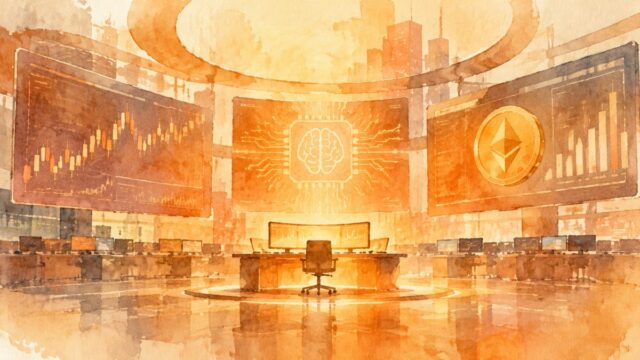
From a crypto perspective, the intersection of AI and blockchain is heating up. Decentralized compute networks and GPU marketplaces are emerging as alternatives to centralized providers, potentially reshaping the economics of AI hardware. If Nvidia’s leadership stumbles, these decentralized solutions could gain traction, offering more resilient and transparent infrastructure.
Forward-Looking Perspective
Whether or not Huang actually steps down, the debate signals a maturing industry. The next phase of AI hardware will likely be defined by diversification, efficiency, and integration with decentralized technologies. Stakeholders should prepare for a more competitive landscape where leadership adaptability is as crucial as technological prowess. As the sector evolves, the question of who leads Nvidia—and how—will remain central to the broader AI and crypto ecosystems.