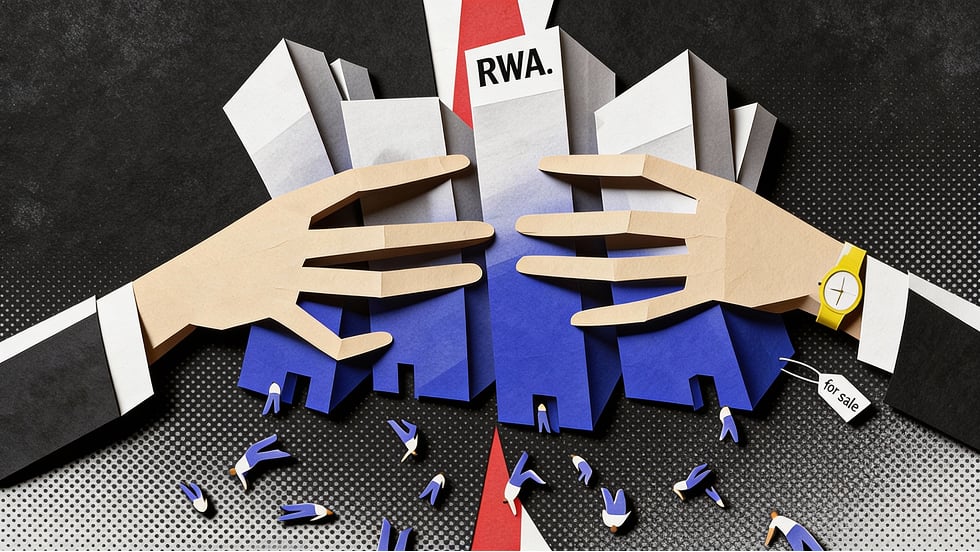
Wintermute Bets on RWA as the Next Bull Market’s On-Ramp
Real-world asset (RWA) tokenization is pulling in roughly $16 billion annually, and market maker Wintermute is betting that tokenized assets will become the next major liquidity channel for crypto — a bridge that funnels capital from traditional markets into BTC and altcoins as stablecoins and ETFs become routine.
The $16 Billion Signal
The figure is not just a vanity metric. It reflects a structural shift: tokenized treasuries, private credit, commodities, and real estate are moving from pilot programs to production rails. BlackRock’s BUIDL fund, Franklin Templeton’s BENJI, and a wave of tokenized money-market products have shown that institutions will hold yield-bearing assets on-chain when the wrapper is familiar and the settlement is instant. Wintermute’s thesis is that this on-chain cash — once parked — does not stay idle. It becomes collateral, it gets lent, it gets swapped, and eventually it rotates into higher-beta crypto assets.
Why RWA Is the New On-Ramp
The logic runs in stages. First, stablecoins normalized dollar access on-chain. Then spot Bitcoin ETFs normalized institutional exposure to crypto as an asset class. The missing piece was a yield-bearing, regulated instrument that could sit natively on-chain without forcing institutions to leave their compliance frameworks. Tokenized RWAs fill that gap. Once a fund manager can hold a tokenized T-bill, post it as collateral in a DeFi lending market, and borrow stablecoins against it, the boundary between TradFi balance sheets and crypto liquidity thins.
- Collateral efficiency: Tokenized treasuries can be pledged in repo-like structures, deepening on-chain credit markets.
- Distribution: Wallets and exchanges can offer yield products without building bespoke infrastructure.
- Composability: RWAs plug into DeFi money markets, DEXs, and structured products — each layer adds liquidity.
- Regulatory clarity: Frameworks like MiCA in Europe and evolving SEC guidance give institutions a path to participate.
Implications for Market Structure
If Wintermute is right, the next bull market will not be driven solely by retail speculation or ETF inflows. It will be driven by balance-sheet rotation: institutions holding tokenized cash equivalents that can be mobilized into crypto risk when sentiment turns. That has profound implications for market makers, who will need to price and hedge across both TradFi and DeFi venues. It also changes the risk profile — RWA collateral can be liquidated more efficiently, but it also introduces new correlation risks between traditional rates and on-chain leverage.
Forward Look
The RWA trade is still early. Tokenized assets remain a small fraction of global assets under management, and legal, custody, and oracle infrastructure are maturing. But the direction is clear: the on-ramp is being built, and the market makers are already positioning. The next cycle may be less about which meme coin pumps and more about how quickly tokenized cash can become tokenized risk.