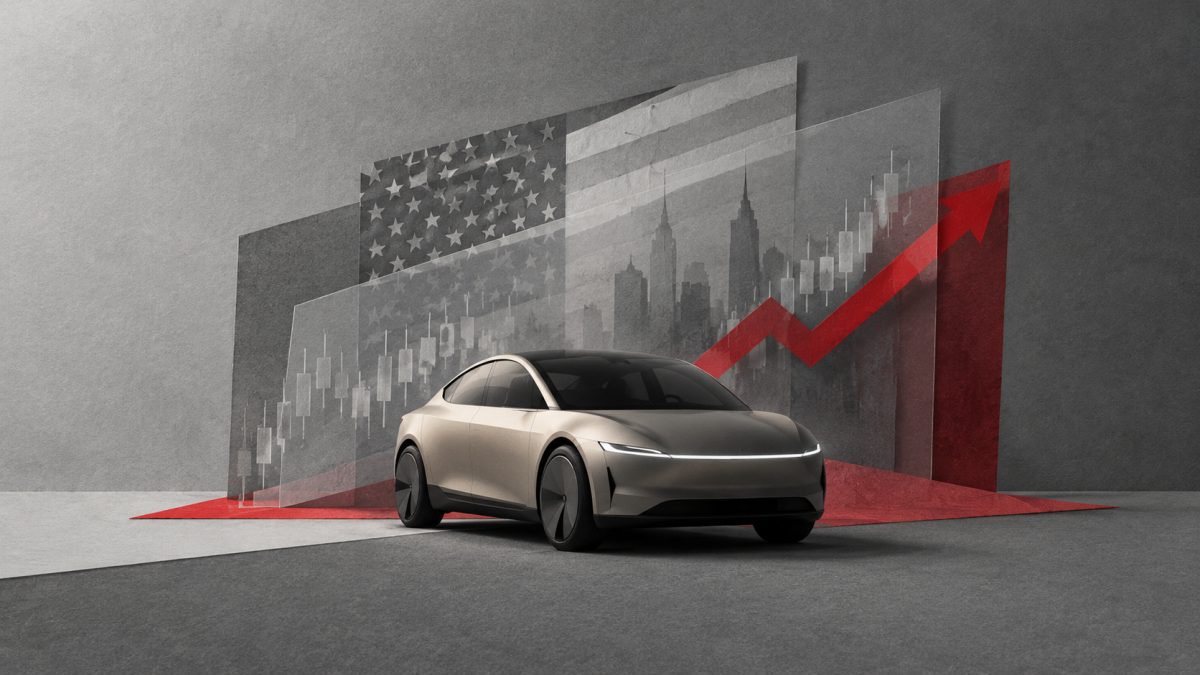
Tesla Cybercab Launch: Cost Edge Clear, But Fleet Expansion Remains the Bottleneck
TREE NEWS reports: Tesla unveiled its dedicated robotaxi, the Cybercab, on September 3, revealing that its Robotaxi fleet has surpassed 1 million miles of cumulative driving. While the vehicle’s low-cost design is a clear advantage, major investment banks remain cautious, citing persistent challenges in fleet scale and expansion speed.
What Happened
The Cybercab is a two-seat, purpose-built autonomous vehicle without a steering wheel or pedals, marking Tesla’s first use of a dedicated robotaxi platform—previously relying on the Model Y. The vehicle leverages Tesla’s ‘unboxed’ manufacturing process, which the company claims can cut production costs by up to 50%. It features dry-cathode 4680 cells, a 500,000-mile design life, and a 48V electrical architecture with steer-by-wire and brake-by-wire systems. The autonomous stack follows Tesla’s vision-only approach with eight external cameras and one interior camera, eschewing lidar.
However, the operational scale remains limited. Texas state filings show only 45 Cybercabs registered, and Goldman Sachs notes that not all may be in commercial service—some could be for testing or with safety monitors.
Market Impact Analysis
Goldman Sachs estimates that if Cybercab’s scaled production cost reaches $20,000–$30,000, it would create a per-mile cost advantage of $0.05–$0.30 versus competitors’ $50,000–$100,000 vehicle costs. But the bank emphasizes that near-term economics hinge on software capability—specifically, whether Tesla’s generalized AI can support cross-regional expansion at low marginal cost.
Barclays points out that before the Cybercab launch, Tesla’s Austin robotaxi fleet was under 100 vehicles, and the event provided no new growth or financial targets. The core issue: cost efficiency on a per-vehicle basis doesn’t translate into revenue if the fleet can’t scale quickly.
For investors, the stock reaction may be muted because the announcement lacked concrete expansion milestones. Tesla’s FSD (supervised) safety data is improving—with HW4 vehicles showing 75–85% fewer automatic emergency braking events and 40–90% fewer collisions—but European data, collected by trained engineers, has limited comparability. Robotaxi incident rates are also improving, with Tesla reporting one accident per 50,000–70,000 miles, but the sample size remains small.
Key Takeaways for Investors
- Cost advantage is real but insufficient: Cybercab’s low cost improves unit economics, but without rapid fleet growth, it won’t move the needle on Tesla’s overall financials.
- Watch for scaling signals: The key metrics to monitor are production cost realization, fleet expansion rates, and replication of operations beyond Austin to new cities.
- Software is the linchpin: The ability of FSD to operate across diverse geographies will determine the addressable market and profitability of Robotaxi.
- Regulatory progress matters: European approvals are advancing, with a broader EU vote possible as early as October, which could open new markets.
- Safety data is promising but preliminary: Improvements in incident rates are encouraging, but the current operational scale is too small to validate long-term safety.
In summary, the Cybercab launch reinforces Tesla’s technological leadership in autonomous vehicle cost, but the investment thesis hinges on execution—specifically, whether Tesla can overcome the fleet expansion bottleneck to turn cost advantages into sustainable revenue growth.