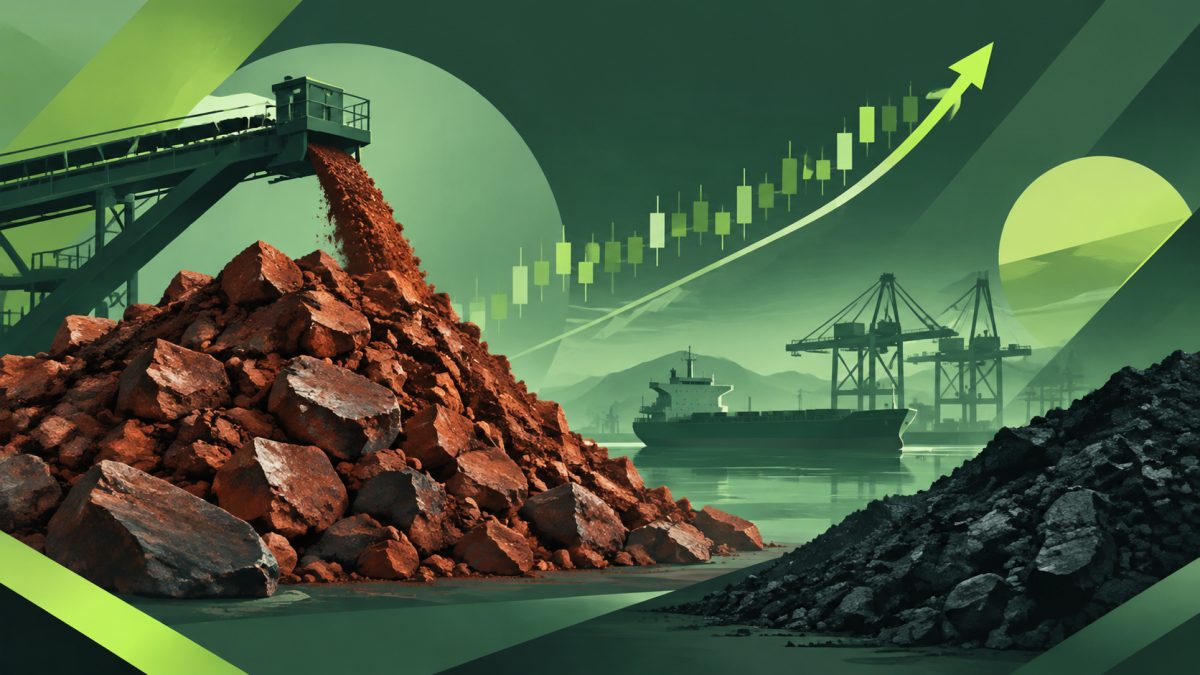
Iron Ore Recaptures $100 as Coking Coal Squeeze Meets Demand Glimmers
TREE NEWS reports: Iron ore futures have stormed back above the $100-per-ton mark this week, reaching their highest level since mid-July, as tightening coking coal supplies lift steelmaking costs and early signs of downstream demand improvement emerge from China. The rebound—led by Singapore-listed contracts—signals a potential bottom for the steelmaking raw material, though analysts remain split on whether the recovery has legs.
What Happened: Cost Push Meets Tentative Demand Uptick
The immediate catalyst is a squeeze in coking coal supply, which has driven rebar and hot-rolled coil prices to multi-month highs. Stronger steel prices improve mill margins, creating room for higher iron ore prices. Rafael Barcellos, head of Latin America metals, mining, and pulp & paper equity research at Bradesco BBI, noted in a recent report that his team had already predicted a floor for iron ore, and the current price action is validating that call.
Supporting the bullish narrative, iron ore port inventories have been declining, spot trading activity among Chinese steel traders has picked up for a second straight week, and steel mill profitability is recovering. Yet a second consecutive weekly drop in blast furnace utilization rates injects caution, suggesting the demand recovery is not yet broad-based.
Market Impact: A Multi-Asset Ripple
The iron ore rebound is part of a broader metals rally—London copper hit a record $14,530 per ton on Monday—and carries implications across asset classes:
- Commodities: Iron ore’s move above $100 supports the entire ferrous complex. If sustained, it could lift bulk shipping rates and benefit producers like BHP, Rio Tinto, and Vale. Copper’s record high adds to the risk-on tone in industrial metals.
- Equities: Mining stocks, particularly those with iron ore exposure, may see positive momentum. In China, steelmakers could gain as margins improve, though higher raw material costs could pressure downstream manufacturers.
- Bonds & Currencies: A sustained recovery in Chinese commodities could ease deflationary pressures, potentially reducing the need for aggressive monetary easing. This might support the Australian dollar (a major iron ore exporter) and weigh on Chinese government bond prices if growth expectations firm. However, the Australian dollar’s gains could be tempered by broader risk sentiment.
- Crypto: While not directly correlated, a stronger Chinese demand outlook could improve global growth sentiment, which historically has been a tailwind for risk assets, including bitcoin. However, the effect is indirect and likely muted.
Why It Matters for Investors
Iron ore is a bellwether for Chinese industrial activity and, by extension, global growth. The fact that prices are reclaiming $100 suggests that the market sees light at the end of the tunnel for China’s property and infrastructure sectors, which have been a drag on the economy. The August manufacturing PMI, cited by Barcellos as an encouraging signal, hints at a seasonal demand pickup.
Yet the sustainability of this rebound hinges on whether demand improves from a seasonal blip to a structural trend. Investors should watch China’s property sector, infrastructure spending, and steel output cuts. If the recovery fades, iron ore could slip back below $100, dragging down mining equities and commodity-linked currencies. Conversely, a durable upturn would signal broader reflation, with positive implications for industrial metals, cyclical stocks, and global trade.
Key Takeaways
- Iron ore’s return to $100 is driven by coking coal supply tightness and tentative demand improvements, but blast furnace utilization is still falling.
- Watch for confirmation from Chinese steel output and property data before betting on a sustained rally.
- For diversified investors, the metals rally offers a hedge against deflationary risks, but exposure should be sized with caution given the uncertainty.



