News Summary
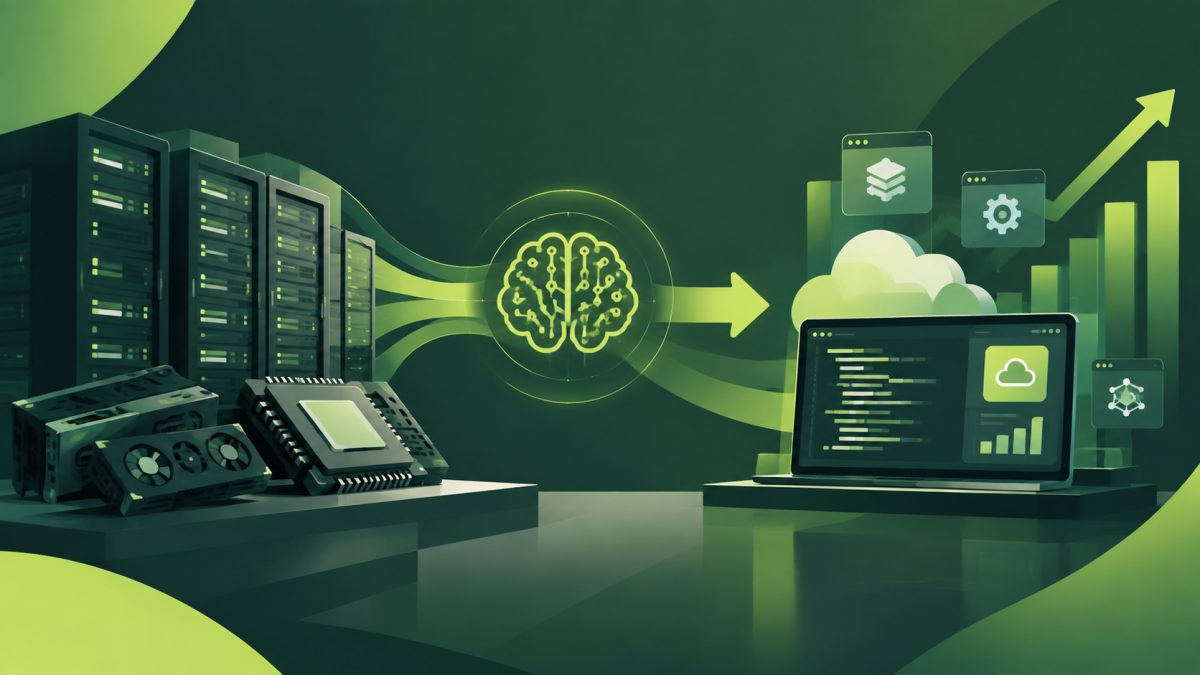
TREE NEWS reports: Morgan Stanley’s September 4 AI guide report, spanning seven teams and eight key debates, argues that AI is transitioning from a training era to an inference era. This shift will gradually redirect investor capital from hardware and semiconductors toward enablement layers and software. The report projects hyperscaler data center capex will reach $1.5 trillion by 2027 (up 60% YoY) before slowing to 12% growth in 2028. AI compute capacity is expected to quadruple from 35 GW in 2025 to ~145 GW by 2028, with custom ASICs rising from 34% to 66% of incremental capacity.
Industry Analysis
The report highlights a pivotal capital expenditure inflection. Amazon’s 2026 data center capex is estimated at $180 billion, with ~38% allocated to forward-building capacity for 2027-2029. Microsoft follows at 37%, Meta at 32%, while Google sits at just 5%, forcing it to ramp forward investments sharply in 2027. This capex slowdown, combined with continued revenue and cash flow expansion among hyperscalers, will push investment flows up the stack—mirroring the mobile era’s pattern where chips and devices rallied first, followed by infrastructure, then software and services.
On the compute side, Google leads new capacity additions with ~20 GW in 2027-2028, primarily for Gemini training, GCP growth, and GenAI features across Search and YouTube. Google’s TPU and Amazon’s Trainium dominate the custom chip shift, with TPUs adding ~15 GW alone. Notably, over 50% of Google’s new capacity serves Google Cloud, while Trainium is already preselling capacity one to two years out. Morgan Stanley’s per-GW cost estimates incorporate memory inflation from GB200/GB300/VR200 racks and rising out-of-rack costs, with total costs reaching ~$50 billion per GW in the Rubin Ultra generation.
On ROI, Morgan Stanley outlines three frameworks, all yielding 25-50% returns. The highest return (~46%) comes from model developers running APIs on proprietary infrastructure—a model where META, Google, and SpaceX hold advantages. The knowledge work TAM is estimated at $22.5 trillion, with GenAI-addressable digitalization potential of $20-30 trillion. Even a 4% penetration by 2027 (mirroring public cloud adoption) implies ~$800 billion in enterprise AI spending.
Forward-Looking Perspective
As inference workloads scale, the value chain will shift toward software, model layers, and AI-enabled applications. Companies like AMZN, META, GOOGL, and MSFT stand to benefit from earnings revisions and multiple expansion. The report’s adoption signals are already visible: ~25% of S&P 500 companies quantified GenAI benefits in Q2 2026 earnings, up from 14% a year earlier. Tech leads at 51%, followed by financials (37%) and healthcare/industrials (~20% each). For crypto and blockchain markets, this macro trend suggests decentralized compute networks and AI-related token projects could see renewed interest as traditional infrastructure spending peaks—though the primary beneficiaries remain centralized hyperscalers in the near term.