News Summary
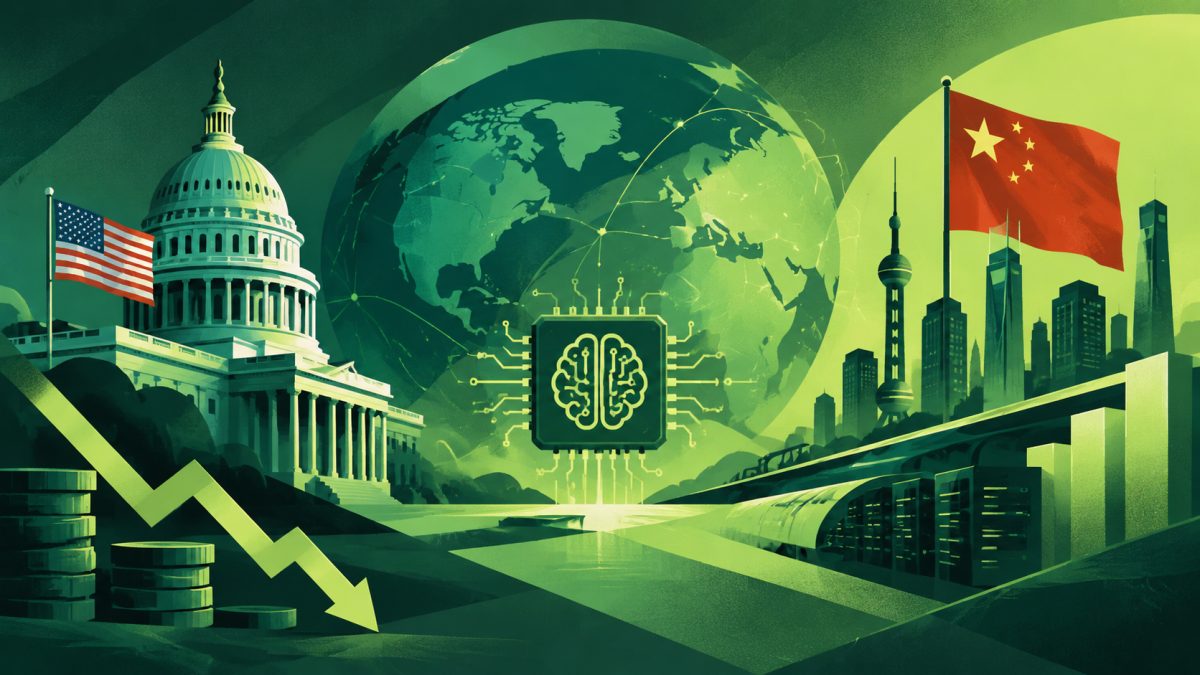
TREE NEWS reports: US Treasury Secretary Scott Bessent has issued a stark warning: if China surpasses the United States in artificial intelligence and ‘leaves it behind,’ there will be no tomorrow—even with a massive defense budget, America would not be able to guarantee its security. His comments were aimed at domestic opposition to large data centers being built locally, arguing that such resistance could weaken the US in the AI race. In contrast, China has been strategically deploying most new AI infrastructure projects in sparsely populated northern and northwestern regions.
Industry Analysis
Bessent’s remarks highlight a critical intersection of geopolitics, technology, and energy policy. The warning is not merely rhetorical; it reflects a growing concern within the US government that bureaucratic hurdles and local opposition to data centers could cede the AI advantage to Beijing.
For the crypto and blockchain sector, this is a double-edged sword. On one hand, the push for more data centers could accelerate the development of decentralized compute networks, as AI and blockchain increasingly share infrastructure needs. On the other hand, a geopolitical AI arms race might lead to tighter export controls and data localization laws, which could fragment the global digital economy and complicate cross-border crypto operations.
The contrast with China’s approach is telling. By placing AI data centers in remote areas, China sidesteps local political resistance and leverages abundant renewable energy sources. This strategic advantage could translate into faster AI deployment and lower operational costs, potentially giving Chinese firms a competitive edge in AI-powered financial services, including algorithmic trading and risk management.
Forward-Looking Perspective
Bessent’s warning may signal a policy shift in Washington. Expect increased federal pressure on states to streamline permitting for data centers, possibly through executive orders or national security designations. For crypto markets, this could mean a more favorable environment for mining and staking operations, which often face similar local opposition.
However, investors should brace for volatility as US-China tensions over AI intensify. Blockchain-based solutions for tracking AI development or verifying data provenance could gain traction as trust becomes a premium. The intersection of AI and crypto—whether through decentralized training markets or tokenized compute—may become a key growth area, but only if regulatory frameworks allow cross-border innovation.
In the near term, the US must balance energy costs, local politics, and national security. The outcome will not only determine the AI race but also shape the infrastructure on which the next generation of financial and digital systems will run.



