Machine-Native Commerce: The Missing Infrastructure Race to Equip the Buyer
The next phase of crypto’s evolution may not be about human users at all. A structural shift is underway from machine payment rails — stablecoin settlement, programmatic wallets, and account abstraction — toward fully autonomous procurement networks, where software agents discover, negotiate, and pay for goods and services without human intervention. The central question animating this migration is deceptively simple: who equips the buyer?
From Payment Rails to Procurement Agents
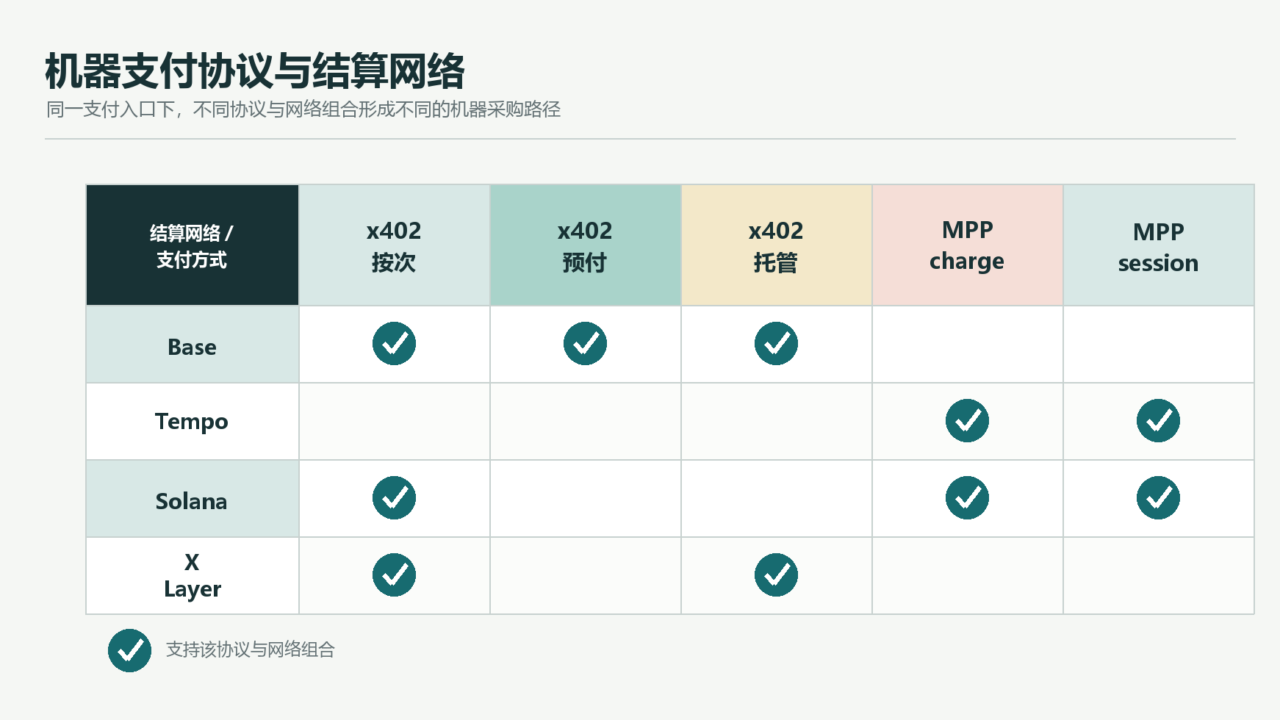
Stablecoins have already proven they can move value across borders in seconds at near-zero marginal cost, and protocols like x402-style payment standards, Circle’s programmable wallets, and Coinbase’s agent toolkits have begun exposing payment primitives directly to software. But payments are only one leg of a transaction. A machine that can pay still cannot reliably decide what to buy, verify that a seller will deliver, or enforce recourse when it does not. That gap is where the infrastructure battle is now concentrated.
- Discovery and identity: Agents need verifiable counterparty identity — decentralized identifiers, attestations, and reputation systems that work without human KYC.
- Negotiation and escrow: Smart-contract escrow, streaming payments, and conditional settlement let machines transact with enforceable terms.
- Verification and dispute resolution: Oracle networks, zero-knowledge proofs, and on-chain arbitration are emerging as the trust layer for agent-to-agent commerce.
Why the Buyer Side Is the Hard Problem
Most existing crypto infrastructure was built to serve sellers — merchants accepting stablecoins, exchanges listing tokens, protocols attracting liquidity. Equipping the buyer is harder because it requires delegating economic agency to software. Whoever builds the default procurement stack for AI agents — the wallet, the credit line, the reputation graph, the dispute layer — captures a position analogous to Visa or Stripe, but for a customer base that never sleeps and never signs a form.
Several converging trends make this timely: the maturation of on-chain AI agents, the collapse in inference costs, and regulatory clarity around stablecoins in major jurisdictions. Together they create the conditions for machine-to-machine GDP to become measurable rather than theoretical.
The Forward View
The infrastructure migration now underway is not a single product but a stack. Expect consolidation around a handful of agent payment standards, fierce competition over identity and reputation primitives, and the first real test cases in logistics, compute brokerage, and data procurement — domains where machines already make decisions but still rely on human-mediated payment. The winner will not be the best payment rail; it will be the party that equips the buyer with judgment, credit, and recourse. That is the missing piece, and it is being built now.