A New Kind of Launchpad on Robinhood Chain
TREE NEWS reports: Robinhood Chain’s on-chain DEX volume cooled from a $3 billion peak, but the speculative capital never left — it simply rotated into a new narrative. The latest beneficiary is Commodity Market Exchange (CME), a launchpad whose token has broken past a $15 million market cap with daily volume approaching $10 million.
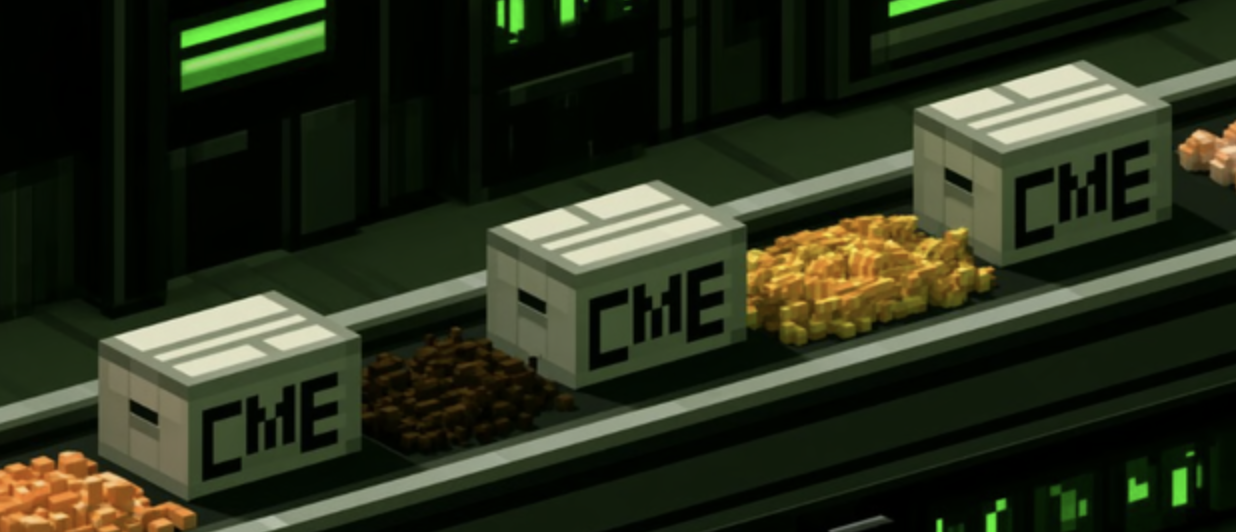
What is drawing the crowd is not another stock-token pairing model, but a stranger abstraction: pairing memes against real-world commodities and non-fungible consumer assets. The platform has minted 94 ERC-20 commodity tokens — gold, crude oil, natural gas, milk, corn — each tracking a reference price pulled from futures near-month quotes, fast-food menu prices, and TCGplayer card listings, refreshed roughly every 60 seconds.
How the Pairing Actually Works
Each commodity token trades against USDG in a single-sided Uniswap pool, with the protocol quoting sells one tick above and buys one tick below the reference price. When the real-world price moves or one side of liquidity dries up, an off-chain keeper bot cancels orders and migrates the pool to the new price. The result is a synthetic commodity stablecoin system — not physical delivery, not warehouse receipts, but an algorithmic price exposure.
- $FART pairs against natural gas
- $MILKERS tracks milk prices
- $WEN is pooled against a “Lamborghini” reference, riffing on the classic “when Lambo?” meme
- Pools can also reference Big Macs, CS2 dragon-lore skins, and first-edition Pokémon Charizard cards
The Tokenomics Doing the Heavy Lifting
CME’s aggressive distribution model is central to its early traction. Forty percent of trading fees are automatically redistributed every 15 minutes in the underlying commodity tokens, weighted by holder positions and requiring no manual claim. Thirty percent of fees are converted to ETH and used to buy back and permanently burn $CME. Creators receive zero fee share, forcing developers and traders into the same pool.
The launch architecture also skips the bonding-curve migration ritual: assets deploy directly into Uniswap v4 pools from genesis, so aggregators and terminals can route from the first trade.
Implications and Risks
This is a bottom-up, degen-driven mirror of the institutional RWA narrative. Where regulated players wrestle with licenses, custody, and audit trails, on-chain speculators are accidentally building a synthetic commodity liquidity network with real price-discovery depth. The risks are equally real: single-sided pools and keeper-dependent oracles can depeg under extreme one-way flows or network latency.
The experiment is only beginning, but it signals that on Robinhood Chain, the next liquidity magnet may come from pairing memes with anything — and everything.