Crypto Billionaires Pour $97M Into Reform UK, Outraising Every British Party Combined
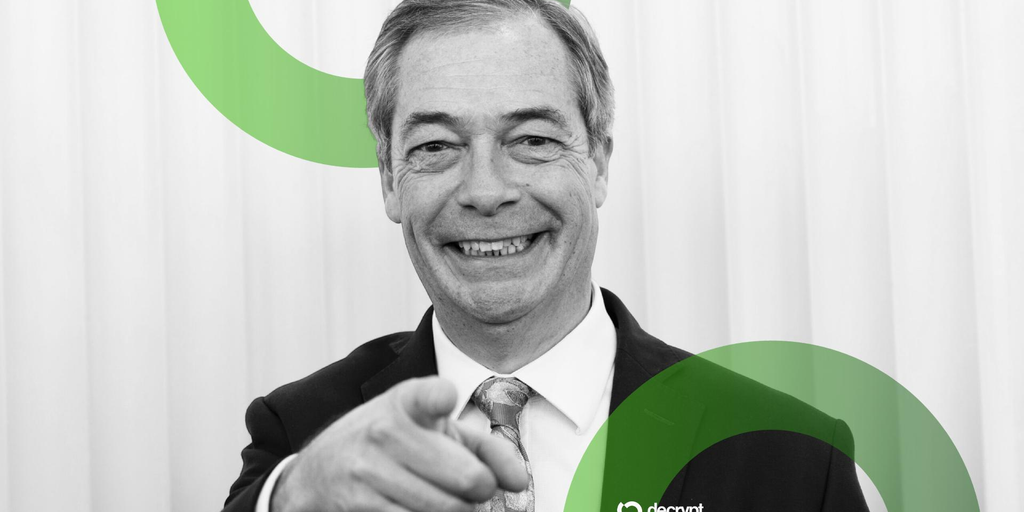
TREE NEWS reports: Two cryptocurrency billionaires have injected a combined £72 million (roughly $97 million) into Reform UK, a donation that single-handedly exceeds what every UK political party raised across the entire previous year. Ben Delo, co-founder of the crypto exchange BitMEX, and Christopher Harborne, a British-born investor with substantial stakes in crypto and aviation ventures, each contributed £36 million to the right-wing populist party led by Nigel Farage.
A Landmark Moment for Crypto Political Finance
The scale of the donations is unprecedented in British political history and signals a new phase in how digital-asset wealth is being deployed to shape policy. Delo, who co-founded BitMEX and later settled a US regulatory case over anti-money-laundering failures, has become one of the most prominent crypto figures to translate trading fortunes into electoral influence. Harborne, whose holdings span crypto exchange Bitfinex and Tether-related entities, has previously backed UK political causes but never at this magnitude.
Reform UK has positioned itself as a deregulation-friendly party, and its leadership has repeatedly signaled openness to blockchain innovation, crypto-friendly tax treatment, and a lighter regulatory touch than the incumbent Labour government’s approach. For an industry that has spent years battling restrictive licensing regimes, stringent marketing rules, and enforcement actions, the donations represent a calculated bet that political patronage can accelerate a more permissive environment.
Implications for UK Crypto Regulation
The UK has been drafting a comprehensive crypto regulatory framework that would bring exchanges, custodians, and stablecoin issuers under Financial Conduct Authority oversight. Industry participants have broadly welcomed clarity but warned that overly burdensome compliance could push activity offshore. A well-funded political ally could shift the debate toward competitiveness, tokenization-friendly rules, and faster licensing — particularly as the UK seeks to keep pace with the European Union’s MiCA framework and the United States’ evolving posture.
- Regulatory arbitrage: Large crypto donors may increasingly treat political contributions as a cheaper path to favorable rules than years of lobbying.
- Reputational risk: Ties between crypto wealth and populist parties could invite scrutiny from regulators and the media, potentially complicating the industry’s mainstream acceptance.
- Global precedent: Similar dynamics are visible in the US, where crypto super PACs have spent heavily on elections, suggesting a structural shift in political finance.
What to Watch
The donations will intensify debate over campaign finance transparency and foreign or offshore influence in UK politics. For crypto markets, the key question is whether Reform UK’s rising profile translates into concrete policy influence — or remains a symbolic gesture. Either way, the episode confirms that digital-asset fortunes are now large enough to compete with traditional finance and industry in the political arena, a development that will shape regulatory outcomes for years to come.