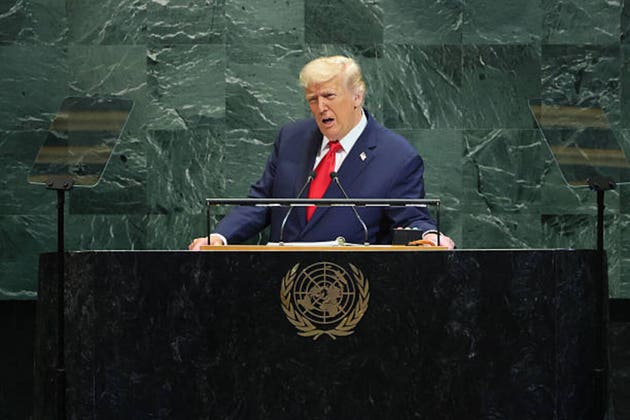
UN General Assembly Preview: Geopolitics Takes Center Stage as Markets Brace for Volatility
TREE NEWS reports: World leaders are set to gather in New York for the annual United Nations General Assembly, a high-stakes diplomatic marathon that this year arrives against an unusually fragile geopolitical and macroeconomic backdrop. The agenda is expected to be dominated by the wars in Ukraine and the Middle East, escalating trade tensions between the US, China, and Europe, climate finance commitments, and the reform of multilateral institutions. For investors, the event is less about any single communiqué and more about the tone, alliances, and flashpoints it reveals.
What Happened
The UN General Assembly brings together heads of state and government for a week of speeches, bilateral meetings, and side events. This year’s session is expected to feature addresses from major powers including the United States, China, Russia, and key European and emerging-market leaders. Topics likely to dominate include continued military support for Ukraine, the trajectory of the Israel-Hamas conflict, sanctions enforcement, global trade rules, and the financing gap for climate adaptation in developing economies.
Markets will also watch for any signals on coordinated action regarding energy security, food supply chains, and sovereign debt relief for stressed emerging markets.
Market Implications
Equities: Defense stocks in the US and Europe could see renewed interest if leaders signal sustained or expanded military commitments. Conversely, any hint of de-escalation in Ukraine or the Middle East would likely lift risk appetite broadly, benefiting cyclical and consumer discretionary names. Companies with heavy emerging-market exposure — consumer staples, industrials, and some tech — remain sensitive to any shifts in trade rhetoric.
Bonds: Safe-haven demand for US Treasuries, German Bunds, and other core sovereign debt tends to rise when geopolitical risk premiums spike. If the assembly produces sharp rhetorical clashes between major powers, expect yield curves to flatten as investors seek duration. Any credible progress on global debt relief could narrow spreads on frontier and high-yield emerging-market bonds.
Commodities: Energy markets are the most direct transmission channel. Escalation in the Middle East or new sanctions on Russian or Iranian exports would pressure oil and natural gas prices higher. Agricultural commodities — wheat, corn, sunflower oil — remain vulnerable to Black Sea supply disruptions. Gold, already near record levels, could extend gains on any deterioration in global risk sentiment.
Currencies: The US dollar typically strengthens during periods of geopolitical stress, while commodity-linked currencies such as the Australian and Canadian dollars, along with emerging-market currencies, tend to weaken. Any coordinated push on trade or currency policy could introduce volatility in the Chinese yuan and the euro.
Crypto: Digital assets have increasingly traded as a high-beta risk proxy. A risk-off week would likely pressure Bitcoin and major altcoins, though crypto can also attract flows in jurisdictions facing capital controls or currency instability. Regulatory signals from major economies during the assembly — particularly around cross-border payments and sanctions compliance — will be closely monitored by the digital-asset industry.
Why It Matters for Investors
The General Assembly is not a policy-setting body, but it is a powerful barometer of geopolitical alignment. For portfolio managers, the key is not to trade headlines but to assess whether the week reinforces or undermines the prevailing macro narrative — namely, a soft-landing scenario in the US, a slow European recovery, and continued geopolitical fragmentation.
Investors should watch three signals in particular:
- The tone and content of US-China exchanges, which set the direction for trade-sensitive sectors.
- Any new commitments on sanctions or energy supply, which feed directly into commodity prices.
- Progress, or lack thereof, on sovereign debt and climate finance, which shapes emerging-market risk premia.
Key Takeaways
- The UN General Assembly is a volatility catalyst, not a policy event — expect headline-driven swings in risk assets.
- Defense, energy, and gold are the most direct beneficiaries of escalation; cyclicals and emerging markets benefit from de-escalation.
- Currency markets will reflect the balance of safe-haven demand versus trade-policy signals.
- Crypto remains a high-beta play on global risk appetite, with additional sensitivity to regulatory rhetoric.
- Position for a range of outcomes rather than a single narrative; geopolitical weeks rarely resolve cleanly.