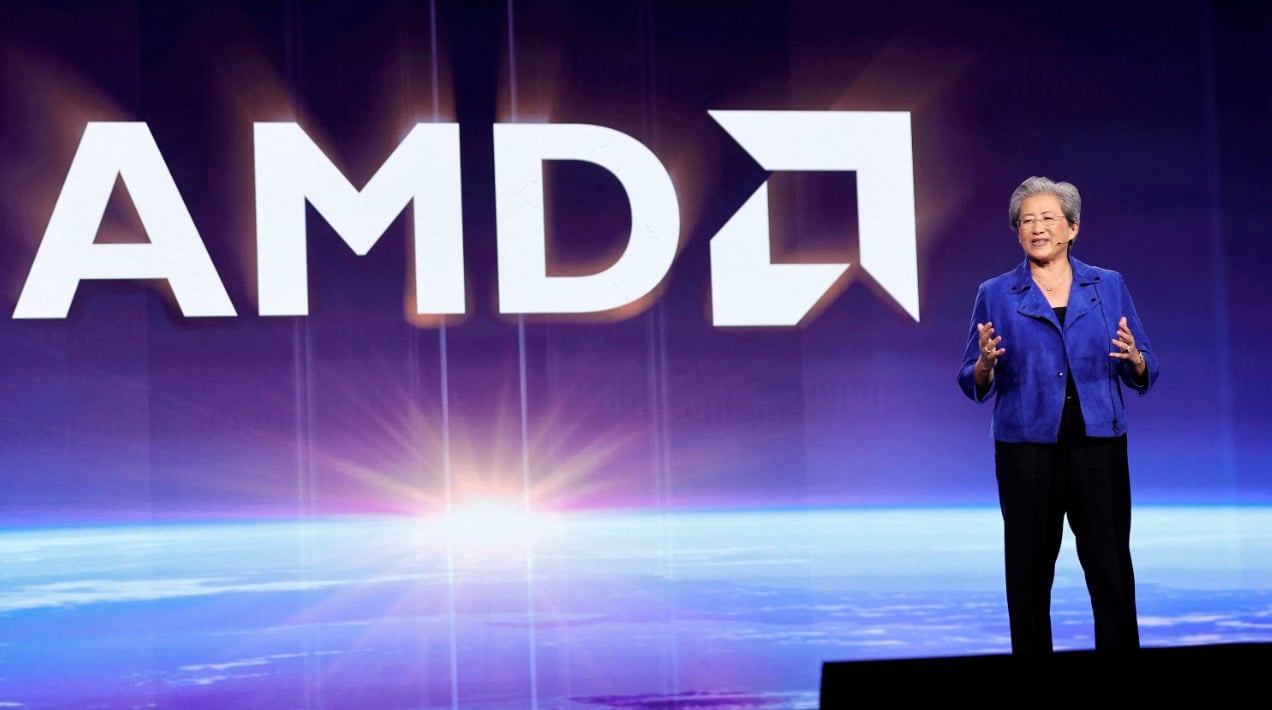
AMD Breaks the Trillion-Dollar Ceiling
Advanced Micro Devices (AMD) rallied more than 10% in a single session, pushing its market capitalization past the $1 trillion mark for the first time. The move cements the chipmaker’s status as one of the defining beneficiaries of the ongoing artificial intelligence infrastructure buildout and signals that investor appetite for AI compute exposure remains far from exhausted.
What Is Driving the Rally
The surge reflects a confluence of catalysts that have been building for several quarters:
- Instinct accelerator traction: AMD’s MI300X and its successors are winning design slots at hyperscalers and AI labs that previously defaulted to a single dominant GPU vendor. Customers are actively seeking a second source of supply, and AMD is the most credible alternative at scale.
- Large anchor orders: Multi-billion-dollar commitments from cloud providers and sovereign AI programs have given revenue visibility that the market rewards with premium multiples.
- Open-source ecosystem: AMD’s ROCm software stack has matured, lowering the switching cost for developers and reducing the lock-in that historically protected incumbents.
- Data center mix shift: Data center now represents the fastest-growing and highest-margin segment of AMD’s business, fundamentally changing the company’s earnings profile.
Industry Implications
A trillion-dollar valuation for the number-two player implies the market is pricing in a compute market large enough to support multiple winners. That has knock-on effects across the semiconductor supply chain — advanced packaging, HBM memory, networking silicon and foundry capacity all stand to benefit. It also pressures the incumbent to accelerate its own roadmap and defend pricing power, which historically has been remarkably durable.
For the broader market, AMD’s move is a reminder that AI is not a single-stock story. Capital is rotating across the compute stack, from accelerators to interconnects to power infrastructure. Investors who missed the first leg of the AI trade are actively hunting for the next leg.
Risks to Watch
Three caveats deserve attention. First, valuation now embeds near-flawless execution; any supply constraint, yield issue or delayed ramp could trigger sharp reversals. Second, export controls and geopolitical fragmentation could cap addressable market in key regions. Third, hyperscaler capital expenditure is cyclical — a digestion phase would hit accelerator orders disproportionately.
Forward-Looking Perspective
The trillion-dollar milestone is less an endpoint than a re-rating event. If AMD can convert its design wins into sustained share gains and demonstrate software parity, the company could evolve from challenger to co-leader. The next twelve months of earnings calls — specifically data center revenue guidance and gross margin trajectory — will determine whether this is a durable regime change or a sentiment-driven spike.