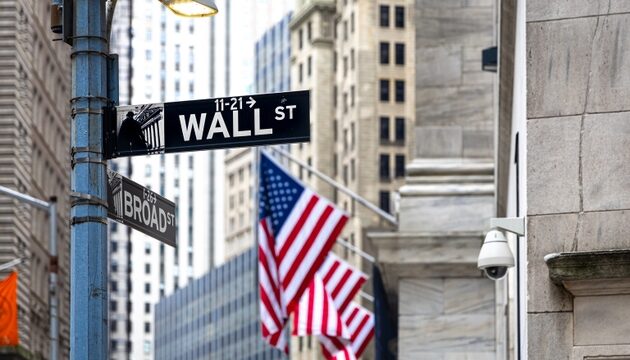
Wall Street Enters the 23-Hour Trading Era
TREE NEWS reports: Beginning December 6, four core U.S. exchanges — including Nasdaq and NYSE Arca — will formally add an overnight session, pushing Wall Street into a 23-hour trading day. The historic expansion is designed to counter cross-border competition from crypto and prediction markets that already trade around the clock, and to capture incremental demand from overseas investors. Securities and Exchange Commission data show that although overnight trading currently accounts for only about 1% of total U.S. equity volume, it is growing at a year-on-year rate of 358%.
Institutional Money Stays on the Sidelines
The extension of trading hours has split the global market. Supporters hope to tear down time-zone barriers, but institutions controlling the largest pools of capital remain wary of the risks. David Easthope, a senior analyst at Crisil Coalition Greenwich, said the core pain point for institutions is not operational or staffing issues but “market quality” during extended hours — namely liquidity and bid-ask spreads. A survey of buy-side traders conducted in the second half of 2025 showed that because participants are scarce outside regular hours, forcing trades could mean both liquidity drying up and spreads widening, with potential knock-on effects on traders’ well-being. Easthope added, however, that as regulators push reforms forward, the buy side has come to accept the “inevitability” of the trend.
Joseph Saluzzi, co-head of equity trading at Themis Trading, was blunt about his lack of interest in the new rules. He noted that pre-market and after-hours volume combined accounts for only about 10% of the total, and that institutions will never rush into a market that is low-liquidity, wide-spread and highly volatile. Jeff O’Connor, head of market structure at Liquidnet, said institutions are currently in “wait-and-see mode.” If the December expansion materially improves overnight price discovery and lowers trading costs, institutional money will eventually enter to capture overnight alpha.
Overseas and Retail Investors Dominate
Foreign capital and retail traders are the absolute dominant force in the current overnight session. SEC data show that in the second quarter of this year, overseas investors contributed 37% of total overnight volume. That imbalance in participant structure has led to a highly concentrated set of traded names. In August, just 15 stocks accounted for 50% of overnight volume, frequently including sub-$1 penny stocks incorporated in mainland China and Hong Kong. By comparison, during liquid regular hours, it takes 256 stocks to reach the same share of volume.
Brian Hyndman, CEO of Blue Ocean Technologies, an alternative trading system that provides overnight matching, said existing active players will transition seamlessly after the December rules take effect. But he also acknowledged that the continued absence of buy-side institutions and investment banks means the market is still missing its most critical piece.
Clearing Infrastructure Is Ready
Despite disagreements on the capital side, Wall Street’s underlying infrastructure is already prepared for an all-nighter. The Depository Trust & Clearing Corporation, which handles U.S. equity clearing, switched to a “24×5” model in June, running from 8 p.m. New York time on Sunday through 8 p.m. Friday. The securities information processors that distribute quotes and trade data have also been approved for extended hours.
Under the latest timetable, after the December expansion, Nasdaq and the NYSE will add an overnight session from 9 p.m. to 4 a.m. on top of the existing regular session (9:30 a.m.–4:00 p.m.), pre-market (from 4:00 a.m.) and after-hours (4:00 p.m.–8:00 p.m.). The U.S. market will thus have only a one-hour break from 8 p.m. to 9 p.m. for system maintenance and trade processing.
Key Takeaways for Investors
- Liquidity risk is real: Overnight sessions will likely feature thin order books and wider spreads, so retail and institutional traders alike should use limit orders and size positions carefully.
- Concentration risk: With a handful of names — often low-priced foreign-incorporated stocks — driving half of overnight volume, price discovery may be distorted and volatility amplified.
- Institutional adoption is the swing factor: If buy-side participation grows, overnight liquidity and pricing could improve materially; until then, treat the session as a niche venue.
- Infrastructure is ready, but market quality is not: Clearing and data distribution can support 23-hour trading, yet the absence of major banks and funds leaves the ecosystem incomplete.