AI Data Centers Face Water Stress: A Quarter Sit in Water-Stressed Regions
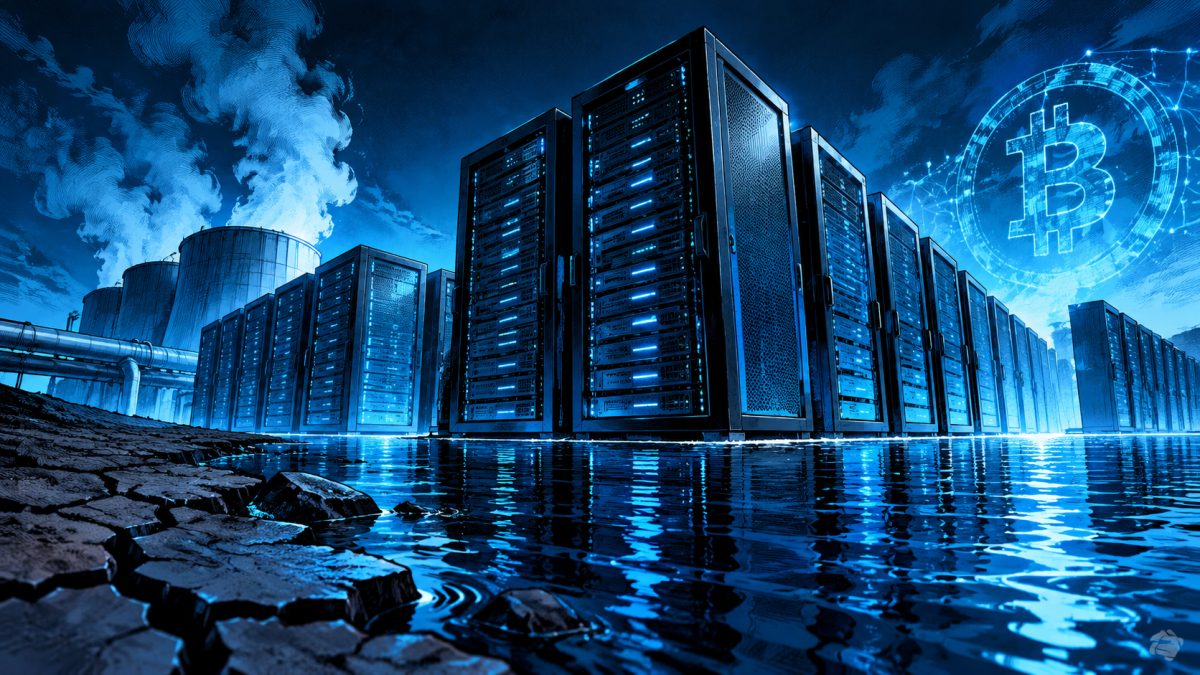
TREE NEWS reports: A study published in Environmental Science & Technology by researchers from the American Chemical Society analyzed the locations of 9,347 operating data centers worldwide and their local water supply and demand conditions. The findings reveal that approximately 25% of data centers are located in areas facing water stress for at least one month per year, and about 6% are in regions under water stress for most of the year. Under a scenario where global average temperatures rise 3°C above pre-industrial levels, the share of data centers in water-stressed areas could climb to 33%. The research highlights that data center cooling water competes with surrounding cities, agriculture, and other users, and long-term site selection and operational planning must consider local water resources and infrastructure conditions.
Industry Analysis and Implications
This water stress finding has significant implications for the cryptocurrency and AI industries, which are increasingly reliant on data centers for mining and AI compute. As AI adoption surges, demand for data center capacity—and water for cooling—is skyrocketing. Crypto mining operations, already under scrutiny for energy consumption, may face additional environmental and regulatory pressure if located in water-stressed regions. The study underscores a growing risk: water scarcity could disrupt operations, increase costs, and lead to community backlash or regulatory restrictions. For crypto firms building AI infrastructure, site selection must now factor in water availability and sustainability, not just energy costs and connectivity.
Moreover, the intersection of AI and crypto—such as decentralized compute networks and on-chain AI agents—relies on physical infrastructure that is vulnerable to climate-related stresses. Investors and operators should assess water risk as part of due diligence. The projected increase to 33% under a 3°C warming scenario signals that climate change will exacerbate these challenges, potentially forcing relocations or investments in water-efficient cooling technologies.
Forward-Looking Perspective
The industry must prioritize water stewardship. Innovations in cooling—such as liquid immersion cooling and closed-loop systems—can reduce water consumption, but widespread adoption requires investment and regulatory incentives. Crypto and AI companies should engage with local communities and governments to ensure sustainable water management. As environmental, social, and governance (ESG) criteria gain prominence, data center operators that proactively address water risk will be better positioned for long-term success. Policymakers may also introduce water-use regulations for data centers, similar to energy efficiency standards. The crypto sector, often criticized for its environmental footprint, has an opportunity to lead in sustainable infrastructure by adopting water-efficient technologies and transparent reporting. Ultimately, the water stress study serves as a wake-up call: the digital economy’s backbone must be built with climate resilience in mind.