OKX Expands Earning Options with Hold-to-Earn
TREE NEWS reports: OKX has upgraded its Flash Earn product, introducing a new “Hold to Earn” mode alongside the existing “Stake to Earn” and “Trade to Earn” options. The first campaign, running from October 29, 2026, to November 28, 2026, offers a total prize pool of 400,000 USDT. Users who register can hold any of 10 designated tokenized assets—including xNVDA, xTSLA, xGOOGL, and xQQQ—and receive rewards proportional to their holdings without needing to subscribe or stake assets into a pool.
How It Works
Participants must maintain a daily qualified holding value of at least $100, with a maximum daily reward of 650 USDT per user. Rewards are calculated based on the lowest qualified holding value from a random snapshot each day, starting the UTC day after successful registration. Users can join via the “Flash Earn”—”Hold to Earn” entry.
Industry Analysis: Bridging TradFi and DeFi
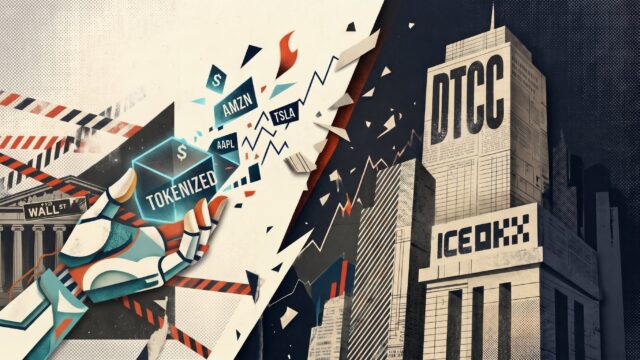
The introduction of tokenized versions of major US stocks and ETFs (xNVDA for Nvidia, xTSLA for Tesla, xGOOGL for Alphabet, xQQQ for Invesco QQQ Trust) signals a significant step in the convergence of traditional finance and decentralized finance. By offering yield on these assets without requiring staking, OKX lowers the barrier for users to earn passive income on tokenized equities, potentially attracting traditional investors who are hesitant to lock up assets.
This move aligns with the growing trend of real-world asset (RWA) tokenization, where blockchain-based representations of stocks, bonds, and commodities are becoming more accessible. OKX’s initiative not only enhances liquidity for these tokenized assets but also provides a use case beyond speculation—earning yield simply by holding. The $400,000 USDT pool serves as an incentive to bootstrap adoption and demonstrate the viability of holding tokenized assets as a yield-generating strategy.
Implications and Forward-Looking Perspective
As regulatory clarity around tokenized securities improves in jurisdictions like the EU and parts of Asia, exchanges are racing to offer compliant and attractive products. OKX’s Hold-to-Earn could pressure competitors to launch similar programs, further integrating DeFi mechanics with traditional asset classes. However, challenges remain, including regulatory scrutiny over tokenized equities and the need for robust custody solutions. If successful, this campaign could pave the way for more sophisticated RWA-based yield products, blurring the lines between crypto and traditional investing. The coming year will likely see more exchanges experimenting with hold-based rewards, potentially reshaping how investors perceive passive income in the digital asset space.