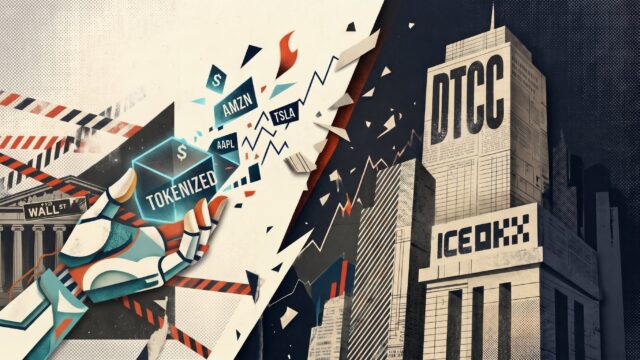
Banks Move Beyond Trading to Build the Rails of Tokenized Finance
TREE NEWS reports: At MERGE Madrid 2026, held at the Palacio de Cibeles, banking executives said the industry is shifting its focus from crypto trading to building the infrastructure behind stablecoins and tokenized assets. The message was clear: the next phase of institutional adoption will be about settlement, custody, and issuance—not speculation.
Chainalysis data presented at the event helped explain the urgency. Cryptocurrency economic activity reached approximately $9.4 trillion between June 2025 and June 2026, down just 1.6% from the previous year despite a volatile market environment. More strikingly, stablecoin transfers jumped 80% over the same period, underscoring how quickly dollar-denominated tokens are becoming a core part of global payment and settlement flows.
Why the 80% Jump Matters
The surge in stablecoin transfers is not just a retail phenomenon. Banks are increasingly viewing stablecoins as a bridge between traditional finance and blockchain-based settlement. Executives at the Madrid event noted that clients—from corporates to funds—are demanding faster, cheaper cross-border payments and 24/7 settlement, capabilities that legacy infrastructure struggles to provide.
Tokenized assets, including money market funds and deposits, are also gaining traction. Banks are exploring how to issue and custody these instruments while complying with evolving regulations. The focus is on building compliant rails that can handle both stablecoin flows and tokenized securities, rather than simply offering crypto trading desks.
Industry Implications
- Infrastructure over speculation: Banks are prioritizing custody, issuance platforms, and settlement networks, which could accelerate institutional participation in tokenized finance.
- Stablecoins as payment rails: The 80% transfer growth signals that stablecoins are moving from trading collateral to everyday settlement, pressuring banks to integrate them.
- Regulatory clarity needed: As banks build, they are calling for clearer rules on reserve management, cross-border compliance, and tokenized asset classification.
The $9.4 trillion economic activity figure, while slightly down year-over-year, shows that crypto is maturing rather than collapsing. The composition of that activity is shifting toward stablecoins and tokenized real-world assets, which are more closely tied to traditional finance and therefore more attractive to banks.
Forward-Looking Perspective
The next 12 to 18 months will likely see a wave of bank-led stablecoin and tokenization pilots move into production. Success will depend on interoperability between blockchain networks, regulatory harmonization across jurisdictions, and the ability of banks to manage liquidity and risk in a 24/7 environment. If the Madrid discussions are any indication, the race is no longer about who offers crypto trading—it is about who builds the most trusted infrastructure for tokenized money and assets.