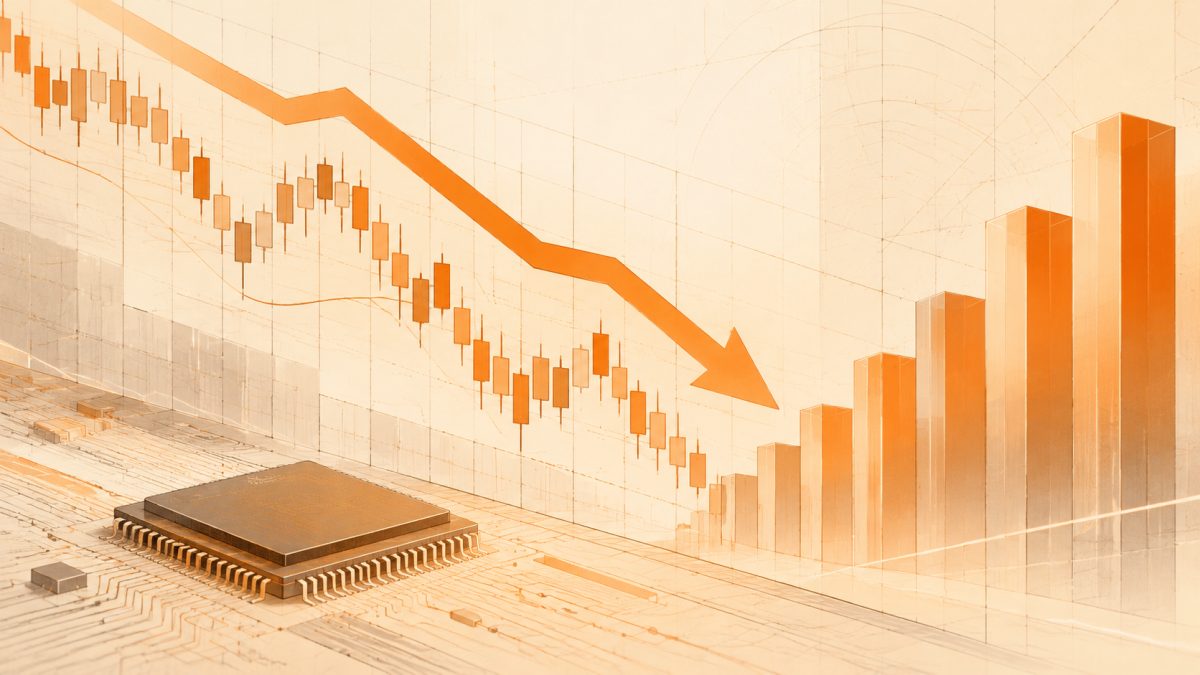
Korean Equities Retreat as Semiconductor Heavyweights Weigh on the Index
TREE NEWS reports: The KOSPI index dropped below the 5,500-point mark on November 4, falling 2.70% intraday, as weakness in major technology constituents dragged the benchmark lower. SK Hynix saw losses widen to 4.5%, while Samsung Electronics declined 3%, underscoring the outsized influence of semiconductor names on Korean market sentiment.
The pullback comes amid a broader reassessment of global risk appetite, with investors rotating away from high-beta technology exposure. While the immediate trigger for the sell-off was not explicitly identified, the magnitude of the move in memory-chip leaders suggests that concerns over demand visibility and valuation are resurfacing.
Semiconductor Concentration Risk in Focus
Korea’s equity market is unusually dependent on a handful of chipmakers, and that concentration amplifies index-level volatility. SK Hynix and Samsung Electronics together account for a substantial share of KOSPI market capitalization, meaning that even modest re-rating in these names can move the entire benchmark.
The 4.5% drop in SK Hynix is particularly notable given its role as a key supplier of high-bandwidth memory (HBM) used in AI accelerators. Any signal of softening order momentum or inventory adjustment in the AI supply chain tends to hit Hynix disproportionately. Samsung’s 3% decline reflects similar dynamics, compounded by its broader exposure to consumer electronics and foundry competition.
Implications for Crypto and Risk Assets
Korean equity weakness often correlates with shifts in global liquidity conditions and risk sentiment. For crypto markets, the read-across is indirect but meaningful: Korea is one of the most active retail crypto trading jurisdictions, and a sharp equity drawdown can dampen speculative appetite across asset classes.
- Liquidity signal: A sustained KOSPI decline may indicate tightening financial conditions or reduced willingness to hold growth exposure.
- AI trade proxy: Semiconductor stocks are a bellwether for the AI infrastructure cycle, which has become a narrative driver for crypto AI tokens and decentralized compute networks.
- Retail sentiment: Korean retail investors are influential in crypto markets; equity losses can reduce disposable risk capital allocated to digital assets.
Forward-Looking Perspective
The key question is whether this is a short-term technical correction or the start of a deeper de-risking cycle. Much depends on upcoming semiconductor earnings guidance, memory pricing trends, and the trajectory of global interest rates. If chip stocks stabilize, the KOSPI could reclaim the 5,500 level quickly. If not, expect ripple effects across Asian equities and a more cautious tone in crypto markets, particularly in AI-adjacent tokens that trade as leveraged proxies for the compute build-out.