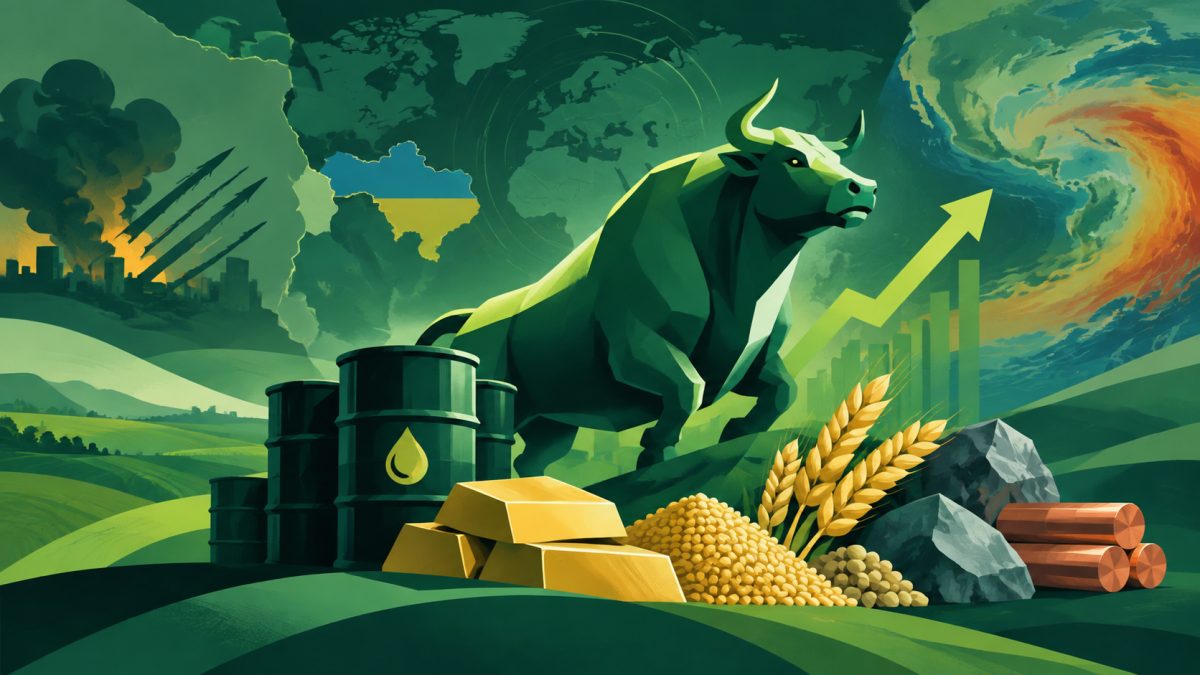
HSBC Warns of Commodity ‘Super Bull’ as Iran War, Ukraine Conflict and El Niño Collide
TREE NEWS reports: Global commodity markets have entered a rare phase of overlapping supply shocks that could keep prices elevated for longer than usual. The bank’s chief global commodities economist, Paul Bloxham, said in a new report that the Iran war, the Russia-Ukraine conflict and an intensifying El Niño are disrupting supply at the same time that artificial intelligence infrastructure investment and the energy transition are lifting demand for energy and metals. HSBC now expects commodity prices to rise by an average of 22% in 2026, up from a previous forecast of 16%, and has raised its 2027 forecast by 14 percentage points.
The market is already reflecting the shift. London copper futures briefly broke above $14,700 per tonne, while Brent crude reclaimed $102 per barrel. HSBC’s statistical model, COCCLES, indicates that commodities have entered a “super bull” phase, which historically lasts longer than other cycles.
Supply Risks Spread Beyond Energy
Six months after the outbreak of the Middle East conflict, the Strait of Hormuz remains largely closed, with no clarity on when or under what conditions it might reopen. Attacks by Houthi forces on Red Sea and Saudi vessels have further disrupted shipping through the Bab el-Mandeb strait. The result is higher transport costs and greater uncertainty across crude, refined products and other commodity supply chains.
The Russia-Ukraine conflict, now in its fifth year, is also having a widening impact. Recent disruptions have hit diesel and other refined products as well as grain supplies, with the shock spreading from crude to sulfur, fertilizer, aluminum, helium, jet fuel, naphtha and other refined by-products. The Bloomberg Commodity Index is up 18% year-to-date and 24% year-on-year, underscoring how supply shocks are feeding into broader price pressures.
Inventory Buffers Are Dwindling
High inventory levels had previously helped the market absorb supply shocks. That buffer is now eroding quickly, especially in energy. In oil, continued U.S. exports are drawing down strategic reserves. HSBC warns that if disruptions persist, the risk of inventories falling to “tank bottom” levels will rise sharply. Once buffers are exhausted, any new supply shock could translate directly into stronger price gains.
Natural gas faces a similar problem. European storage is well below target levels, and an unusually hot summer has accelerated consumption. If stocks are not replenished before winter, the supply-demand gap could widen and prices could spike.
AI, Energy Transition and El Niño Reshape Demand
On the demand side, structural changes are underway. The AI infrastructure boom and the energy transition are driving global electrification, lifting most base metals. Copper has hit record highs, reflecting both demand growth and long-term supply constraints from underinvestment in new mines. Aluminum prices have been more contained because some shipments can still pass through Hormuz. Lithium prices have risen 130% over the past year, but history suggests high prices will stimulate new supply from Zimbabwe and Australia, potentially capping further gains.
Agricultural commodities face dual pressure from weather and costs. A strong El Niño is intensifying, with the Southern Oscillation Index (SOI) at its most extreme level in more than two decades. Drought risks are rising in Australia and Indonesia, India’s monsoon is weakening, and parts of Southeast Asia are turning hotter and drier. At the same time, the Middle East conflict and the Russia-Ukraine war are raising the supply risk for fertilizers and diesel. Grain prices have been climbing, with wheat particularly strong, while cocoa and coffee have also risen.
In precious metals, gold retreated after peaking in January 2026, pressured by higher long-term interest rates as some investors rotated into yield assets. Bloxham argues that persistent geopolitical risk, central bank gold buying and bond market uncertainty will continue to support precious metals, while limited mine supply could benefit platinum and palladium.
Key Takeaways for Investors
- Commodities may stay higher for longer. Overlapping supply shocks and structural demand growth suggest a prolonged period of elevated prices rather than a short spike.
- Energy inventories are the key risk. If oil and gas storage falls to critical levels, price volatility could intensify sharply, especially ahead of the Northern Hemisphere winter.
- Metals remain a structural play. Copper and other electrification metals are supported by AI infrastructure and the energy transition, though lithium’s rally may face supply responses.
- Agriculture is exposed to weather and input costs. El Niño and higher fertilizer and diesel costs are pushing food prices up, with wheat, cocoa and coffee in focus.
- Precious metals retain a hedge role. Despite recent weakness, gold and platinum-group metals may benefit from geopolitical risk and central bank demand.



