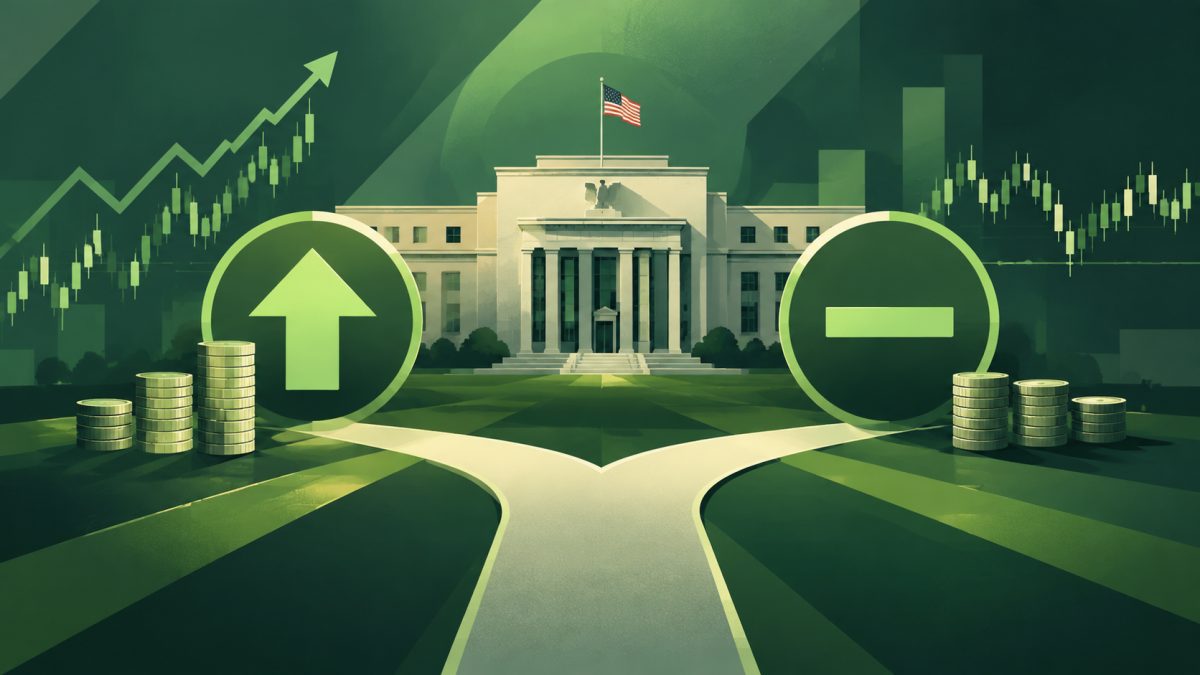
Fed’s September Dilemma: Rate Hike or Hold?
TREE NEWS reports: With the Federal Reserve’s September 16 policy meeting fast approaching, the debate over whether to raise interest rates has reached a fever pitch. A surprisingly strong August jobs report and hawkish comments from Fed Chair Kevin Warsh have bolstered the case for a hike, while cooling inflation trends and doubts about the reliability of employment data give equal weight to the case for holding steady. Fed funds futures currently price a roughly 60% probability of a September hike, and markets see about a 36% chance of two cumulative hikes by mid-March 2027.
The Hawkish Camp: Three Pillars
Support for a September hike rests on three main pillars. First, Chair Warsh set a hawkish tone at Jackson Hole on August 28, stating that recent inflation data have not convinced him that the improving trend is firmly established, and that “we still have work to do.” New York Fed President John Williams echoed this, suggesting rising bond yields “merely reflect economic strength.” Second, the August jobs report blew past expectations: nonfarm payrolls rose 162,000, more than triple the Wall Street consensus of 50,000. The unemployment rate held at a historically low 4.1%. Even dovish Governor Lisa Cook said she would support a hike if necessary to bring inflation down. Third, Cleveland Fed President Beth Hammack, the most consistently hawkish voice on the committee, argued that current rates are not restrictive, inflation will not fall to 2% on its own, and “now is the time to act.” She advocates a series of hikes rather than a one-off move.
The Hold Camp: Data Reliability and Policy Fit
Opponents of a hike point first to the reliability of jobs data. The Bureau of Labor Statistics’ annual benchmark revisions have repeatedly slashed job growth: the preliminary revision for the year through March 2025 cut 911,000 jobs, reducing monthly gains from 147,000 to 71,000. The final revision trimmed 2025’s total job growth from 584,000 to 181,000. The 2024 revision also removed 818,000 jobs. More recent data have seen large downward revisions as well. Richmond Fed President Tom Barkin described the labor market as “neither tight nor loose, in a fragile balance.” On inflation, July CPI was tame, with core CPI up just 0.2% month-over-month, and the Dallas Fed’s trimmed mean PCE at 2.28%, close to target. Five-year inflation expectations stand at 2.4%, slightly below pre-Iran conflict levels. Fed Governor Waller, the strongest advocate for holding, argues that the forces pushing yields higher—fiscal deficits, dollar credibility concerns, AI-related capital demand, and oil supply shocks—are largely beyond the Fed’s mandate, and hiking in response risks a policy error.
Deep Data: Both Employment and Inflation Cooling
Composite data models suggest both employment and inflation trends are weakening. A Z-score normalization of six labor market indicators—BLS household and establishment surveys, labor force participation, ADP private payrolls, real wage growth, and JOLTS hires—shows the downtrend has worsened over the past six months. ADP and JOLTS do not corroborate the August BLS surge; the three-month moving average of job gains is around 60,000 to 70,000, well below the pre-pandemic 150,000 to 250,000 range. On inflation, core CPI year-over-year is about 2.5%, roughly flat versus pre-Iran conflict levels, and still slowly converging to 2%. A trend model comparing the last three months to the prior three shows inflation has been “anchored” since January 2023, briefly spiked during the Iran conflict, and is now moving toward a “cooling” range, with negative Z-scores across components.
Market Implications
For investors, the September decision carries significant implications across asset classes. Stocks: A hike could pressure equities, especially rate-sensitive growth and tech names, while a hold might spark a relief rally. Bonds: Short-end yields would rise on a hike, but long-end yields may be driven more by fiscal and supply concerns. Crypto: Digital assets, particularly bitcoin, have shown sensitivity to Fed policy; a hawkish outcome could strengthen the dollar and weigh on crypto, while a hold could support risk assets. Commodities: A stronger dollar from a hike could pressure oil and gold, though supply-side factors remain dominant. Currencies: The dollar would likely strengthen on a hike, with the euro and yen vulnerable.
Key Takeaways
- The Fed faces a close call on September 16, with markets pricing a 60% chance of a hike.
- Hawkish arguments rest on strong August jobs and Warsh’s Jackson Hole rhetoric; dovish arguments cite data revisions and cooling inflation.
- Investors should prepare for volatility across stocks, bonds, crypto, commodities, and currencies.
- A hold could raise doubts about the Fed’s inflation-fighting credibility, while a hike risks unnecessary economic damage.