McDonald’s Faces Worst Annual Performance in Over Two Decades
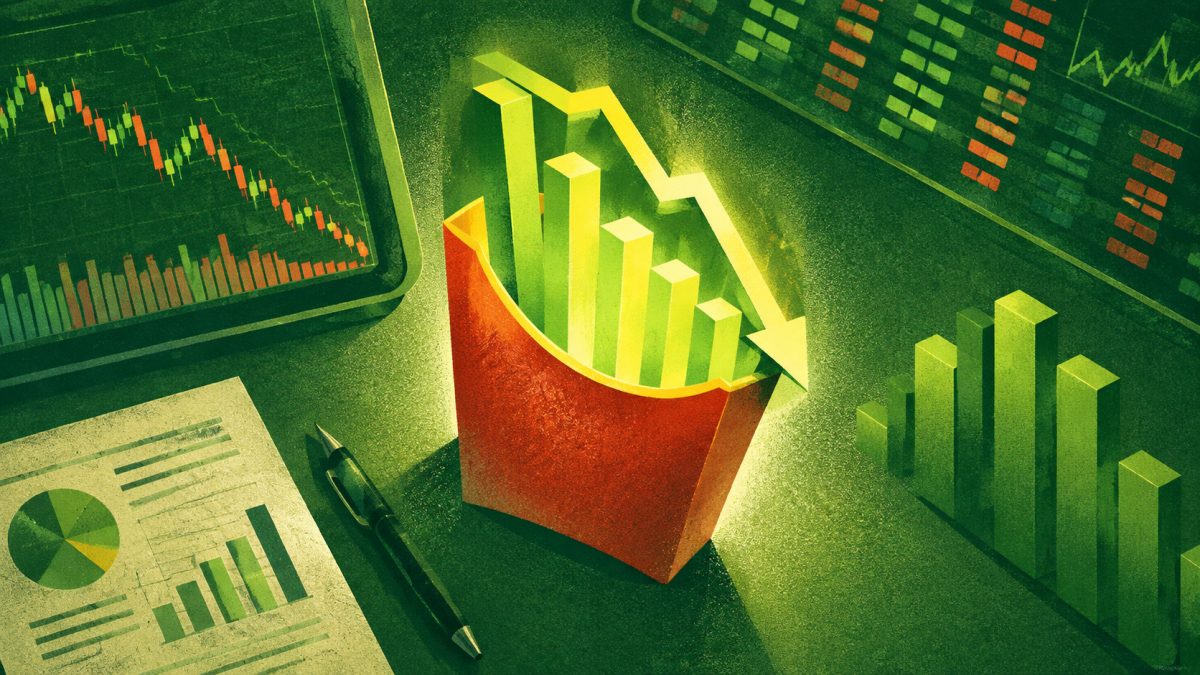
TREE NEWS reports: McDonald’s Corp. is paying the price for years of menu price increases, with its stock down nearly 31% from its February high and 22% year-to-date. If the trend holds, 2025 will mark the fast-food giant’s worst annual performance since 2002. The decline accelerated this week after the company warned at an investor day that current-quarter U.S. same-store sales would be “slightly negative,” following a mere 0.8% gain last quarter—its slowest growth in over a year.
In response, McDonald’s announced an $8.5 billion multi-year improvement plan targeting technology, store upgrades, and expanded chicken and beverage offerings. Investors, however, balked at the hefty capital expenditure, fearing margin erosion. The stock slid further.
The Roots of the Problem: Pricing Power Lost
McDonald’s troubles stem directly from its post-pandemic pricing strategy. To offset rising beef, labor, and fuel costs, the company steadily raised menu prices. The U.S. price of a Big Mac has climbed roughly 23% from 2019 to late 2025. Meanwhile, consumers, squeezed by inflation and higher interest rates, have become far more discerning about dining spending.
Jacob Aiken-Phillips of Melius Research, the only analyst tracked by Bloomberg with a “sell” rating on McDonald’s, put it bluntly: “Their prices have gone up a lot. McDonald’s is no longer seen as the best value in dining. I can go to Texas Roadhouse, spend about the same, and enjoy a real sit-down meal with my family.” A viral social media post in 2024 showing an $18 Big Mac meal amplified the value perception problem, though McDonald’s noted it was an isolated pricing instance among its more than 13,700 U.S. locations.
Competitors Seize the Moment
McDonald’s pricing pressure is thrown into sharp relief by rivals’ strong numbers. Burger King, owned by Restaurant Brands International, posted an 8.5% increase in U.S. comparable sales last quarter, beating expectations, driven by its revamped Whopper and a Star Wars promotion. Yum Brands’ Taco Bell saw same-store sales rise 7%, aided by $5, $7, and $9 value meal combos.
On stock performance, Burger King’s parent is up 5% year-to-date, while Taco Bell’s parent is down 8.4%. Both lag the S&P 500’s 13% gain, but far outperform McDonald’s 23% drop.
Franchisee Friction and the “Next” Plan
McDonald’s value strategy is also meeting internal resistance. CEO Chris Kempczinski revealed on the Q2 earnings call that about one-third of franchisees are not following the company’s pricing guidance, and consumer awareness of promotions is below target. With nearly 95% of McDonald’s stores franchised, operators are reluctant to embrace discounts—such as this year’s “10 items under $3” deal—that boost traffic but squeeze already thin operating margins.
Under pressure, McDonald’s has launched a new strategy called “Next,” aiming to revitalize the brand through technology investments, store renovations, and reopening children’s play areas closed during the pandemic. Seaport Global analyst Eric Gonzalez remains cautiously optimistic but notes it will take “at least a year” for these changes to show clear results. He also believes the negatives—higher capex and near-term sales pressure—are already reflected in the current valuation. McDonald’s trades at about 17 times forward earnings, well below its five-year average.
Wall Street Still Mostly Bullish
Despite the gloom, the Street remains largely positive. Of analysts tracked by Bloomberg, 24 rate the stock buy or equivalent, 16 are neutral, and only one recommends selling. The average price target implies roughly 28% upside from last Friday’s close.
Rebecca Walser, chief investment officer at Walser Wealth Management, whose firm holds McDonald’s shares, said investors now need to see tangible improvements in food quality and value, plus signs of sustained traffic recovery. “McDonald’s is part of American culture: Happy Meals, the Hamburglar, Ronald McDonald, the play areas. They need to rebuild that experience. We truly believe McDonald’s can emerge from this slump,” Walser said. A company spokesperson reiterated on Friday that McDonald’s will act with urgency to get its U.S. business back on a stronger track by the end of 2026.
Key Takeaways for Investors
- Value perception is critical: McDonald’s lost its edge as a value leader, and regaining it may require price cuts or better promotions that could pressure near-term margins.
- Execution risk is high: The $8.5 billion “Next” plan requires significant capital and time; investors should monitor same-store sales trends and franchisee compliance.
- Valuation looks attractive, but catalysts are needed: At 17x forward earnings, the stock is cheap versus history, but a re-rating depends on visible traffic recovery and margin stabilization.
- Watch the competition: Burger King and Taco Bell are gaining share with successful value offers; McDonald’s must respond without eroding franchisee profitability.