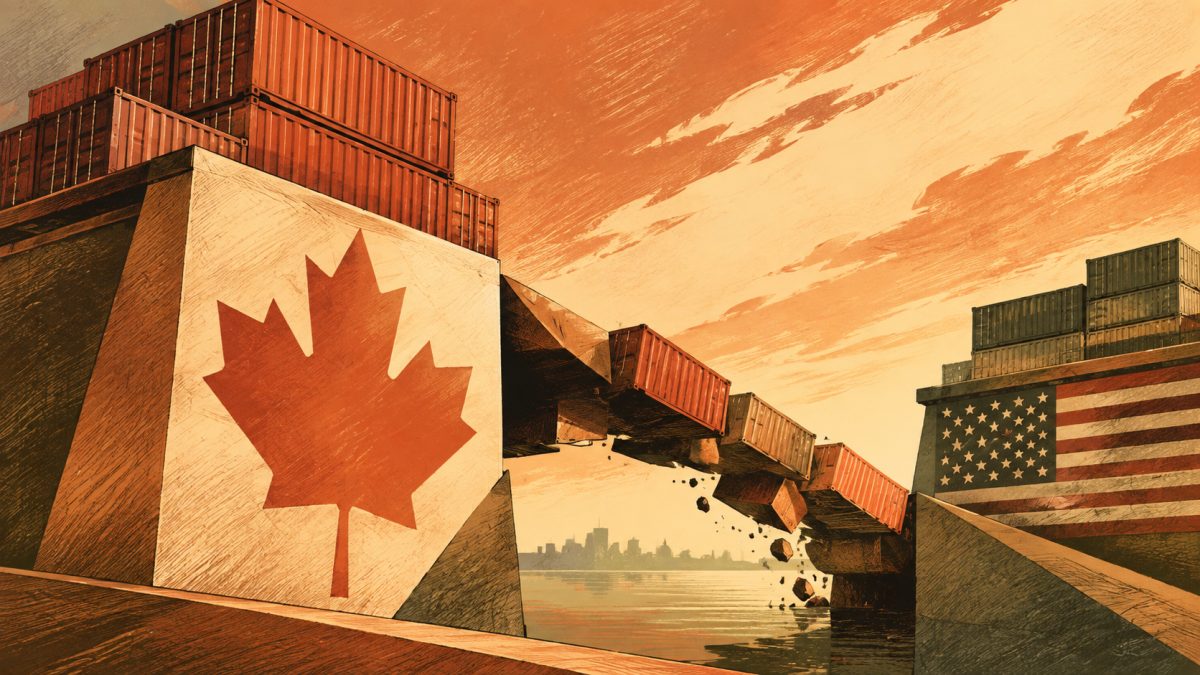
What Happened
TREE NEWS reports: In a dramatic escalation of cross-border trade tensions, Canadian Prime Minister Mark Carney announced Saturday that Canada will impose dollar-for-dollar retaliatory tariffs on a wide range of U.S. goods. The move comes after trade negotiations between the two nations broke down, marking a significant rupture in one of the world’s most integrated economic relationships.
Carney framed the tariffs as a necessary defense of Canadian sovereignty and economic interests. ‘We will not stand idly by while our workers and industries are threatened,’ he said in a televised address. The exact list of affected U.S. products has not yet been fully disclosed, but officials indicate it will target politically sensitive sectors, including agriculture, manufacturing, and consumer goods.
Market Impact Analysis
Stocks
U.S. equities are likely to face immediate downside pressure, particularly in sectors with heavy cross-border supply chains. Automakers, agricultural exporters, and consumer goods companies with significant Canadian exposure could see sharp sell-offs. Conversely, Canadian stocks may find some support from a weaker loonie, which boosts export competitiveness, though overall sentiment will be risk-off.
Bonds
Safe-haven demand is expected to boost U.S. Treasuries, pushing yields lower. Canadian government bonds may also rally as investors seek stability. However, if the trade war escalates into a broader global conflict, inflation concerns could resurface, limiting the bond rally. The Bank of Canada and the Federal Reserve may both face pressure to adjust monetary policy in response to the economic drag.
Commodities
Commodity markets are likely to see mixed reactions. Oil prices could rise on supply disruption fears, given Canada is a major energy exporter to the U.S. Agricultural commodities, such as dairy and lumber, are particularly vulnerable to the tariff war. Gold, as a traditional safe haven, is likely to appreciate as investors seek protection from geopolitical and trade uncertainty.
Currencies
The Canadian dollar (CAD) will likely weaken sharply against the U.S. dollar (USD) as trade tensions undermine Canada’s economic outlook. The USD may strengthen broadly due to its safe-haven status, though prolonged trade conflicts could eventually erode the dollar’s appeal if they damage U.S. growth. Emerging-market currencies may also suffer as risk appetite diminishes globally.
Crypto
Cryptocurrencies, particularly Bitcoin, could see increased demand as a hedge against fiat currency volatility and geopolitical instability. However, the immediate reaction may be mixed, with some investors liquidating assets to cover margin calls in traditional markets. Over the medium term, trade wars often reinforce the case for decentralized, borderless assets.
Why It Matters for Investors
This escalation marks a critical juncture for global trade. The U.S.-Canada relationship is a cornerstone of North American economic integration, and its breakdown signals that protectionist policies are spreading beyond U.S.-China tensions. Investors must brace for heightened volatility across all asset classes.
The ‘dollar-for-dollar’ nature of the retaliation underscores a tit-for-tat dynamic that could spiral into a full-blown trade war. Historical precedents, such as the Smoot-Hawley Tariff Act of 1930, warn that such actions can deepen economic downturns. While today’s economies are more diversified, the immediate shock to supply chains and consumer prices is undeniable.
Key Takeaways for Investors
- Risk-off posture: Reduce exposure to cyclical stocks and sectors vulnerable to trade disruption.
- Safe havens: Consider adding to holdings in gold, U.S. Treasuries, and possibly Bitcoin as hedges.
- Currency hedging: If you have CAD exposure, consider hedging strategies or reducing positions.
- Monitor negotiations: Any sign of renewed talks could trigger a relief rally, so stay informed on political developments.
- Diversification: Ensure portfolios are well-diversified across geographies and asset classes to mitigate single-country risk.