AI-Powered Cyberattack Rocks South Korea’s Banking Sector
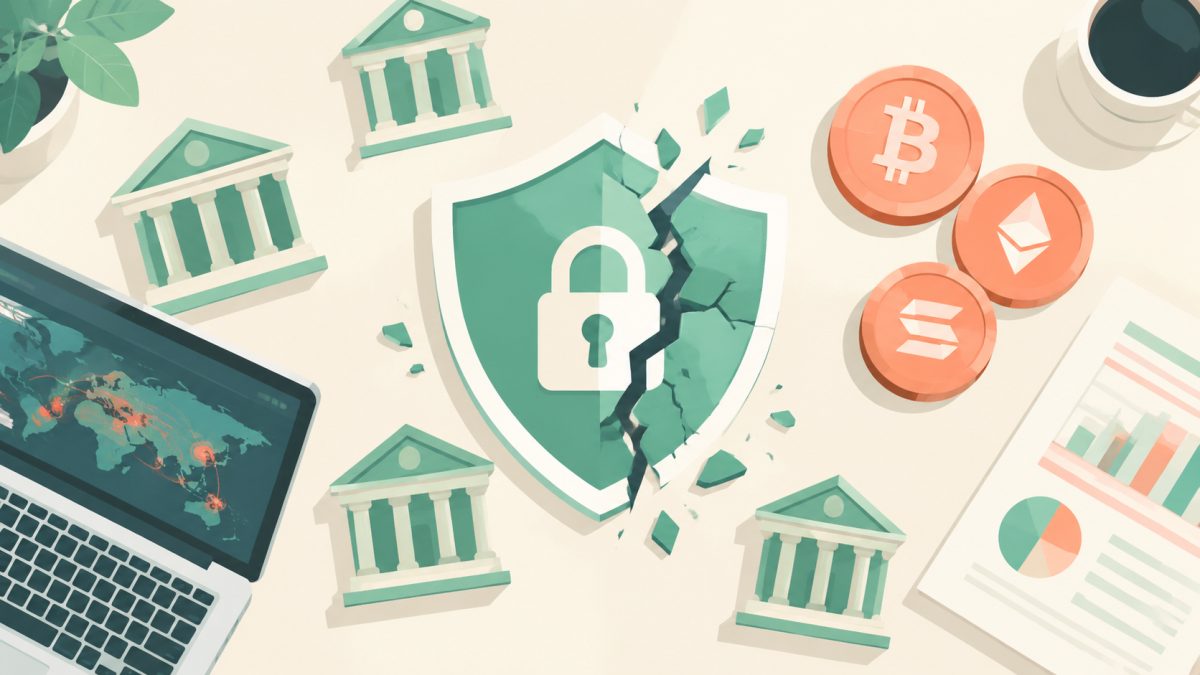
TREE NEWS reports: South Korea’s five largest commercial banks have simultaneously suffered what appears to be an AI-driven cyberattack, marking the first time the country’s financial industry has faced a coordinated assault of this scale. Three of the five institutions have confirmed customer data breaches.
BNK Busan Bank reported the leak of personal information belonging to 11 outsourced employees. KB Kookmin Bank disclosed that data from 119 customers was compromised, while Hana Bank confirmed 89 customer records were exposed. Earlier, Shinhan Bank suffered a similar attack that leaked information on roughly 25,000 customers. Woori Bank and NH NongHyup Bank also faced intrusion attempts but successfully blocked them through their defense systems, with no data leaks detected so far.
Why This Matters for the Crypto Industry
The incident underscores a growing convergence between traditional finance and emerging technologies — including the same AI tools increasingly used in crypto trading, on-chain analytics, and DeFi protocol management. As banks digitize and integrate blockchain-based services, their attack surfaces expand, creating new vulnerabilities that bad actors can exploit with AI-driven methods.
For the crypto sector, the implications are twofold. First, it validates the push for decentralized identity and zero-knowledge proof systems that minimize centralized data storage — reducing the value of a single breach. Second, it highlights the need for AI-powered security solutions in both TradFi and DeFi, a space where blockchain analytics firms and on-chain monitoring protocols are already competing.
Regulatory and Market Implications
Korean regulators are likely to tighten cybersecurity mandates for financial institutions, potentially accelerating adoption of blockchain-based audit trails and decentralized identity frameworks. The incident could also spur demand for privacy-preserving technologies in the RWA (real-world asset) tokenization space, where institutions must balance transparency with data protection.
Investors should watch for increased spending on AI-driven cybersecurity and blockchain infrastructure across Asian financial markets. The attack may also push Korean banks to explore decentralized storage and encryption solutions, creating new opportunities for crypto-native security providers.
Looking Ahead
As AI becomes a dual-use tool — both a shield and a weapon — the line between traditional banking security and crypto-native defense mechanisms will blur. Financial institutions that embrace decentralized, privacy-first architectures may find themselves better positioned against the next wave of intelligent cyber threats.