Massive Data Breaches at Major South Korean Banks
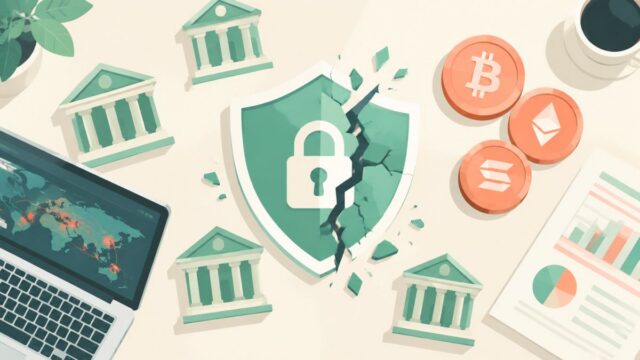
TREE NEWS reports: South Korea’s five largest commercial banks have all fallen victim to hacking attempts, with three confirming customer data leaks. Shinhan Bank reported approximately 25,000 customers affected, KB Kookmin Bank over 100, and Hana Bank 89. Woori Bank and NH Bank also experienced intrusion attempts, though no data loss has been confirmed yet.
The breaches, which occurred over recent weeks, have raised serious concerns about the security infrastructure of traditional financial institutions. While the number of affected customers at KB and Hana appears small, the fact that all five major banks were targeted suggests a coordinated, sophisticated campaign.
Implications for the Crypto Industry
These incidents underscore a critical reality: cybersecurity is the bedrock of trust in both traditional finance and the crypto ecosystem. For crypto exchanges and DeFi protocols, which handle vast amounts of digital assets, the stakes are even higher. A breach can lead to irreversible fund losses and permanent reputational damage.
South Korea is one of the world’s most active crypto markets, with a high penetration of retail trading and a growing institutional presence. The banking sector’s vulnerability could push more users toward self-custody solutions and decentralized finance, where individuals control their own private keys. However, this also places greater responsibility on users to secure their assets.
Regulators are likely to tighten oversight of both banks and crypto service providers. The Financial Services Commission (FSC) may introduce stricter cybersecurity mandates, including mandatory penetration testing and real-time threat monitoring. Crypto exchanges, already subject to rigorous KYC/AML rules, could face additional requirements for cold storage and insurance coverage.
Forward-Looking Perspective
As traditional banks grapple with breaches, the crypto industry has an opportunity to demonstrate superior security practices. Projects that prioritize audited smart contracts, multi-signature wallets, and decentralized identity solutions may gain a competitive edge. Moreover, the incident could accelerate the adoption of blockchain-based identity management, where users control their personal data without relying on centralized custodians.
In the long run, the convergence of traditional finance and crypto will require a unified approach to cybersecurity. Banks and crypto firms must collaborate on threat intelligence sharing and best practices. Until then, users should remain vigilant, enable two-factor authentication, and consider diversifying their asset storage across multiple platforms.