Supreme Court Takes Up Exxon, Suncor Challenge to Climate Lawsuits
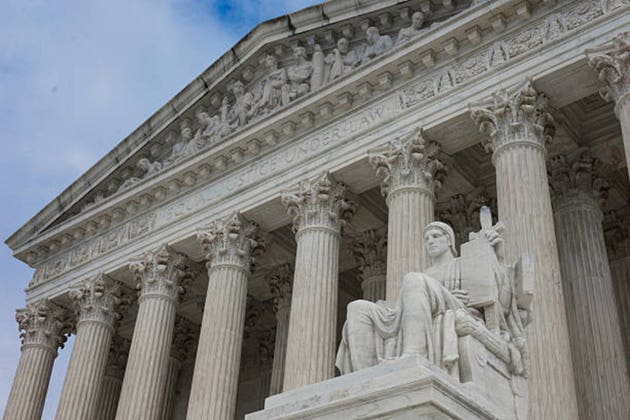
TREE NEWS reports: The U.S. Supreme Court has agreed to hear a challenge brought by Exxon Mobil and Suncor Energy to a set of climate-related lawsuits seeking damages for the companies’ alleged role in contributing to global warming. The case centers on whether such claims — filed by states, municipalities, and other plaintiffs — belong in state courts, where they have so far advanced, or must instead be heard in federal court, where defendants argue they stand a better chance of being dismissed on preemption and federal-law grounds.
The justices’ decision to grant certiorari elevates a long-running procedural fight into a landmark test of how far the fossil fuel industry can be held liable for climate change in U.S. courts. A ruling in favor of the companies could stall or kill dozens of similar suits; a ruling against them could open the door to a wave of state-level liability actions with potentially enormous financial stakes.
Why This Matters Beyond the Courtroom
At its core, the case is about who bears the cost of climate adaptation and who gets to decide. For investors, the implications ripple well beyond Exxon and Suncor. A broad liability regime could reshape the cost of capital for carbon-intensive sectors, alter insurance and underwriting models, and accelerate capital flows toward transition-oriented assets.
Market Implications
- Energy equities: Integrated oil majors and refiners face headline risk around the ruling. Any signal that state courts can impose damages could pressure valuations of carbon-heavy producers, while a federal-court win for defendants could be read as a relief rally for the sector.
- Bonds: A wide liability finding could raise credit risk premia for fossil fuel issuers and complicate municipal finance for coastal cities pursuing damages. Green bond spreads could tighten if legal risk reinforces demand for transition finance.
- Commodities: Oil and gas prices are unlikely to move on the legal question alone, but a sustained rise in litigation-driven compliance costs could feed into longer-term supply discipline and capital expenditure planning.
- Crypto and digital assets: The read-through is indirect. Heightened climate litigation reinforces the ESG and energy-accountability narrative that has, at times, weighed on proof-of-work mining economics. Conversely, if courts expand liability frameworks, demand for transparent, auditable environmental attributes — including tokenized carbon credits and on-chain emissions tracking — could grow.
- Currencies: The dollar is unlikely to react directly. Over time, however, a more litigious U.S. climate regime could influence cross-border capital allocation and the relative attractiveness of jurisdictions with clearer liability rules.
Investor Takeaways
This is a slow-burn legal catalyst, not a same-day trading event. Still, it is a structural marker. Investors should watch three things: the scope of the question the Court agrees to decide, the reaction among state attorneys general and plaintiff cities, and whether insurers begin repricing climate liability exposure. For portfolio construction, the case argues for stress-testing energy holdings against a scenario in which liability costs become a recurring line item rather than a one-off risk.
Companies with strong balance sheets, diversified operations, and credible decarbonization plans are better positioned to absorb legal uncertainty. Speculative, single-asset producers with weak cash flow and high leverage are most exposed. The ruling, whenever it comes, will not end the debate — but it will define the arena in which the next decade of climate litigation is fought.