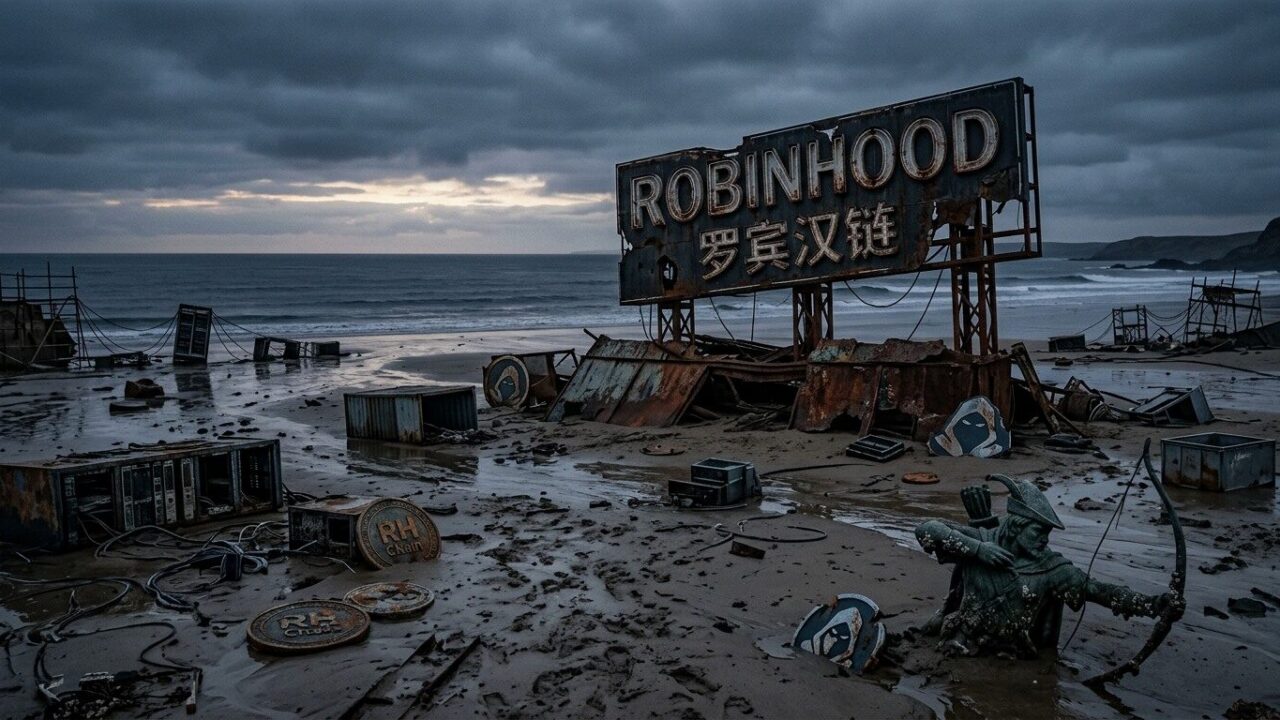
Robinhood Chain’s Meme Frenzy Fades as On-Chain Metrics Retreat
TREE NEWS reports: Robinhood Chain, the L2 that captured crypto’s attention over the summer with a novel “RWA + meme coin” model, is entering a quieter phase. Daily fees and revenue have collapsed from their September peaks, and the ecosystem’s early momentum appears to be normalizing.
Key Data Points
- Fees peaked near $6 million on September 4 and fell to roughly $97,000 by September 30.
- Daily revenue dropped from $5.44 million to about $86,000 over the same period.
- Active addresses fell from a peak of 5.18 million on August 12 to about 354,000, a 30-day decline of roughly 15%.
- Net inflows turned negative for eight straight days between August 31 and September 7, with about $470 million flowing out.
- Bridged TVL slipped from roughly $3.4 billion to about $3 billion, while stablecoin market cap has stalled near $1 billion.
Four Forces Behind the Cooldown
1. Rampant rug pulls. A single serial launch group was linked to 53 projects and over $18 million in extracted value in two months. A separate fraud factory processed roughly $9.49 million in two-way flow across hundreds of tokens in 30 days. Each rug pushes retail traders to exit, thinning the real user base even as DEX volume stays elevated.
2. Tokenized-stock meme pairs stall. Despite more than 800,000 tokenized-stock meme pairs across nine launchpads, aggregate volume has stayed near $600 million, with RWA trader share varying wildly by platform.
3. SEC innovation exemption tightens token issuance. New guidance requires issuer consent for third-party stock token issuance, limiting how aggressively Robinhood can expand its tokenized equity catalog.
4. Robinhood users aren’t converting to on-chain users. The millions of brokerage and crypto app users have not migrated into on-chain meme trading, as the brief CashCat surge and subsequent decline demonstrated.
Bull vs. Bear
Uniswap’s Hayden Adams and Dragonfly’s Haseeb Qureshi argued the drop in fees reflected a deliberate capacity expansion — higher gas limits, lower user costs — with DEX volume still second only to Solana. DeFi researcher Ignas countered that meme and tokenized-stock narratives depend entirely on volume and fees; when volume dries up, rewards and buybacks vanish, and holders sell.
Forward Look
The chain’s next leg likely hinges on bridging the liquidity gap between Robinhood’s brokerage and crypto apps and on-chain markets. If traditional finance users can be onboarded as on-chain traders, the ecosystem — and Robinhood’s equity story — could find a more durable growth path. Until then, expect a period of consolidation.