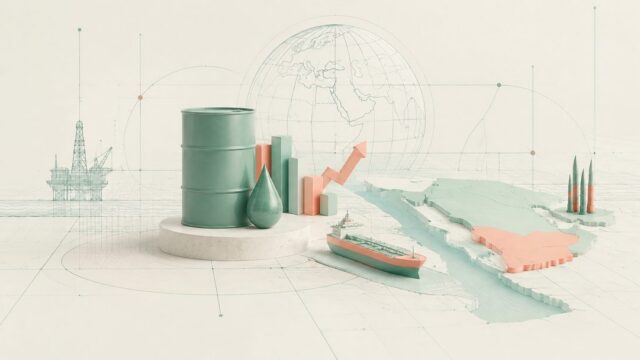
A Leadership Vacuum Meets an Export Deadline
TREE NEWS reports: Iran’s oil minister has resigned just days before the country’s final crude cargoes are expected to clear, a timing that would normally rattle energy desks from Houston to Singapore. Instead, benchmark crude has barely moved. The disconnect says less about Iran’s importance to global supply than about how thoroughly markets have already priced in the loss of its barrels.
The resignation lands as Tehran’s last scheduled export liftings approach a mid-October cutoff. With sanctions enforcement tightening and buyers retreating, the minister’s exit reads as the political capstone on a supply channel that was already closing.
Why Crude Hasn’t Jumped
Three forces explain the muted reaction:
- Pre-priced attrition. Traders have spent months modeling a gradual decline in Iranian exports, so the final cargoes are a confirmation, not a shock.
- Ample spare capacity. OPEC+ members hold millions of barrels per day of idle output, and rival producers have filled the gap.
- Demand softness. Slowing industrial activity in key economies has capped upside even as geopolitical risk premiums flare.
In other words, the market treats Iranian supply as a slow leak rather than a sudden rupture — and slow leaks get absorbed.
What It Means Beyond Oil
For crypto and digital-asset markets, the read-through is indirect but real. Energy-importing economies facing higher effective costs tend to see currency pressure, which historically correlates with stronger stablecoin demand and peer-to-peer flows in restricted markets. Iranian users have long leaned on digital assets to move value around sanctions, and a formal export shutdown could push more activity toward decentralized rails.
At the same time, harder enforcement raises compliance stakes for exchanges and payment processors. Firms with exposure to sanctioned jurisdictions face sharper scrutiny, and blockchain analytics providers will be watching for shifts in on-chain flows.
Macro Crosswinds
Oil is a tax on everything. If crude stays contained, central banks retain room to focus on growth rather than an inflation re-acceleration. That backdrop tends to favor risk assets, including crypto. If, however, a broader Middle East escalation pushes prices higher, the calculus flips: tighter monetary expectations, stronger dollar, and pressure on speculative assets.
The Forward View
Watch three things. First, whether OPEC+ signals a policy response to the lost barrels. Second, whether alternative suppliers ramp quickly enough to keep the market balanced. Third, whether sanctions enforcement visibly reshapes on-chain activity tied to the region.
The quiet in crude prices is not complacency — it is a market that has already done the math. The real question is what happens when the next supply disruption arrives without the same cushion of spare capacity and soft demand.