OKX Expands Beyond Trading with Consumer Payments App
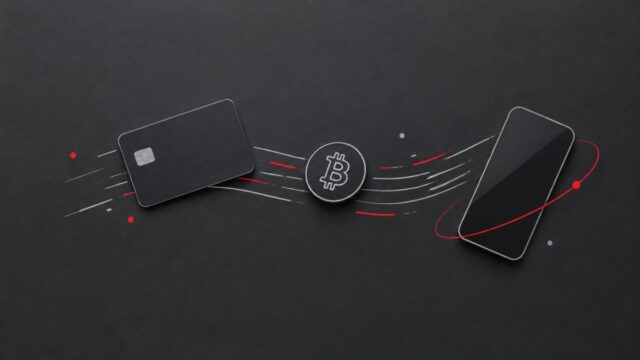
TREE NEWS reports: OKX has unveiled OKX Money, a standalone application aimed at non-trading and non-crypto-native users. The app bundles cross-border transfers, everyday payments, savings yield, and self-custody of assets. It runs on X Layer, OKX’s own Ethereum-compatible Layer 2 network, and is already available in more than 30 countries.
What OKX Money Actually Does
Unlike the main OKX exchange, which targets active traders, OKX Money is designed for people who want to send money across borders, pay for goods and services, earn yield on idle balances, and hold their own keys — without navigating order books or perpetual futures. By settling activity on X Layer, OKX can offer faster and cheaper transactions than a typical Ethereum mainnet transfer, while keeping the door open to on-chain composability.
The product sits at the intersection of several hot narratives: stablecoin-based remittances, embedded payments, and self-custodial wallets. It also reflects a broader strategic pivot among major exchanges, which are racing to capture retail users who may never place a trade but still want dollar-denominated savings and cheap global transfers.
Why This Matters for the Industry
- Stablecoin payments go mainstream: Cross-border transfers and everyday payments are the clearest real-world use cases for stablecoins, and a major exchange launching a dedicated consumer app signals confidence in that demand.
- Layer 2 as a consumer rail: X Layer is no longer just a DeFi playground; OKX is positioning it as the settlement layer for a mass-market payments product.
- Self-custody meets convenience: Offering self-custody alongside payments and yield is a balancing act. If OKX gets the UX right, it could convert crypto-curious users into on-chain participants.
- Competitive pressure: Rivals such as Binance, Coinbase, and regional fintechs are all pushing into payments and remittances. OKX Money raises the stakes.
The Road Ahead
The key question is whether OKX Money can attract users who are not already crypto-native. That depends on regulatory clarity in each of the 30-plus markets, the quality of the payment integrations, and whether the savings yield remains attractive as global interest rates shift. If OKX can pair a familiar payments experience with the transparency of self-custody, it may carve out a durable niche between neobanks and crypto exchanges. For now, the launch is a clear signal that the next phase of exchange competition will be fought over everyday money movement, not just trading fees.