Tree News Invited to Singapore’s “Future Night”
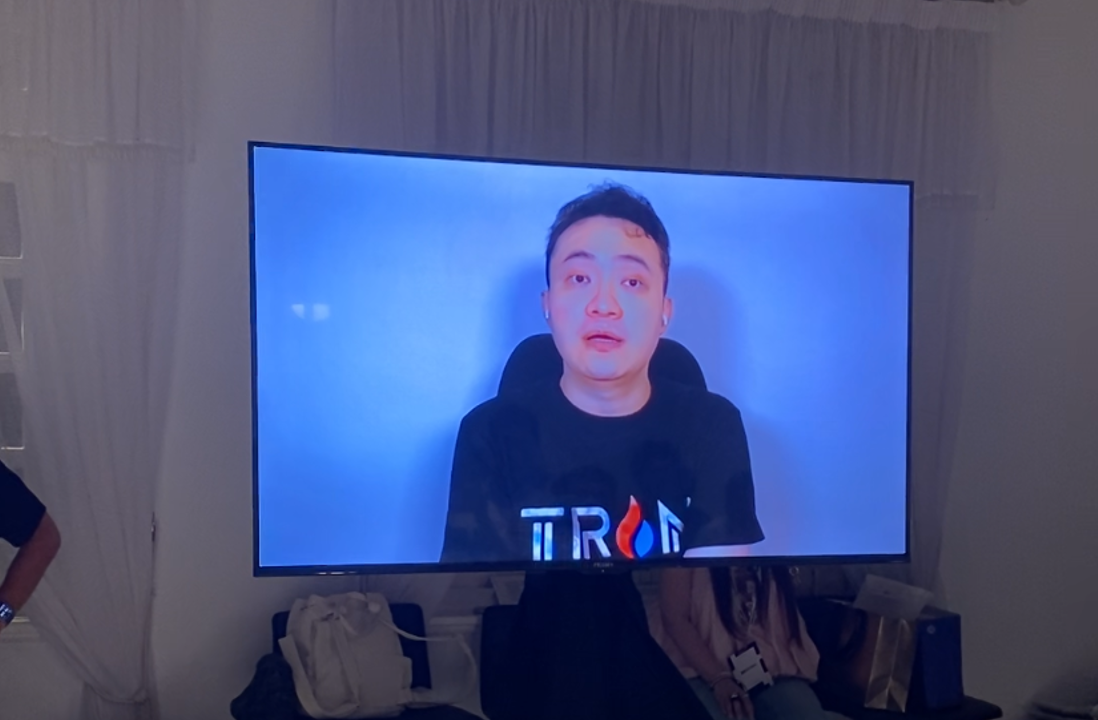
TREE NEWS reports: On October 6, HTX DAO’s “FUTURE NIGHT” was held in Singapore. Tree News was invited to attend the event and, as a partner listed on the event poster, joined industry participants on site in focusing on the evolution of the digital economy and future wealth.
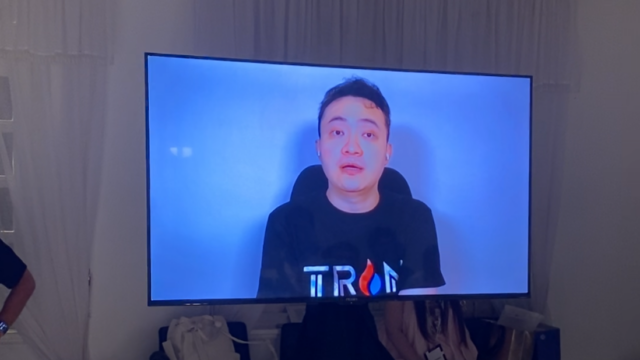
The event was themed “Finding the Wealth Code of the Future.” During the event, Justin Sun shared, via video, his judgments on wealth concepts, digital finance and AI development over the next decade. He extended the discussion from short-term market fluctuations to longer-term questions: as assets, payments and productive activity gradually enter digital networks, how should people understand the holding, flow and creation of wealth?
In Tree News’ view, what is worth further discussion in these remarks is the attempt to place several industry threads that are usually told separately side by side: stablecoins carry value transfer, asset tokenization changes how rights are recorded and circulated, and AI may change the process of task execution and income creation. Whether the three can truly connect determines how far the related narrative still is from the real economy.
Below, we first publish the provided video transcript in full, then offer Tree News’ independent interpretation.

Full Text of Justin Sun’s Video Remarks
Editor’s note: The following fully preserves the content of the provided transcript, divided by semantics and with subheadings added; the subheadings are added by the editor and are not part of the original remarks.
The Market Is Repricing the Future
Everyone, we’re very happy—once again in Singapore with our HTX DAO friends for future night. Many of you here are old friends who have been with HTX for many years. The market has indeed been interesting lately: the U.S. ten-year Treasury yield has risen to its highest level since 2007. By the old logic, risk assets should be struggling, but Bitcoin has instead climbed back above $80,000.
The macro is not as good as everyone imagines, and the market is not as bad as everyone imagines. What exactly is the market trading? I think what it’s really trading is many people’s repricing of the future world. In 2017, everyone was still arguing every day about whether Bitcoin was a bubble and what blockchain was even good for. Today Bitcoin has spot ETFs, stablecoins have a regulatory framework, and traditional financial institutions are studying how to move assets onto the chain.
A Decade of Cognitive Change: Digital Assets and Traditional Finance Moving Toward Connection
The biggest changes in my understanding over this decade are two. First, ten years ago I saw crypto as a new kind of asset. Today I increasingly feel that what really matters about it is that it makes us rethink how we should hold and use wealth in a world that is changing faster and faster. Second, twenty years ago many people thought crypto was here to disrupt traditional finance; today I believe more strongly that the two will become ever more deeply connected, and what is really happening is not one destroying the other, but the underlying infrastructure of global finance being rebooted.
What I most hope to help accomplish today is actually very simple: to let anyone in the world, with just a phone, save and transfer value at low cost and in a timely way, as easily as sending a message. Today USDT on-chain has reached over $90 billion, and many users come from places where banks are inconvenient and cross-border remittances are expensive; they use it to receive salaries, do cross-border trade, and send money to family.
The internet brought the cost of transmitting information down to almost zero, and blockchain will bring down the cost of transmitting value as well—this is the fundamental reason I have long been bullish.
Uncertainty Becomes the Norm, and Views on Wealth Need Re-examination
Over the past few decades, many people’s views on wealth were built on a relatively stable world: stable jobs, real estate, savings, long-term economic growth, and relatively stable rules. But over the next decade, uncertainty will become the norm. First, money is no longer cheap; the debt of major economies is at high levels, and many wealth logics driven by low-cost capital need to be re-examined, and people will care more and more about the long-term purchasing power of the assets in their hands.
Second, technological change is getting faster and faster; the decades-long landscape of an industry may be rewritten in just a few years. Third, geopolitics, energy, and industrial chains—issues ordinary people did not need to consider in the past—are increasingly and directly affecting everyone’s wealth. AI changes how wealth is created, while crypto and digital finance change how wealth is held and flows.
Stack the two together, and wealth creation will be faster, and wealth divergence will be faster too. So the single-asset belief of “buy and just hold forever,” and the idea that “money in savings is safe,” will both be challenged more and more.
Optionality, Mobility and Real Productivity
Conversely, I particularly value three things: optionality, mobility, and real productivity. First, optionality. When the market is truly cheap, do you have money to buy? When a new industry emerges, do you have capital to participate? Many people miss opportunities not because they can’t understand them, but because by the time the opportunity comes, they no longer have optionality. So the first thing in wealth management is not maximizing returns, but not easily letting yourself lose your options.
Second, mobility. Today people, business and information are all globalized, but the flow of value is still slow and expensive. Houses can’t move, equity flows are restricted, cash has exchange-rate and credit issues, and digital assets add a new option to the world.
Third, productivity. Wealth ultimately flows to places that can raise production efficiency. The Industrial Revolution was machines and electricity, the internet era was chips and software, and today it is AI, computing power, energy and digital finance.
Cash, Gold, Stocks and Digital Assets Each Play Their Part
With this framework, look again at cash, gold, stocks, BTC and digital assets: it’s not about one replacing another, but each playing its part. The value of cash is not yield, but optionality—it is ammunition—but holding a large amount for the long term will slowly erode its purchasing power. Gold is a consensus of thousands of years, hedging credit risk and extreme situations; in recent years central banks around the world have continued to increase holdings, and it is more like ballast.
Stocks are ownership of productivity; a large part of the value AI creates over the next decade will show up in corporate profits. BTC is the scarce asset of the digital age, with the scarcity of gold and the mobility of the internet, but it is very volatile and should be part of an allocation, not all of it. Stablecoins are the cash of the digital world; other digital assets differ enormously, and the key is whether they have real users and revenue.
Frankly speaking, most projects today may not still be around ten years from now.
Judging Long-Term Holding: Demand, Scarcity and Crossing Cycles
In judging whether an asset is worth holding long term, I mainly look at four points: is it scarce enough, does it have real demand, are consensus and liquidity getting stronger, and will it still be there in the worst case? Preserving value is about protecting purchasing power, while growing value is about participating in productivity growth. Long-term accumulation relies on time and compounding, and the thing to fear most is being forced out midway. The people who truly keep their wealth are often not those who seized the most opportunities, but those who made no fatal mistakes.
So my own approach to assets has always been relatively simple. First, no matter what happens tomorrow, there is enough liquidity, and I won’t be forced to sell the things I truly favor. Second, a portion of assets is there to cross cycles, and doesn’t need me to open my phone and check every day. Third, I always set aside a portion of capital to participate in the growth of the next decade.
The Increments of the Next Decade: AI, Stablecoins, RWA, Energy and Computing Power
The truly large wealth increments of the next decade, I believe, will come from several directions: AI, stablecoins and global payment infrastructure, RWA asset tokenization, and energy and computing power. Stablecoins will go from being a tool of the crypto world to becoming part of global payments and clearing. Traditional assets such as bonds, funds and gold will increasingly go on-chain, tradable 24/7 and reachable globally. And the end of AI is computing power, and the end of computing power is energy.
AI’s Key Test: Whether It Can Enter Real Production Processes
These directions share one thing in common: they all make something faster, cheaper, and easier to scale—and most of them are infrastructure. Among them, what I spend the most time on is AI: how do AI agents pay? When does the machine economy arrive? I’ve talked about these a lot before. What I focus on more now is another question: can AI ultimately become real productivity?
If a technology is merely something everyone talks about a lot every day, it can generate market moves. But a technology that can truly change the wealth landscape must enter the production process, help companies cut costs, let ordinary people do things they couldn’t do before, and ultimately form new income.
From Token Throughput to Productivity
The changes we’ve seen on BAI make me increasingly interested in this point. BAI has been online for more than five months, users already exceed 2.8 million, and daily token throughput has broken through 1.5 trillion. But frankly, what interests me most is not 1 trillion or 1.5 trillion. Because tokens themselves are not wealth; what is truly worth watching is whether these tokens have become productivity, and whether developers are truly calling models to build products.
So I prefer to treat BAI as an observation window, letting us get as close as possible to the front line of AI truly entering economic activity.
When AI Starts Working, What Kind of Financial Infrastructure Does It Need
And when AI is no longer just chatting, but truly starts working, it needs identity, accounts, and the ability to transact independently. This is also the direction BAI is exploring: giving AI agents truly usable financial infrastructure. By then, stablecoins will not only be used by people; AI will use them too. Doing investment and doing startups share one thing: you don’t necessarily have to predict the endgame earlier than everyone else, but you must get as close as possible to where change is happening. The closer you are to change, the faster you can correct it.
After Getting the Direction Right, You Still Have to Avoid Being Forced Out Midway
The mistake ordinary people are most prone to is using short-term money to do long-term things, entering when things are hottest, exiting when there is the most panic, or betting everything on one judgment. Leverage itself is not the original sin, but it amplifies both wrong judgments and timing errors at the same time: a correct direction, plus excessive leverage, can also be liquidated before reaching the finish line.
I’ve seen too many people in this industry get the direction right but fail to wait until the day the result comes out. So my advice is very plain: separate emergency money, money for crossing cycles, and money for participating in growth; only invest in what you understand; proceed in batches; and don’t operate frequently. In the field of digital assets, safekeeping your assets is itself part of the return.
Crypto is a market with very obvious cycles, but the long-term trend is precisely realized through cycle after cycle.
Advice for Young People: Invest in Yourself, Stay Close to the Flow of Value
To young people, I want to say: invest in yourself, learn early to work alongside AI, make mistakes while you can afford to lose, and let time be on your side. For any claim of guaranteed profits, ask one more question—including claims from me. If over the next decade you could only follow one trend, I would choose the free flow of value in the digital world. AI starts working, assets start going on-chain, stablecoins go global.
In the end, it all comes back to this one question. Ten years from now, I hope what we do today can let more ordinary people, no matter where they live, equally access good financial services. If one day everyone transfers money with stablecoins and manages wealth with on-chain assets as naturally as sending a message—so natural that no one mentions the word blockchain anymore—that is when this industry will have truly succeeded.
The World Ten Years from Now, and Where You Stand Today
Finally, a question for everyone: if the world ten years from now really arrives in the direction you believe in, where do you stand today? Thinking this question through clearly is far more important than predicting the next K-line. Thank you. Okay, great, okay.
Tree News In-Depth Interpretation
From Discussing Price to Discussing Use, the Industry Needs to Change Its Yardstick
The first half of the remarks discusses wealth and assets, while the second half gradually turns to payments, productivity and AI agents. In Tree News’ view, this shift raises a question more worth tracking continuously: what exactly supports the long-term value of digital assets?
Price can reflect market expectations, but it cannot by itself prove that a technology has entered economic activity. Whether a network has people continuously using it, whether a service has people willing to pay for it, and whether a transaction saves time and is easier to complete than the original method—these kinds of evidence are closer to the application itself.
Therefore, observing a project cannot rely only on user growth, transaction scale or discussion heat at a certain stage; one must also ask where the growth comes from: is it a one-off attempt attracted by subsidies, or will users keep using it when there are no incentives? Does revenue come from external customers, or does it mainly depend on circulation within the ecosystem?
This is also our entry point for understanding Justin Sun’s emphasis on “real users and revenue” in the video. It can serve as a set of observation criteria, but whether a specific project meets the criteria still needs to be verified one by one. Having a direction recognized and a project having already built a sustainable business model are two different judgments.
The Opportunity for Stablecoins Depends on Whether a Real Payment Can Be Completed End to End
The video links stablecoins with salaries, remittances and cross-border trade. What these scenarios share is that users first need to complete a payment, and technology is merely the path to completing that payment.
From Tree News’ perspective, measuring the stablecoin payment experience cannot just calculate the time and fees required for an on-chain transfer. How the payer obtains stablecoins, whether the recipient can exchange them into locally usable funds, and how the service provider handles identity verification and abnormal transactions all affect the cost and usability of the entire payment.
If the on-chain transfer is fast, but exchange, withdrawal or dispute handling remain difficult, the efficiency improvement users feel will be discounted. What is truly worth watching is the complete process from payment to receipt, and then to actually using the funds.
At the same time, stablecoins’ payment function still depends on their reserves, redemption arrangements and service networks. Research by the Federal Reserve points out that the connection between stablecoin growth and the financial system may bring efficiency gains, but may also transmit stability risks such as runs.Reference: Federal Reserve, “Stablecoins in 2025: Developments and Financial Stability Implications”
Therefore, Tree News pays more attention to practices that can demonstrate real payment use cases, sustained usage and the full cost of service. This information explains the situation better than disclosing on-chain transfer scale alone.
The Core of RWA Is Whether On-Chain Records and Off-Chain Rights Correspond
In his remarks, Justin Sun talked about putting assets such as bonds, funds and gold on-chain, and envisioned more continuous and broader ways of trading and reaching users. The appeal of this direction is intuitive: if asset records, trading and settlement can be more tightly connected, friction in the original processes has a chance to be reduced.
But in Tree News’ view, after “going on-chain,” the first thing that needs to be explained is what the token actually represents.
Does it correspond to asset ownership, a claim on income, or the right to use a certain service? Who is responsible for safekeeping the underlying assets, who maintains the holder records, and how are defaults handled? These questions determine whether on-chain records can be recognized and enforced in reality.
Technology allowing round-the-clock transfers does not mean the market always has sufficient liquidity, still less that the underlying assets can be redeemed at any time. Trading hours, market depth and the honoring of rights need to be examined separately.
The Bank for International Settlements’ research on tokenization regards the integration of assets, funds and related processes as a potential source of efficiency, and emphasizes the importance of the foundations of financial trust. This provides a useful perspective for understanding RWA: value comes not only from an asset having a digital certificate, but also from whether trading and settlement processes are reliably improved.Reference: BIS, “The next-generation monetary and financial system”
For the media, reporting on RWA requires clearly explaining the underlying assets, the rights structure and actual operations. These are the foundation for readers to understand a project.
The Financial Capabilities of AI Agents Should Start with Clearly Authorized Tasks
In the video, Justin Sun links AI starting to work with identity, accounts and transaction capabilities. This provides a concrete entry point for the relationship between AI and digital finance.
For example, an agent that organizes materials for a company may need to buy data, call paid models or use cloud computing services. As long as a task involves calling external resources, it raises issues of budget, payment, receipts and verification.
However, having a wallet it can call does not automatically mean AI has become an economic entity that can independently bear rights and obligations. Practical applications still need to clarify: who authorizes it to use funds, who it is allowed to pay, what the limit is, which actions must be confirmed by a human, and how to halt subsequent operations.
Tree News believes the easier starting point to verify is to have an agent complete a specific task under a limited budget, clear permissions and auditable records. How high the task completion rate is, whether it reduces manual processing time, whether it produces erroneous payments, and whether it can accurately deliver results can all be observed and compared.
If these links work, payment infrastructure can move from being a conceptual accompaniment to an actual need. This also explains why the combination of AI and stablecoins is worth studying starting from business processes, rather than judging it merely on the stacking of two hot fields.
After Token Throughput, We Need to See Evidence of Productivity
In the passage involving BAI, Justin Sun gives figures such as user scale and daily token throughput, while emphasizing whether the calls are truly used to develop products. The project name and figures here follow the provided transcript; this article has not independently verified them, nor does it treat them as evidence that the project’s operating performance has been confirmed.
What has more analytical value in this passage is the measurement approach it proposes: computing resources being consumed does not equal economic value having been produced.
A model call may complete a valid task, or it may be repeated attempts, error correction, or handling problems that could have been solved more simply. Call volume indicates the degree of system activity, while productivity needs to be judged through task completion, delivery quality, manual review input and customers’ willingness to pay.
The next layer of data Tree News hopes to see is comparable business results: how much time it takes to complete the same job, how unit task cost changes, whether users keep paying, and whether the business can operate long term after deducting computing power, subsidies and service costs.
These indicators can help the industry distinguish “AI is being used a lot” from “AI creates sustainable value,” and also make truly effective products easier to see.
Judgments About Long-Term Trends Also Need to Withstand the Test of Time and Reality
The video talks several times about liquidity, optionality, and avoiding an early exit due to leverage and mismatched funding horizons. What Tree News pays more attention to here is the methodological point: a long-term judgment needs an implementation path that can withstand real-world changes.
This applies equally to startups and project building. A direction may have potential, but customer adoption speed, the pace of cost decline, rule changes and delivery capability may all differ from initial expectations. Continuous verification and preserving room for adjustment are important conditions for turning a trend judgment into actual results.
Therefore, when presenting industry views, the media should also provide questions that can test those views. Have stablecoins entered payment scenarios that occur continuously? Has asset tokenization made rights and processes clearer? Have AI agents completed valuable tasks within controllable permissions? These questions help understand change more than equating a certain track directly with certain returns.
Starting from On-Site Exchange, Continuously Observing Real Change
Invited to attend HTX DAO’s “Future Night,” Tree News hopes to extend the on-site exchange into continuous observation. Changes in future wealth will ultimately be reflected in specific products, real transactions and user behavior.
When more people can complete value transfers with lower friction, when digital rights can be clearly verified and honored, and when AI’s execution capability forms measurable business results, the trends discussed in the remarks will have trackable real-world progress. Tree News will continue to follow these developments, and also record the problems that remain unresolved.