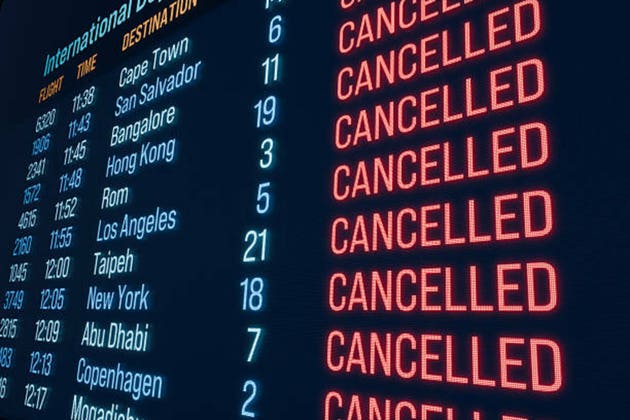
Missile Strike on Saudi Airport Triggers Flight Disruptions and Market Jitters
TREE NEWS reports: A missile attack on a Saudi Arabian airport has forced airlines to reroute flights and cancel services, with disruptions widening across the region as carriers assess safety risks. The strike marks a significant escalation in regional tensions, raising immediate concerns about the security of civilian aviation infrastructure and the stability of energy supply routes in the world’s most important oil-producing region.
While details of the attack remain fluid, the operational impact is already visible: multiple flights have been diverted, delayed, or grounded, and airspace closures are rippling through connecting hubs. For markets, the immediate question is whether this is an isolated incident or the opening move in a broader geopolitical confrontation that could threaten Gulf shipping lanes, oil facilities, and investor risk appetite.
Market Implications: Oil, Safe Havens, and Risk Assets
Energy and Commodities
The most direct transmission channel is crude oil. Any perceived threat to Saudi production or export infrastructure typically adds a geopolitical risk premium to Brent and WTI. Traders will watch for:
- Brent crude pushing higher on supply-security fears, with options skewing toward calls.
- Natural gas and refined products reacting if shipping or refining logistics are affected.
- Gold attracting safe-haven bids as investors hedge geopolitical tail risk.
If the disruption proves contained, the premium may fade quickly. If retaliatory threats escalate, energy could lead a broader commodity rally.
Equities
Equity markets are likely to show a bifurcated reaction. Defense and aerospace names often benefit from heightened geopolitical tension, while airlines, travel, and logistics companies face headwinds from higher fuel costs and route disruptions. Broad indices may see modest risk-off pressure, particularly if volatility gauges like the VIX spike. Energy sector stocks could outperform as oil rises, offering a partial offset to overall market weakness.
Bonds and Currencies
Safe-haven flows typically favor U.S. Treasuries, German bunds, and the Japanese yen. The U.S. dollar may strengthen against risk-sensitive emerging market currencies, while oil-exporting nations’ currencies could see support if crude rallies. Conversely, currencies tied to global growth—such as the Australian dollar—may weaken.
Crypto
Bitcoin and other digital assets have increasingly traded as risk-sensitive instruments. In the short term, a geopolitical shock could pressure crypto prices alongside equities. However, if the event triggers sustained fiat debasement concerns or capital flight in affected regions, crypto could see safe-haven demand—particularly in markets with limited access to traditional havens. The reaction will likely be volatile and two-sided.
Why This Matters for Investors
Geopolitical shocks are notoriously difficult to price because their duration and severity are unknown. The key for investors is to distinguish between a contained incident and a prolonged escalation. Historically, markets have absorbed single-event Middle East flare-ups within days, but sustained conflicts can reprice energy, inflation, and interest rate expectations for months.
Investors should monitor:
- Official statements from Saudi authorities and regional powers on retaliation or de-escalation.
- Oil price action, especially whether Brent holds above recent ranges.
- Airspace and shipping advisories that could signal broader logistical disruption.
- Safe-haven flows into Treasuries, gold, and the yen as a real-time sentiment gauge.
Key Takeaways
- A missile attack on a Saudi airport is disrupting flights and raising regional security concerns.
- Oil and gold are the most likely immediate beneficiaries; equities and risk assets may face pressure.
- Safe-haven flows into bonds and the dollar are probable, with crypto reacting as a risk-sensitive asset in the near term.
- The market impact hinges on whether this remains isolated or escalates into a broader conflict.
- Investors should watch official statements, oil prices, and volatility indicators for directional cues.