Token Naming Debate Reflects Deeper AI Cognition Issues
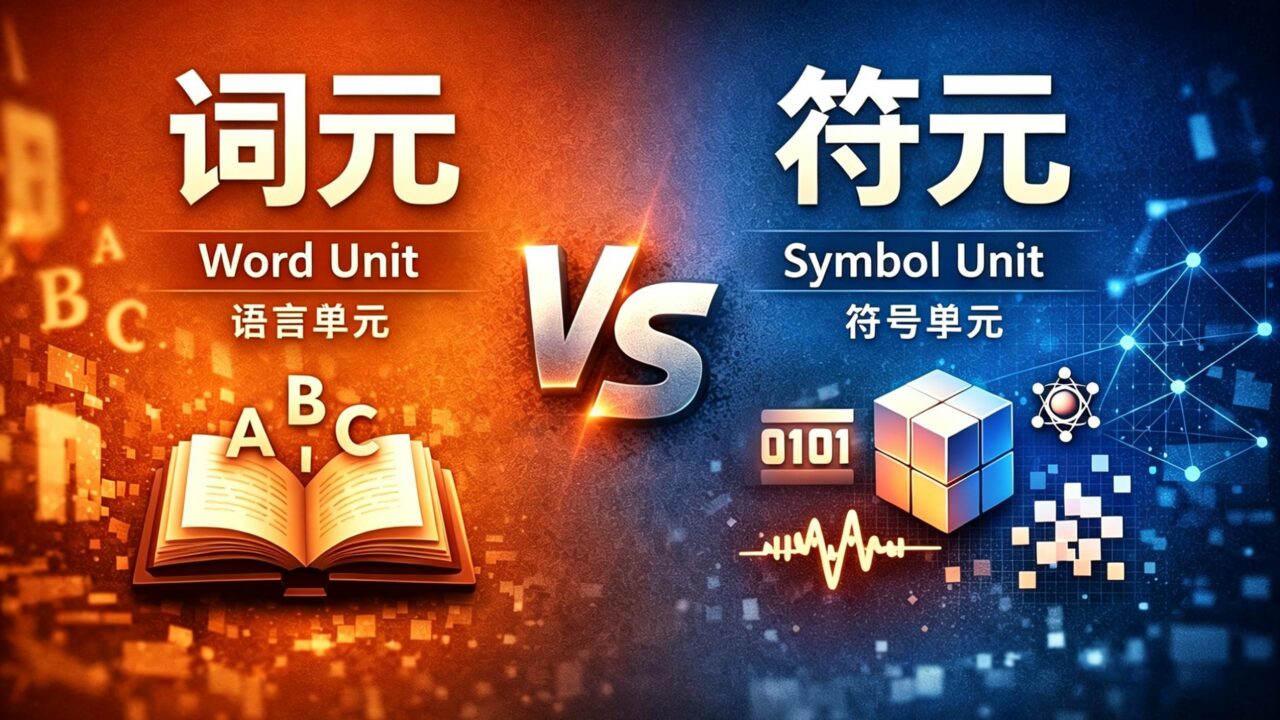
In Chinese AI circles, the term “Token” has long been translated as “词元” (word unit), a name that emphasizes its linguistic role. But as AI models evolve beyond text to handle images, audio, and video, critics argue that “词元” is misleading. A growing number of researchers and developers advocate for “符元” (symbol unit), which they say better captures the fundamental nature of tokens as discrete, cross-modal symbols.
The debate is not merely semantic. It touches on how we conceptualize the basic units of computation in AI systems, and how those concepts shape model design, data representation, and even public understanding of AI capabilities.
The Case Against “词元”
Proponents of “符元” argue that “词元” suffers from path dependency and semantic anchoring. When the term was first coined, AI was predominantly text-based, and tokens were indeed mostly words or subwords. But modern models like GPT-4o and Gemini process tokens that represent pixels, audio frames, or even abstract concepts. Calling these “word units” is inaccurate and constrains thinking.
Moreover, “词元” creates confusion in back-translation. In English, “token” is a neutral term that applies across modalities. Translating it as “word unit” implies a linguistic bias that does not exist in the original. This inconsistency can lead to misunderstandings in international collaboration and in the design of multilingual models.
“符元” as a More Stable Foundation
“符元” aligns with the computational essence of tokens: they are discrete symbols that can represent any type of data. In information theory, a symbol is the basic unit of a message, and tokens are essentially symbols in a learned vocabulary. This naming is modality-agnostic and future-proof, accommodating not only text but also images, sound, and sensor data.
Furthermore, “符元” has historical precedent in Chinese computer science. The term “符号” (symbol) is widely used in mathematics and logic, and “符元” naturally extends that tradition. It avoids the linguistic narrowness of “词元” and provides a more consistent cognitive framework for researchers and engineers.
Implications for AI Development and Education
The naming of fundamental concepts has real consequences. In education, using “词元” may lead students to think of AI as a text-processing tool, whereas “符元” encourages a broader view of AI as a general-purpose symbol manipulator. In research, precise terminology can foster better cross-disciplinary communication, especially as AI intersects with fields like neuroscience, cognitive science, and multimedia processing.
Industry standards and documentation also matter. If major AI platforms and open-source projects adopt “符元”, it could become the de facto standard, influencing how future models are described and understood. The choice is not trivial; it shapes the mental models of an entire generation of AI practitioners.
Forward-Looking Perspective
As AI continues to evolve toward multimodal and embodied systems, the need for accurate, modality-neutral terminology will only grow. The shift from “词元” to “符元” represents a maturation of the field, moving away from text-centric assumptions toward a more universal understanding of computation. While the debate may seem academic, it reflects a broader recognition that the language we use to describe AI shapes the AI we build. Ultimately, “符元” may become the standard, but more importantly, the discussion itself signals a healthy self-awareness in the AI community.