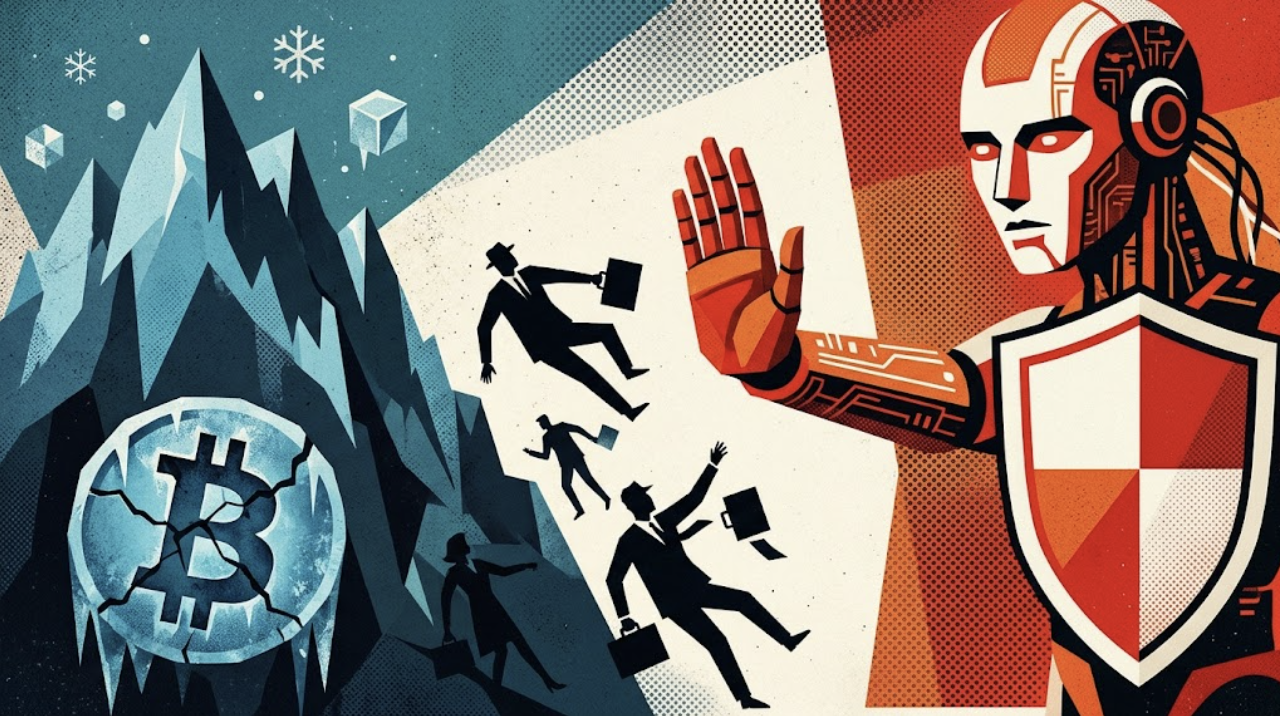
Web3 Layoff Wave: It’s Not AI Stealing Jobs, It’s the Money Running Out
The Web3 industry has been gripped by a sustained wave of layoffs for more than half a year, and the official explanations are increasingly being called into question. Coinbase publicly announced a 14% workforce reduction, but former employees claim that in its India office, roughly 90% of staff have departed. Multiple sources say layoffs are frequently packaged as “AI-driven restructuring” or “performance-based” to avoid paying severance, obscuring the real cause: a severe liquidity crunch and unsustainable cost structures across the sector.
AI Is a Convenient Scapegoat
The narrative that artificial intelligence is displacing Web3 jobs is appealing but misleading. While AI tools have automated some routine tasks, the scale and speed of the cuts point to deeper financial distress. “AI is the excuse du jour,” said one former exchange employee. “The truth is that revenue has collapsed, token listings are drying up, and venture funding has slowed to a trickle.” By framing layoffs as technology-driven, companies can avoid acknowledging that their business models are failing—and, in some jurisdictions, sidestep legal obligations to affected workers.
The Real Problem: High Listing Fees and Dried-Up Liquidity
Industry participants point to two structural issues choking the sector. First, listing fees on major exchanges remain prohibitively high, often reaching millions of dollars for projects seeking visibility. These fees drain capital that could otherwise fund development and job creation. Second, liquidity has evaporated. Trading volumes have slumped, market makers have pulled back, and retail participation has dwindled. The result is a vicious cycle: lower liquidity leads to lower revenue for exchanges and protocols, which leads to cost-cutting, which further erodes confidence and participation.
Severance and Transparency Concerns
The way layoffs are being handled has raised ethical and legal questions. Former employees describe being classified as “underperformers” without documented warnings, or being told their roles were “automated” when no AI tool had been deployed. Such tactics not only harm workers but also damage employer brands in a tight talent market. As one recruiter noted, “Word travels fast in crypto. Companies that burn people will struggle to hire when the market turns.”
Forward-Looking: A Painful but Necessary Reset
The layoff wave is forcing a long-overdue reckoning. Projects that relied on token inflation and hype rather than real revenue are being culled. Survivors are leaner, more focused on product-market fit, and increasingly cautious about over-hiring. Regulatory clarity—particularly around token classification and exchange operations—could help restore confidence, but it will not solve the liquidity problem overnight. For now, the industry must confront an uncomfortable truth: the job cuts are not a tech story. They are a money story. Until capital flows return and business models prove sustainable, the Web3 labor market will remain in contraction.