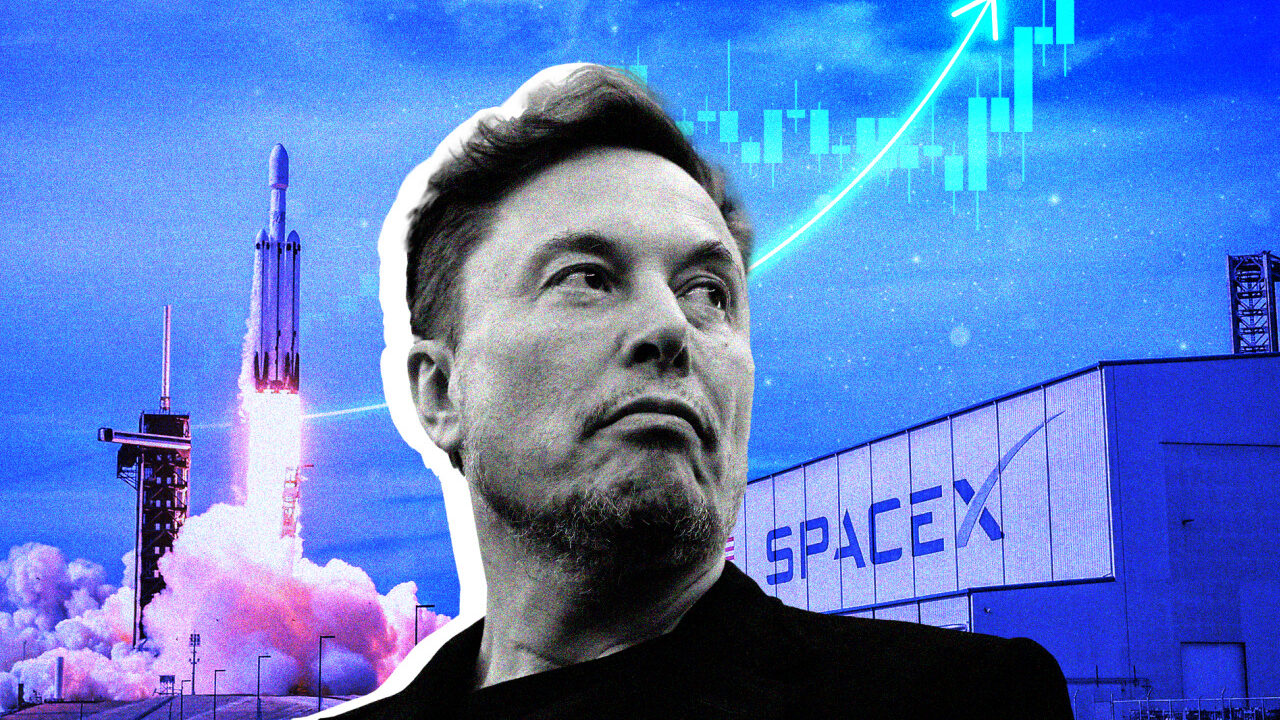
The ‘Musk Selloff’ Deepens as Tesla and SpaceX Combine for $456 Billion Two-Day Wipeout
TREE NEWS reports: Investors are growing increasingly concerned that a divided Washington could derail what some call “Elon, Inc.” — the sprawling business empire of Elon Musk — after Tesla and SpaceX collectively shed $456 billion in market value over just two trading days. The sharp decline marks one of the most dramatic two-day losses for Musk-affiliated assets in recent memory, driven by a combination of political uncertainty and broader market jitters.
The selloff accelerated as investors digested the implications of a fractured political landscape in Washington, where gridlock threatens to stall key policy initiatives, including EV tax credits, government contracts, and regulatory approvals that have historically benefited Musk’s companies. Tesla, the publicly traded centerpiece of the empire, bore the brunt of the losses, while SpaceX, though private, saw its valuation marked down sharply in secondary markets.
Market Implications: A Ripple Across Asset Classes
The Musk selloff is not an isolated event. It reflects a broader repricing of risk tied to political dysfunction in the U.S. capital. Here’s how the fallout could extend across markets:
- Stocks: Tesla’s decline has dragged on the Nasdaq and S&P 500, given its heavyweight status. Other EV makers and clean-energy stocks may face contagion as investors reassess the sector’s policy-dependent growth outlook. Suppliers tied to Tesla could also feel the pinch.
- Bonds: Political gridlock often raises concerns about fiscal policy paralysis, which can affect Treasury yields. If Washington fails to address budget and debt-ceiling issues, bond markets could see increased volatility, with investors demanding higher premiums for holding U.S. debt.
- Crypto: Musk’s influence on crypto markets — particularly Bitcoin and Dogecoin — is well documented. A sustained selloff in his companies could dampen sentiment in digital assets, especially if it signals broader risk aversion. However, some investors might rotate into crypto as a hedge against political instability.
- Commodities: A slowdown in Tesla’s expansion could reduce demand for battery metals like lithium, nickel, and cobalt. Gold, meanwhile, may benefit as a safe-haven asset if political tensions escalate.
- Currencies: The U.S. dollar could weaken if political uncertainty undermines confidence in U.S. governance. Conversely, safe-haven currencies like the yen and Swiss franc may strengthen.
Why This Matters for Investors
The Musk selloff is a microcosm of a larger issue: the market’s sensitivity to political risk. For investors, it underscores the importance of diversification and a clear-eyed assessment of policy exposure. Companies heavily reliant on government subsidies, contracts, or regulatory favor are particularly vulnerable to shifts in political winds.
Moreover, the concentration of Musk’s business interests — spanning EVs, space exploration, social media, and AI — means that troubles in one area can quickly spill over into others. Investors with exposure to any part of the Musk ecosystem should monitor political developments closely and consider hedging strategies.
Finally, the selloff may present opportunities for long-term investors. If the political noise subsides and fundamentals remain intact, beaten-down stocks could offer attractive entry points. However, timing such a recovery requires patience and a willingness to tolerate volatility.
Key Takeaways
- Tesla and SpaceX lost a combined $456 billion in two days, driven by political uncertainty in Washington.
- The selloff highlights the market’s vulnerability to political gridlock and policy risk.
- Contagion effects could spread to other EV stocks, bonds, crypto, commodities, and currencies.
- Investors should diversify, monitor policy developments, and consider hedging against political risk.
- Long-term opportunities may emerge if fundamentals remain sound and political tensions ease.