Tokenized Stocks Face Pushback from Apple, Boeing, Microsoft, Nvidia
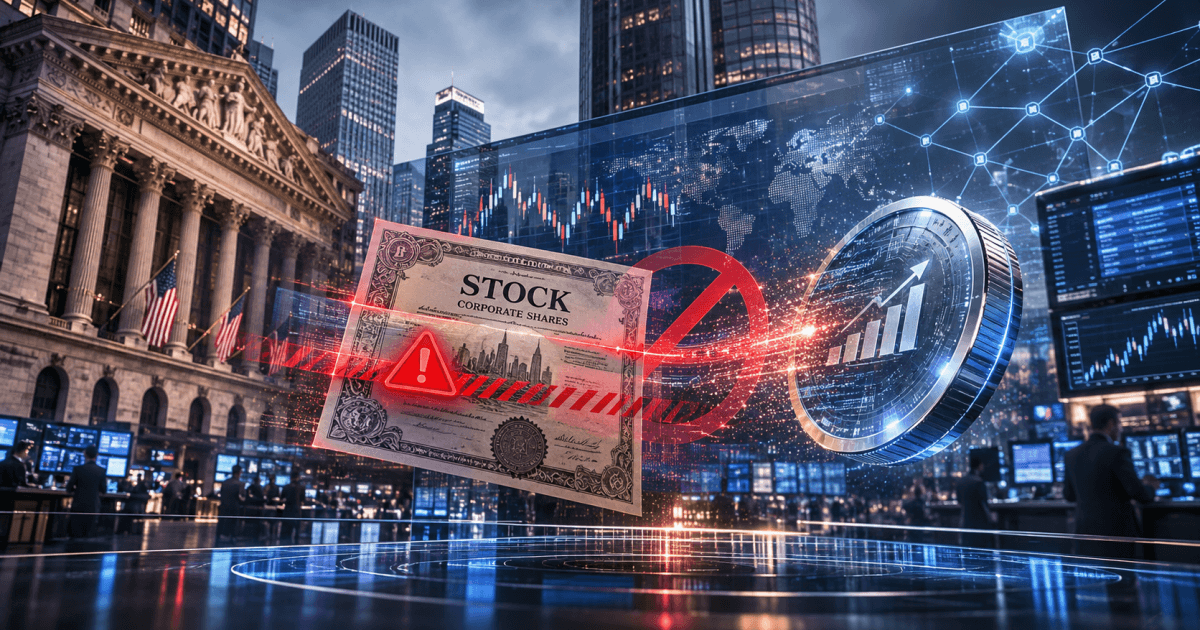
OKX and Intercontinental Exchange (ICE) are pushing forward with OKXICE, a platform designed to bring tokenized versions of US equities onto the blockchain. But the initiative has run into concentrated opposition from several of the world’s largest listed companies, including Apple, Boeing, Microsoft, and Nvidia. These firms argue that third parties should not be able to repackage and trade their shares without consent, raising fundamental questions about issuance rights, shareholder entitlements, and control over trading venues.
The Core Conflict: Issuance Rights vs. On-Chain Liquidity
The dispute is not a simple case of traditional corporations rejecting blockchain technology. Rather, it is a renegotiation of power between stock issuers, trading platforms, and the emerging on-chain liquidity ecosystem. Tokenization promises 24/7 trading, fractional ownership, and broader access, but it also threatens to dilute the control that issuers have over their own equity. Companies worry that tokenized shares could circumvent existing shareholder voting mechanisms, complicate dividend distribution, and create parallel markets that undermine regulatory oversight.
For OKX and ICE, the challenge is to build a compliant framework that respects issuer rights while still delivering the benefits of blockchain-based trading. The pushback from Apple, Boeing, Microsoft, and Nvidia suggests that without explicit consent from issuers, tokenized equity platforms may struggle to gain legitimacy and scale.
Industry Implications: A Test Case for RWA Tokenization
This standoff has broader implications for the real-world asset (RWA) tokenization sector. While tokenized treasuries and private credit have gained traction, equities represent a far more complex asset class due to their governance rights and regulatory sensitivity. If major corporations successfully block third-party tokenization, it could set a precedent that limits how far RWA tokenization can go without issuer cooperation.
Conversely, if platforms like OKXICE can negotiate a framework that satisfies issuers, it could unlock a massive new market. The outcome will likely depend on regulatory guidance from the SEC and other bodies, as well as the willingness of issuers to embrace blockchain-based distribution channels.
Forward-Looking Perspective
The next phase of this debate will center on whether tokenized equities can be structured as derivatives or synthetic products that do not require direct issuer consent, or whether the industry will need to pivot toward a permissioned model where issuers opt in. Either way, the OKXICE controversy highlights that tokenization is as much a legal and governance challenge as a technological one. For now, the ball is in the court of regulators and issuers to define the rules of engagement.