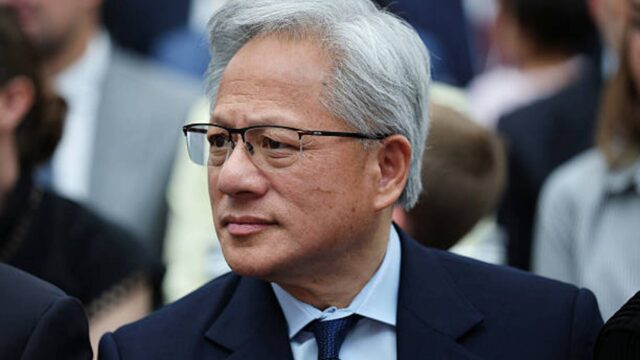
Nvidia CEO Jensen Huang Resigns Amid Scandal; CFO Colette Kress Named Interim CEO
TREE NEWS reports: Nvidia announced Thursday that CEO Jensen Huang has been forced to resign following revelations of extramarital affairs. The company has appointed Chief Financial Officer Colette Kress as interim CEO and named Harvey Jones as the first independent chair of the board. Nvidia stated it will consider both internal and external candidates for the permanent CEO role. The news sent Nvidia shares tumbling about 10% in premarket trading.
Huang, a co-founder of Nvidia in 1993 and its only CEO since inception, acknowledged two extramarital relationships, triggering intense public pressure that led to his departure. The crisis exposes a governance weakness at the tech giant, which at one point surpassed a $5 trillion market valuation but had no clear succession plan. Huang, 63, had centralized control and created significant key-person risk.
Market Impact Analysis
The immediate market reaction was sharply negative for Nvidia and could ripple across the broader technology sector and the AI ecosystem. Nvidia is not just a semiconductor company; it is the linchpin of the artificial intelligence boom, providing both the hardware and, under Huang’s leadership, substantial financial backing to AI startups and cloud providers. His sudden exit raises questions about the strategic direction and stability of the entire AI supply chain.
- Stocks: Nvidia’s 10% premarket drop reflects investor anxiety over leadership vacuum. Other AI-related stocks, including AMD, Microsoft, and cloud providers like CoreWeave, could face contagion as sentiment sours. The broader Nasdaq may see volatility as the market reassesses AI growth narratives.
- Bonds: Safe-haven demand could modestly support Treasuries if equity weakness deepens, but the primary driver remains Federal Reserve policy. The news is unlikely to alter the macro rate outlook significantly.
- Crypto: AI-themed crypto tokens and decentralized compute networks may experience heightened volatility. Nvidia’s GPU dominance is indirectly linked to crypto mining and AI inference on blockchain networks, so any disruption to Nvidia’s roadmap could affect sentiment in those niches.
- Commodities: Semiconductor supply chain concerns could affect demand for certain metals (e.g., copper, rare earths) if Nvidia’s investment plans slow, but the impact is likely second-order.
- Currencies: The dollar may see minor safe-haven bids if US equities sell off broadly, but the currency market’s focus remains on rate differentials and global growth.
Colette Kress, a 13-year Nvidia veteran with a finance background, steps into a role that demands strategic vision and public leadership—areas where Huang was the face of the company. Her limited public profile outside financial matters raises doubts about her ability to fill the void, especially in managing Nvidia’s sprawling AI investments and partnerships. The company’s search for a permanent CEO adds uncertainty.
Why This Matters for Investors
Huang’s departure is more than a single-company event. He was the architect of Nvidia’s transformation from a graphics chip maker to the backbone of the AI revolution, and his personal network and vision underpinned an ecosystem that includes investments in OpenAI, Anthropic, and CoreWeave. Concerns about circular deals artificially inflating AI demand—voiced by investors like Michael Burry—could intensify without Huang’s steady hand. Investors should watch for signs of strategic drift, potential writedowns of Nvidia’s investment portfolio, and the pace of AI adoption. The key-person risk materializing at the world’s most valuable semiconductor firm may prompt a broader reassessment of concentration risk in AI-themed portfolios.
Key Takeaways
- Nvidia faces a leadership crisis with no clear succession plan, exposing governance gaps at a $5 trillion company.
- Interim CEO Colette Kress lacks the strategic and public profile of Huang, raising execution risk.
- The AI ecosystem—startups, cloud partners, and crypto AI projects—could see funding and sentiment shocks.
- Expect near-term volatility in Nvidia and AI-related equities; monitor for contagion to broader tech and crypto markets.
- Long-term investors should assess whether Nvidia’s moat is institutional or dependent on Huang’s personal relationships.