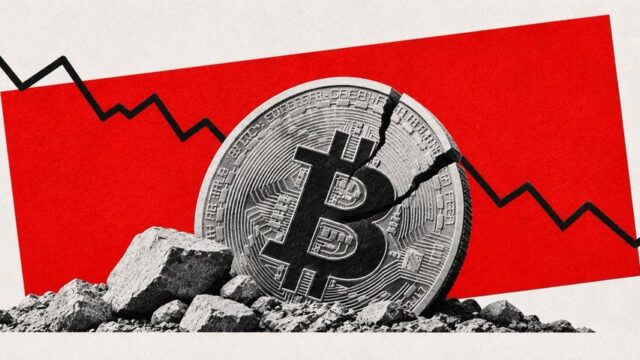
Bitcoin Falls 22% Ahead of Anthropic and SpaceX IPOs
TREE NEWS reports: Bitcoin has declined approximately 22% in the month leading up to two major initial public offerings: Anthropic and SpaceX. This pattern has sparked debate over whether capital is being siphoned from crypto markets to participate in these high-profile listings. Bitcoin fell 22.7% in the 30 days before Anthropic’s IPO, and 22.3% in the month before SpaceX’s June 12 listing. Ethereum saw similar drops of 25.3% and 28% during the same periods.
Matthew Sheffield, CIO of Ethereum treasury management firm SBET, attributes the phenomenon to a “liquidity event that rapidly elevates correlations across assets.” He noted that on Anthropic’s first trading day, tech stocks, crude oil, gold, and cryptocurrencies all sold off simultaneously within the first 15 minutes.
Capital Tug-of-War or Coincidence?
The near-identical sell-offs have led to speculation that investors are withdrawing from highly liquid crypto markets to fund IPO allocations. Sheffield compares this to the dash for cash during the early days of the COVID-19 pandemic. “Whether stocks, bonds, or commodities, everything was sold for cash. Store-of-value assets have long-term preservation properties, but short-term moves are still driven by liquidity,” he said.
However, there is no conclusive evidence to support this single-cause theory. Crypto has also faced ETF outflows, leverage risks, macroeconomic uncertainty, and a broad risk-off sentiment, making it difficult to attribute the decline solely to IPO capital competition.
IPO Lock-Up Periods Delay Capital Reflow
Even if a capital link exists, the timing of any reflow is not immediate. A key variable is the lock-up period for new shares. Sheffield points out that most brokers require investors to hold allocated shares for 15 to 30 days before selling, delaying the wealth effect. “If you went long Ethereum on the day SpaceX listed, you’d have to wait until day 31 to see a profit,” he said.
Matt Cole, CEO and Chairman of Bitcoin treasury firm ASST, corroborates this. He observed that bitcoin did not immediately bottom after SpaceX’s IPO; the actual trend reversal occurred on day 70 post-IPO. “My judgment is that bitcoin is most likely to consolidate in the current range,” he said.
Multiple Headwinds Weigh on Key Support
Bitcoin’s current selling pressure is not only from IPO capital competition but also from a confluence of negative factors. Throughout November, a stronger dollar, continued institutional selling, and crypto leverage liquidations have weighed on prices. The decline began in late October, when concerns over AI sector valuations and capital expenditures triggered a tech sell-off. The $6.3 billion Binance hack and weakening institutional ETF demand further exacerbated the drop.
Nikola Sondergaard, a research analyst at Nansen, identified the $60,000-$62,000 range as the next key test for bitcoin. On Friday, bitcoin fell another 4.2% to $59,318, breaking below the lower bound and potentially targeting the July low of $57,737.35.
Early Spring, Not Midsummer: Bottoming Takes Time
Amid persistent short-term headwinds, some market participants see the current phase as an early stage of bottoming rather than the trigger for systemic risk. Cole notes that recent system failures and quantum security concerns have amplified retail panic, but macroeconomic factors such as debt expansion and fiat currency weakness will support bitcoin’s medium- to long-term trajectory.
“Capital markets are still functioning normally, while retail panic is high. Overall, this looks more like an opportunity to buy the dip in risk assets, including bitcoin, rather than the start of a new major financial crisis,” he said. He likened the market to seasonal change: “Bitcoin’s winter is almost over, but after winter comes early spring, not midsummer. Anyone who has experienced early spring knows there will still be cold snaps and rain—the weather won’t improve immediately.” In his view, it is more appropriate to view risk asset allocation through a volatility lens rather than avoiding it entirely.
Key Takeaways for Investors
- Bitcoin and Ethereum have shown a consistent pattern of selling off before major IPOs, suggesting a liquidity-driven correlation that may repeat with future listings.
- The lock-up period for IPO shares can delay capital reflow into crypto, meaning any post-IPO recovery may take weeks or months.
- Multiple factors—ETF outflows, leverage, macro uncertainty—are compounding the decline, so investors should avoid single-cause explanations.
- Key support levels are being tested; a break below $60,000 could lead to further downside, but long-term holders may view this as a buying opportunity.
- Market conditions resemble an “early spring”—volatility is likely to persist, and a sustained recovery may require patience.